

A limited slip differential is a differential that refuses to let one spinning wheel steal all the motion — it resists the speed difference between the two axle shafts and redirects torque to the wheel with grip. If you understand the open differential’s one fatal flaw, you already understand why the LSD exists; if you haven’t met that flaw yet, start with what a differential is and come back.
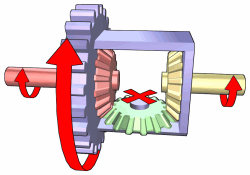
How an open differential fails: the equal-torque rule
Here is the rule that defines everything: an open differential always delivers equal torque to both wheels. Not “up to,” not “usually” — always. The torque each wheel receives is limited by whatever the least grippy wheel can react against.
Picture one drive wheel on dry pavement and the other on glare ice. The icy wheel can only push against the ground with, say, 10 lb-ft before it spins. The open diff sends 10 lb-ft to each wheel — 10 to the ice wheel (which spins uselessly) and 10 to the pavement wheel (which barely notices). The engine’s remaining torque has nowhere to go, so engine RPM climbs, the icy wheel spins faster, and the car sits still.
Note what is really happening: torque doesn’t “flow to” the spinning wheel like water choosing a pipe. The spinning wheel is simply the only one free to move, so all the motion happens there while the torque level stays pinned at what the slipping side can handle. A limited slip differential breaks this stalemate by resisting the speed difference — forcing the torque level up so the gripping wheel actually gets something to work with.
How an LSD fixes the open diff’s flaw
Every LSD design does the same thing with different hardware: it makes it difficult for the two axle shafts to turn at very different speeds. When one wheel tries to spin wildly faster than the other, the mechanism fights back, and that fight raises the torque floor for both wheels.
- Normal driving: both wheels have grip, speeds are nearly equal, and the LSD behaves like an open differential — smooth turns, no drama.
- One wheel slips: the speed difference triggers the mechanism (clutches squeeze, helical gears wedge, viscous fluid thickens), resisting the difference.
- Torque redirects: with slip resisted, the torque level the slipping wheel can “handle” rises — and because the diff still splits torque, the gripping wheel now receives far more than it would from an open diff.
The key spec is the bias ratio: the maximum torque split the unit allows. A 2:1 bias ratio means the high-traction wheel can get up to twice the torque of the slipping one (a 67/33 split); 3:1 means three times (75/25). Higher is more aggressive — better in mud, more noticeable in parking lots.
Limited slip differential types compared
Six designs dominate the market. They are not interchangeable — each has a personality:
| Type | How it works | Bias behaviour | Maintenance | Best for |
|---|---|---|---|---|
| Clutch-type | Clutch packs between the side gears and carrier, preloaded by springs; slip makes the clutches drag and resist the speed difference | Moderate bias (~2:1–3:1); preload gives some lock even with no input torque | Clutches wear — needs friction modifier in the gear oil and eventual rebuild | Street performance, drifting, budget traction upgrade |
| Helical / Torsen | Worm-like helical gears wedge against each other under load — pure gear action, no clutches | Fixed bias ratio (typically ~2:1–3.5:1); needs some resistance on both wheels to work | Virtually none — no clutches, no friction modifier | Daily drivers, track days, the “fit and forget” choice |
| Viscous | Silicone fluid between plates; a speed difference shears the fluid, it thickens, and drag transfers torque | Progressive and smooth, but slow to react | Sealed unit — fluid degrades with heat over time, not serviceable | Older AWD center diffs, gentle street use |
| Automatic locker | Ratcheting mechanism locks both axles together under power, unlocks to allow turns (not technically an LSD) | Full lock under throttle — maximum bias possible | Minimal; can clunk and affect street manners | Hardcore off-road on a budget |
| Selectable locker | Driver flips a switch (air, electric) to fully lock the diff; open the rest of the time | Open when off, spool when on | Air lines or wiring to maintain | Serious off-road where street manners still matter |
| Electronic / brake-based | Uses the ABS system to brake the spinning wheel, raising the torque floor for the other side | Limited by brake heat; effective but eats pads | None extra — it’s software | Factory AWD/4WD systems as a cost-free traction aid |
For the full mechanical background — spider gears, carriers, and how the base differential works — see what is a differential. The engineering-level detail on LSD clutch and gear mechanisms is well covered in Wikipedia’s limited-slip differential article and the Torsen article.
Clutch-type vs helical: the real-world choice
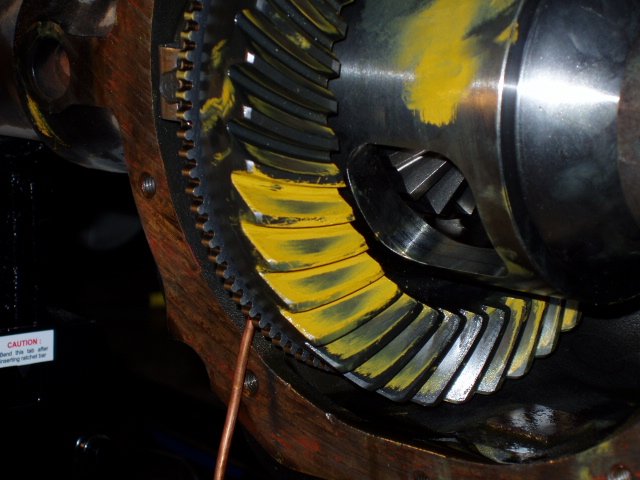
Most buyers choose between these two, so here is the honest trade-off. A clutch-type LSD uses spring preload — the clutch packs are always lightly squeezed, so the unit resists slip even coasting through a parking lot. That preload is why clutch LSDs can chirp tires in tight turns and why they wear: every turn scrubs the clutches a little. Expect to run gear oil with a friction modifier (it keeps the clutches engaging smoothly instead of chattering) and to rebuild the packs eventually.
A helical unit like the Eaton Detroit Truetrac has no clutches at all — it is a gear-type LSD, not a clutch-type, and Eaton lists it as maintenance-free with no special lubrication needed. The helical gears wedge tighter as load rises, with torque bias up to about 3.5:1.
The one caveat: because it is torque-sensing, a helical unit needs some resistance on both wheels. With one wheel completely airborne and zero resistance, it behaves like an open diff — a light touch of the brake pedal gives it the resistance it needs, which is exactly what experienced off-roaders do.
LSD vs locker vs open: which do you actually need?
- Open differential: you drive on pavement, value quiet smoothness and low cost, and never need real traction. This is most cars, and it is fine.
- Limited slip differential: you want better launches, wet-road confidence, light snow or gravel traction, or track-day cornering — without changing how the car feels day to day. The sweet spot for 90% of enthusiasts.
- Selectable locker: you off-road seriously (rock crawling, deep mud) but still drive to the trail. Open on the street, fully locked when it counts. Pair the decision with best gear ratio for off-road and crawl ratio explained — gearing and traction multiply each other.
- Spool / welded: drag strip or dedicated crawler only. Miserable and tire-eating on the street.
One more honest note: an LSD does not change your gear ratio. If you are re-gearing for bigger tires, run the numbers in the axle ratio calculator first — traction devices and gearing solve different problems.
Fluid and friction modifier: the maintenance that matters
Clutch-type units live or die by their fluid. Use a quality GL-5 gear oil in the manufacturer’s weight, and add the friction modifier unless the oil already includes it — without it, the clutches grab and release in rapid succession, which you feel as chatter or shudder in slow turns. The modifier doesn’t reduce the LSD’s locking ability in any meaningful way; it just smooths engagement. Helical and most gear-type units take plain GL-5 with no additive. Change intervals follow the same 30,000–60,000-mile guidance as any differential, sooner with towing or off-road use.
Does your car already have one?
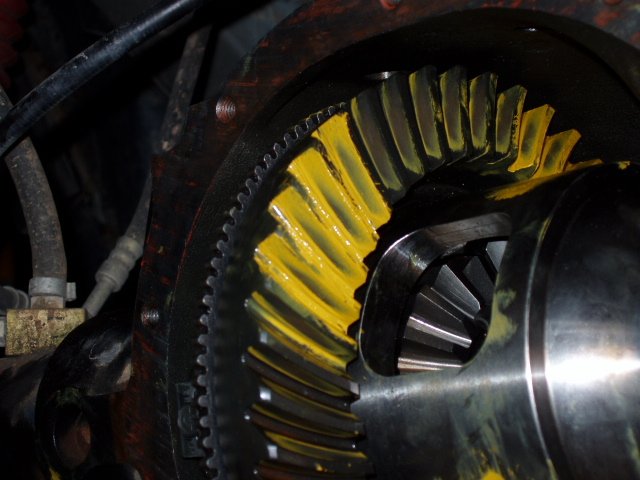
Three ways to check, easiest first:
- Build sheet / option codes: GM’s RPO code G80 means a locking differential (the Eaton Gov-Lock) from the factory. Ford door-jamb axle codes and Jeep’s Trac-Lok / Dana Trac-Lok options decode the same way in the owner’s manual. A dealer can pull the factory build sheet from your VIN.
- The jack test (careful version): on level ground, chock the front wheels, jack up one rear wheel onto a stand, put the transmission in neutral with the parking brake off. Try to rotate the lifted tire by hand. An open differential lets it spin freely; a clutch-type LSD fights you noticeably. Caveat: this test is inconclusive for helical/Torsen units — with one wheel fully airborne they can spin freely like an open diff, because they need resistance on both sides to wedge.
- Look at the tag: many axles carry a metal tag under a cover bolt with the ratio and sometimes an “L” or “LSD” marking.
Frequently asked questions
What is a limited slip differential in simple terms?
A limited slip differential is a differential that limits how much faster one wheel can spin than the other. When one wheel starts slipping, the mechanism resists the speed difference, which raises the torque available to the wheel that still has grip — so you keep moving instead of sitting with one tire spinning.
Is an LSD better than a locker off-road?
For moderate trails, an LSD is often nicer — it works automatically with no driver input and doesn’t affect steering. For rock crawling or deep mud where a wheel may lift completely off the ground, a selectable locker wins because it guarantees both wheels turn together. Many serious rigs run an LSD or helical unit in one axle and a selectable locker in the other.
Do LSDs wear out?
Clutch-type units do — the clutch packs are a wear item, and a tired LSD gradually behaves more like an open diff. Symptoms: one-wheel spin returns, or chatter in turns if the friction modifier is depleted. Helical gear-type units have no clutches and effectively don’t wear out in normal use.
Can you add a limited slip differential to an open axle?
Yes — it is one of the most common axle upgrades. The LSD carrier replaces your open carrier and reuses the existing ring and pinion (or new gears if you’re re-gearing at the same time, which is the smart moment to do it since the labor overlaps). Budget for professional setup: gear backlash and bearing preload must be set precisely.
Does a limited slip differential help in snow?
Meaningfully, yes — it is one of the best single upgrades for winter traction on a rear-drive vehicle. Instead of one wheel spinning on ice while the other does nothing, the LSD keeps torque flowing to the wheel with grip. It is not a substitute for winter tires, but the combination is formidable.
What is the difference between a limited slip differential and traction control?
An LSD is mechanical — gears and clutches inside the axle reacting instantly. Traction control is electronic — it cuts engine power or brakes the spinning wheel after sensors detect slip. Many modern cars have both: the LSD handles the physics, the electronics handle the edge cases.
Limited slip differential: the bottom line
A limited slip differential fixes the open diff’s fatal flaw — the equal-torque rule that strands you with one spinning wheel — by resisting speed differences and feeding torque to the tire that can use it. Clutch-type for maximum tunability, helical like the Truetrac for fit-and-forget reliability, lockers when only full lock will do. Match the mechanism to how you actually drive, keep the fluid right, and you’ll wonder how you ever managed with an open diff.
Choosing between traction and gearing? A limited slip differential decides where the torque goes — the free gear ratio calculator decides how hard it pulls. Run your numbers there next.