

Wondering how to choose gear ratio for your truck? It’s a math problem with a lifestyle answer. The formulas tell you exactly what RPM each ratio gives — the hard part is deciding what you want your truck to feel like. Follow these five steps and you will land on the right ratio the first time, without paying for a gear swap twice.
Step 1: Know your current setup
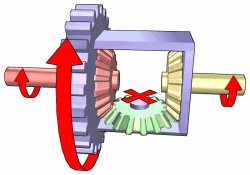
Write down three numbers: your current axle ratio (axle tag, door sticker, or our no-cover method), your tire diameter (measured, not just the sidewall size), and your transmission’s top gear (1:1 or an overdrive like 0.70). These are the inputs every calculation below needs.
Step 2: Define your use case honestly
Be realistic about where the miles go:
- Daily driver, mostly highway: prioritize low cruise RPM and quiet running.
- Towing or hauling: prioritize torque and the ability to hold speed without constant downshifting. Our towing gear guide goes deeper.
- Off-road: prioritize low-speed control and torque — and check your crawl ratio too.
- Performance: prioritize acceleration and keeping the engine in its powerband.
If you are fitting bigger tires at the same time, the tire size drives the whole decision — start with our 35-inch or 33-inch tire guides.
Step 3: Pick a target cruise RPM
Most gasoline trucks are happiest cruising between 1,800 and 2,400 RPM; towing or heavy use, aim for 2,200–2,700. Then work backwards with the formula:
Needed ratio = (target RPM × tire diameter) ÷ (cruise mph × top gear × 336.13)
Example: you want 2,200 RPM at 70 mph on 33″ tires with a 0.70 overdrive: (2,200 × 33) ÷ (70 × 0.70 × 336.13) = 72,600 ÷ 16,470 = 4.41.
Step 4: Round to a ratio you can actually buy
Ring-and-pinion sets come in fixed steps, so round your calculated number to the nearest available ratio for your axle (common steps: 3.42, 3.73, 4.10, 4.30, 4.56, 4.88). In the example above, 4.41 lands between 4.30 and 4.56 — pick 4.56 if you tow, 4.30 for mixed use.
Step 5: Sanity-check the full picture
Before ordering, verify three things with the axle ratio calculator:
- Cruise RPM sits in your target band.
- First-gear speed is still usable (too short = shifting constantly in traffic).
- Your effective ratio after the tire change matches your intent — our tire gear ratio calculator shows exactly what the truck will feel like.
Full worked example: the lifted daily driver
A truck on stock 31″ tires with 3.73 gears is going to 35″ tires, driven daily with occasional towing:
- Current: 3.73 axle, 31″ tires, 0.70 overdrive.
- Use case: daily driver + towing → favor the stronger side.
- Restore ratio: 3.73 × 35 ÷ 31 = 4.21.
- Buyable: 4.10 or 4.30. With towing in the mix → 4.30.
- Check: at 70 mph in overdrive, RPM = 70 × 4.30 × 0.70 × 336.13 ÷ 35 = 70,836 ÷ 35 = 2,024 RPM — right in the band.
How to choose gear ratio with off-road in mind: crawl ratio targets
If trail time is part of your honest use case, the axle ratio is only one piece. Crawl ratio — transmission first gear × transfer-case low range × axle ratio — tells you how slowly and precisely the truck can creep at idle. A ratio that cruises beautifully on the highway can still feel clumsy on the rocks, so run this math too.
| Use | Target crawl ratio |
|---|---|
| Rock crawling | 80:1 or deeper |
| Trail riding | 50–80:1 |
| Daily driver with weekend trails | 30–50:1 |
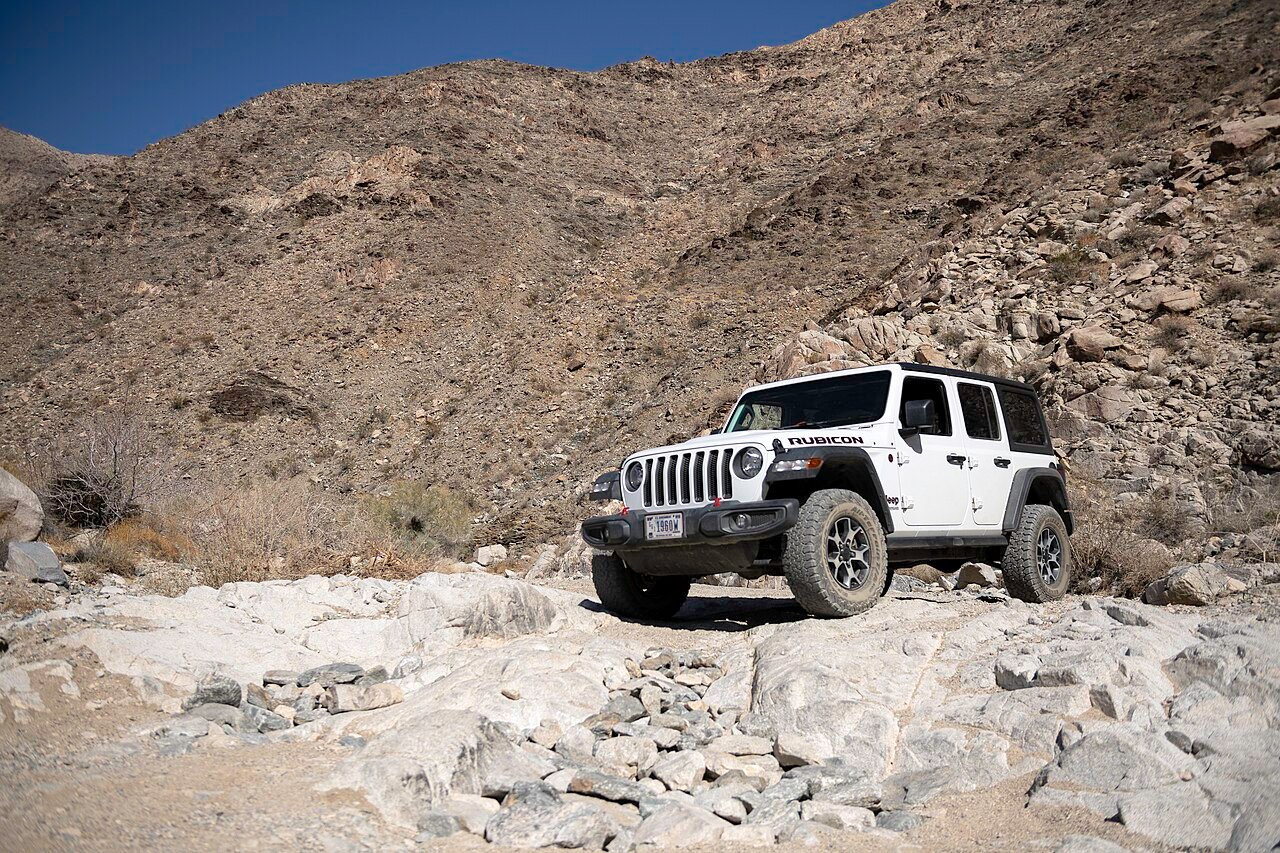
Worked example: a JK Rubicon with the six-speed manual. First gear is 4.459, the Rock-Trac transfer case low range is 4.0:1, and the axles run 4.10 gears. Crawl ratio = 4.459 × 4.0 × 4.10 = 73.1:1 — solid trail-riding territory with real control at walking pace. Swap the axle to 5.13 and the same math gives 91.5:1, which is rock-crawler deep. Either way, the math behind how to choose gear ratio stays the same; only the target changes.
This is why knowing how to choose gear ratio for off-road starts with the whole drivetrain, not just the axle. For the manufacturer’s side of the same decision — tire size, transmission ratio, cruise RPM, stock ratio, and intended use, with the stock setup as the baseline — see Yukon Gear’s technical FAQ on picking the right ratio.
Second worked example: how to choose gear ratio for a Jeep on 37s
Run the full five-step method on a Jeep leaving stock 3.21 gears and 31.5″ tires for 37s, with a 0.75 overdrive:
- Current: 3.21 axle, 31.5″ tires, 0.75 overdrive.
- Use case: trail riding on weekends, still driven to the trail.
- Restore: 3.21 × 37 ÷ 31.5 = 3.77 — that is the ratio that restores stock feel, and restoring stock feel is the classic safe answer when learning how to choose gear ratio the first time.
- Buyable: 3.73 (stock-like feel) or 4.10 (one step deeper). When it comes to how to choose gear ratio between the two buyable options, intended use breaks the tie: bigger tires plus trail work → 4.10.
- Check: at 70 mph in overdrive, RPM = 70 × 4.10 × 0.75 × 336.13 ÷ 37 = 72,352 ÷ 37 = 1,955 RPM — at the low edge of the gas-truck band, quiet and easy on fuel. Bonus crawl check: 4.46 first gear × 2.72 low range × 4.10 axle = 49.7:1, right where a daily driver with weekend trails should be.
Both worked examples follow the same logic that makes how to choose gear ratio a solvable problem: measure the setup, define the use case honestly, calculate, buy what’s available, and verify the result.
Breaking in new gears (the part everyone skips)
You have figured out how to choose gear ratio — now protect the investment. New ring-and-pinion sets run hotter than normal until the teeth wear into each other, and overheating a fresh set before it beds in causes irreversible damage. The industry-standard break-in, published by every major gear maker, goes like this:
- First drives are short: 15–20 minutes, then park and let the axle cool completely (this can take hours). Repeat the drive-and-cool cycle a few times before any highway time.
- Keep speed varied and under about 60 mph. No hard starts, no racing, no off-roading, no long road trips.
- No towing for the first 500 miles. The first tow after break-in should also be short runs with cool-down stops.
- At 500 miles, change the gear oil — this flushes out the metal particles and phosphate coating worn off during break-in. Check the drained oil for excessive metal, which signals a setup problem.
A bad break-in doesn’t always fail loudly on day one — it shows up months later as a whine or a dead gear set. Revolution Gear & Axle’s published break-in procedure lays out the full drive-and-cool-down sequence if you want the shop to follow it to the letter.
Mistakes people make when choosing gears
- Chasing the biggest number. Going straight to 4.88s on a daily driver turns every highway trip into a noisy, thirsty chore. Match the ratio to your actual miles, not your aspirations.
- Ignoring the transmission. A truck with a deep first gear and a double overdrive has very different needs than one with a 4-speed. Always compute the overall ratio — transmission gear × axle — because that is what the engine feels. See final drive ratio explained.
- Using advertised tire size. A “35-inch” tire often measures 34″ or less under load. Measure the actual height, or your RPM math will be off by a few percent.
- Forgetting the speedometer. Any gear or tire change throws off the speedometer and odometer. Budget for recalibration — our speedometer recalibration guide covers the options.
- Re-gearing only one axle on a 4WD. Front and rear ratios must match. Doing one axle is not a shortcut; it is a broken transfer case waiting to happen.
Gas vs diesel: different target RPMs
The 1,800–2,400 RPM cruise target above is for gasoline engines. Diesels make peak torque much lower, so they are happiest cruising at 1,500–2,000 RPM — which is why diesel trucks often run taller (numerically lower) axle ratios from the factory.
When you work the Step 3 formula, use a target RPM that matches your engine’s torque curve: check the manufacturer’s peak-torque RPM and aim your cruise speed to sit just above it. Gearing a diesel to spin like a gas engine wastes fuel and adds noise for no benefit.
When NOT to re-gear
Sometimes the right answer is to leave the gears alone: if your cruise RPM already sits in the target band, if you are within one tire size of stock, or if the truck is a lease you will return in a year. A gear swap is permanent, expensive, and only worth it when the math says the truck will spend most of its life outside its comfort zone. When in doubt, measure your current highway RPM first — many “gutless” trucks just need the transmission serviced, not new gears.
Frequently asked questions
These cover the decisions that come up once you know how to choose gear ratio — the axle-matching rule, verifying the install, and the real cost.
Should I re-gear before or after new tires?
After — or at the same time. You need the actual measured diameter of the new tires (loaded tires measure smaller than the sidewall claims) to do the math right.
Can I change just the rear axle gears?
On a 4WD, no — front and rear must match or the drivetrain binds in 4WD. Re-gear both axles to the same ratio.
Can I re-gear only the rear axle?
On a two-wheel-drive truck, yes — one drive axle means one gear set to change, which is the simpler side of how to choose gear ratio on a 2WD build. On a 4WD, never: front and rear ratios must match or the transfer case binds in 4WD. If you’re unsure what you have, our no-cover method shows how to confirm both axles match before you order.
How do I know the gear setup was done right?
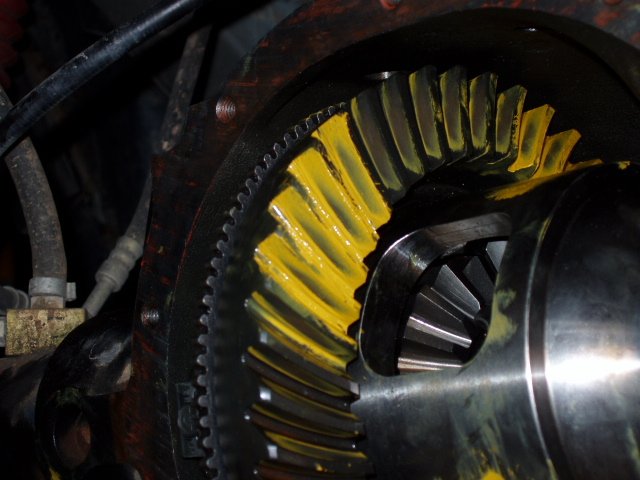
Three signs: the truck runs quiet (no new whine or howl at speed), there are no leaks at the pinion seal or diff cover, and the installer can show you a centered contact pattern on the gear teeth — the marking compound should paint the middle of the tooth, not the edges. Knowing how to choose gear ratio gets you the right parts; knowing what a good setup looks like protects the install. A correct pattern looks like this:
How much does a gear swap cost?
Typically $1,500–$2,500 per axle installed, including the gear set, bearings, and setup labor. That is why getting the math right first matters.
Will the dealer void my warranty?
Aftermarket gears can affect powertrain warranty coverage. If the truck is under warranty, weigh the risk or use a dealer-installed performance package.
Ready to run your numbers? The axle ratio calculator takes your tire size, transmission gears, and target RPM, then ranks the gear sets you can actually buy.