

Short answer: the best gear ratio for 35 inch tires is 4.56 for most daily drivers, 4.88 for mixed trail use, and 5.13 for serious rock crawling — but your stock gears decide how big the jump needs to be. The exact answer depends on the gears you start with — a truck that came with 4.10s needs a smaller jump than one that came with 3.21s. The table below gives you the restore ratio for the four most common factory gear sets, and the nearest gear set you can actually buy.
Restore table: stock gears → 35-inch tires
The restore ratio puts your engine RPM back where the factory intended. It’s calculated as stock ratio × 35 ÷ stock tire diameter (here we use a 31.5″ stock baseline, the typical loaded diameter of a stock 265/70R17 — close to its 31.6″ sidewall size):
| Your stock ratio | Restore ratio (exact) | Buyable set to pick | RPM at 65 mph with that set* |
|---|---|---|---|
| 3.21 | 3.57 | 3.55 (or 3.73 for towing) | 2,216 (2,328 with 3.73) |
| 3.45 | 3.83 | 3.73 or 3.91 | 2,328 or 2,441 |
| 3.73 | 4.14 | 4.10 | 2,559 |
| 4.10 | 4.56 | 4.56 | 2,847 |
*RPM assumes a 1:1 top gear. Also listed: 4.88 = 3,046 RPM at 65 mph (3,281 at 70 mph), 5.13 = 3,202 RPM at 65 mph (3,449 at 70 mph). With an overdrive (e.g. 0.75), multiply these numbers by your overdrive ratio — a 4.88 at 65 mph in a 0.75 overdrive is a calm 2,285 RPM.
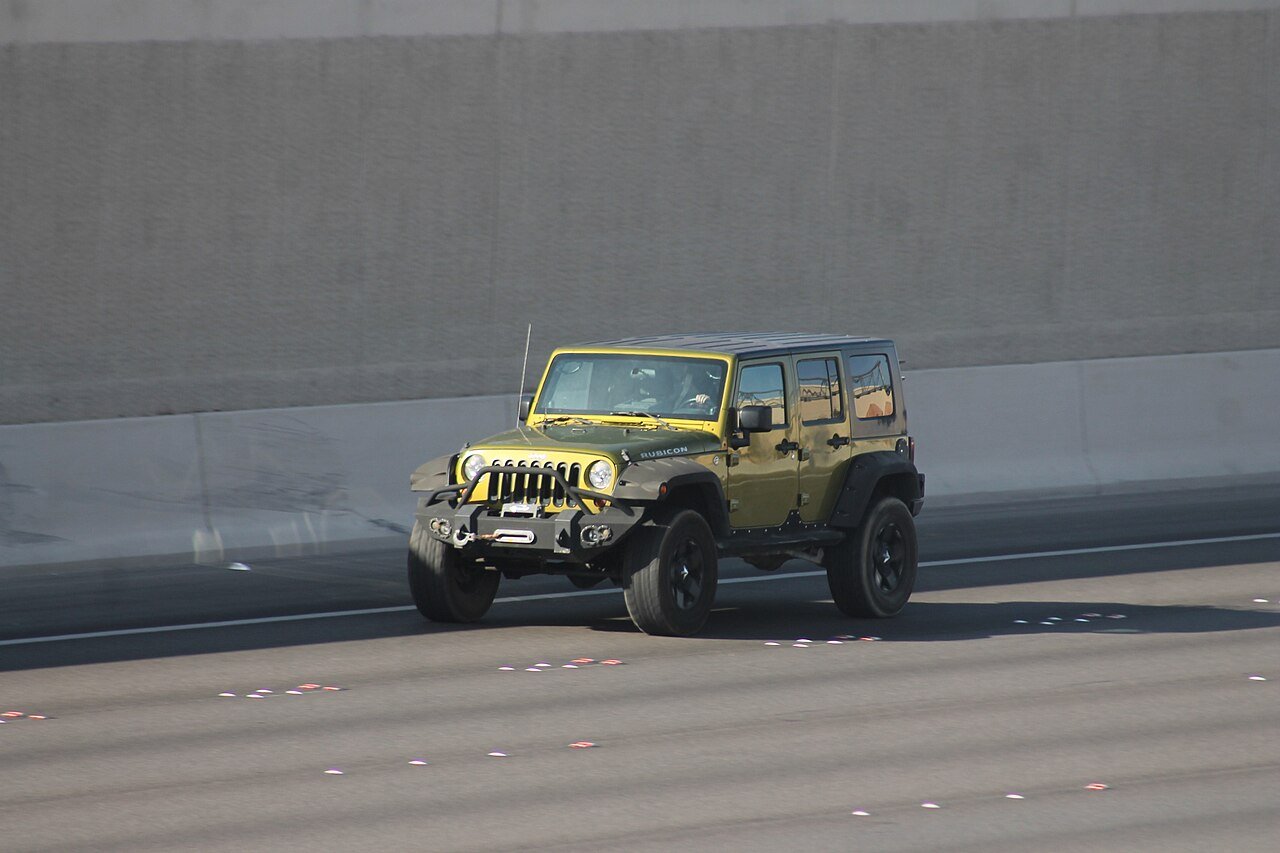
Gear ratio for 35 inch tires at highway speed: the full RPM table
The number that decides whether you’ll enjoy the gear ratio for 35 inch tires you choose is cruise RPM. The formula is simple: RPM = mph × gear ratio × overdrive ratio × 336.13 ÷ tire diameter. Here it is worked out at 70 mph for the three most popular ratios — plus what your stock gears look like on 35s for comparison — both in a 1:1 direct drive and with a typical 0.70 overdrive:
| Axle gears | RPM at 70 mph (1:1) | RPM at 70 mph (0.70 overdrive) |
|---|---|---|
| 3.73 (stock, not re-geared) | 2,508 | 1,755 |
| 4.10 | 2,756 | 1,929 |
| 4.56 | 3,066 | 2,146 |
| 4.88 | 3,281 | 2,296 |
| 5.13 | 3,449 | 2,414 |
The takeaway: the step from 4.56 to 4.88 costs about 215 RPM at 70 mph, and another ~170 to reach 5.13. In overdrive, all three sit under 2,450 RPM — a relaxed cruise for a V8 or the 3.6L Pentastar. If your transmission has a 0.67 top gear instead of 0.70, subtract roughly another 90 RPM across the board. You can sanity-check any of these numbers against the gearing charts in ExtremeTerrain’s Jeep regear guide — they land in the same RPM bands.
Commuting on 65-mph roads? Multiply the 1:1 column by 65 ÷ 70 — the 4.56 row drops to 2,847 RPM, matching the restore table above. Comparing cruise RPM this way is how you sanity-check a gear ratio for 35 inch tires against real highway life instead of guessing.
Worked example: 3.73 stock gears on 35s
This is the most common setup in the wild, so let’s run it fully:
- Restore ratio: 3.73 × 35 ÷ 31.5 = 4.14 → nearest buyable set is 4.10
- If you skip the re-gear: your 3.73s behave like 3.36s on the original tires (3.73 × 31.5 ÷ 35) — your effective gearing dropped a full step
- Cruise RPM at 65 mph (1:1 gear): with 4.10s = 2,559; left stock at 3.73s = 2,328
- Verdict: re-gear to 4.10 for a daily driver, 4.56 (2,847 RPM) if you tow or crawl — run your own numbers in the tire gear ratio calculator
Jeep vs truck notes
Where you land on the gear ratio for 35 inch tires question also depends on the vehicle wearing them:
- Jeep Wrangler JK/JL (3.6L): 4.56 is the crowd favorite for daily driving on 35s; 4.88 if the rig sees real trails. The lighter JL with the 8-speed auto tolerates 4.56 happily on the highway.
- Full-size trucks (V8, 5.3L/5.7L): 4.56 balances highway economy with the ability to actually tow; 4.88 if it’s a work truck. Trucks with 6+ speed automatics and overdrive cruise fine at 4.88 — the overdrive does the highway work.
- Manual transmissions: manuals have no torque converter to mask tall gearing, so lean one step deeper than an auto would take — 4.88 on 35s feels right where 4.56 suits an automatic.
- Heavy builds (bumpers, winch, armor, 37s next): if 37s are in your future, skip 4.56 and go straight to 4.88 or 5.13 to buy once.
Watch the pinion size when you go deep
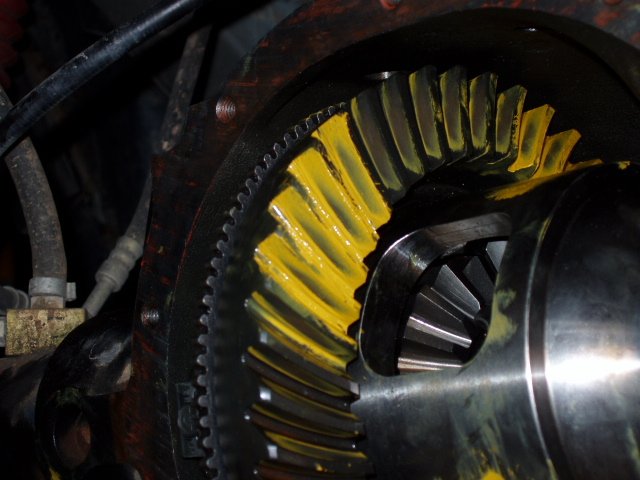
One caution as ratios climb: numerically deeper gears use a smaller pinion gear to get more teeth on the ring gear. A 5.13 pinion is physically smaller and weaker than a 4.10 pinion for the same axle. On a Dana 30 or Dana 35, 5.13s on 35s are workable for a light Jeep, but push to 37s and the small pinion becomes the weak link — that’s why serious builds step up to Dana 44 or 60 axles before going deeper. Match the gear set to the axle’s strength, not just the tire chart.
Here’s what that looks like in real tooth counts for the ratios you’re choosing between for a gear ratio for 35 inch tires: a 4.56 set is typically 41 ring teeth over 9 pinion teeth (41 ÷ 9 = 4.556), a 4.88 is 39 over 8 (39 ÷ 8 = 4.875), and a 5.13 is 41 over 8 (41 ÷ 8 = 5.125). The pinion head gets physically smaller as the ratio climbs — that’s the weak link to watch.
The Wrangler Forum’s gearing thread backs this up: Dana 44s on TJ-era Jeeps handle 35s comfortably, while pushing a Dana 30 hard is where the breakage stories start. If you’re unsure which axle sits under your Jeep, the how-to-find-gear-ratio guide walks through identifying it before you order gears.
Get this match wrong and even the right gear ratio for 35 inch tires won’t save a small pinion from a hard life.
Speedometer and odometer error on 35s
Re-gearing to the right gear ratio for 35 inch tires restores performance, but it does nothing for your speedometer — that reads off tire revolutions, not gear teeth. With a 31.5″ stock tire, jumping to 35s makes the speedo read low by 35 ÷ 31.5 − 1 = 11.1%. When the needle shows 60 mph, you’re actually doing 66.7; at an indicated 65, you’re at 72.2 — ticket territory in a 65 zone.
Your odometer under-reads by the same amount, logging only 90 miles for every 100 real ones — so your hand-calculated fuel economy comes out pessimistic. Multiply odometer-based MPG by 1.11 to get the true number, and remember your odometer-based maintenance intervals stretch about 11% too far in real miles. A plug-in speedometer calibrator sets the correct tire diameter so the speedo, odometer, and shift points all read true again.
None of this changes which gear ratio for 35 inch tires you should pick — speedo error is purely a tire-size problem. On JK/JL Wranglers the fix is usually a plug-in programmer that sets tire size in the computer; on full-size trucks it’s often a dealer flash or handheld tuner. Do it right after the tire swap — your shift points, traction control, and ABS all read the same wrong speed until you do.
Overdrive changes the RPM math
Modern 6- and 8-speed automatics have deep overdrives (0.67–0.75), which take the sting out of 4.88s on the highway. A 4.88 at 65 mph in a 1:1 gear is 3,046 RPM, but in a 0.67 overdrive it’s only 2,041 RPM (3,046 × 0.67) — calmer than many stock trucks cruise. If your truck has a tall overdrive, don’t fear the deeper ratio: the transmission handles the highway, and the gears handle everything else. Confirm your exact overdrive ratio in the RPM calculator, which accepts any top-gear ratio.
Do you even need to re-gear for 35s?
Technically you can drive on stock gears — the truck still moves. But dropping from an effective 3.73 to 3.36 is the equivalent of factory-downshifting your whole truck by one gear range: sluggish off the line, transmission hunting for gears on grades, and higher transmission temperatures under load.
That said, if your truck already has 4.10s, the jump to 35s leaves you at an effective 3.69 — close enough to stock feel that a re-gear becomes a “nice to have” rather than a necessity. Check your current situation with the effective gear ratio guide, and cross-reference cruise RPMs on the gear ratio chart. That is the honest test for any gear ratio for 35 inch tires: does the truck still feel like itself?
Frequently asked questions
Is 4.56 or 4.88 better for 35-inch tires?
4.56 is better for a daily driver that sees mostly highway — lower cruise RPM and quieter cabin. 4.88 is better for trail use, towing, or heavier trucks — more low-end pull at the cost of roughly 200 extra RPM on the highway.
Can I run 35s on 3.73 gears without re-gearing?
Yes, but your effective ratio drops to about 3.36 — expect noticeably slower acceleration and frequent transmission downshifts. It’s drivable; it’s just no longer the truck the factory tuned. Most owners re-gear to 4.10 to restore stock feel.
What RPM will I turn at 70 mph with 4.88s and 35s?
3,281 RPM in a 1:1 gear — but most modern trucks have an overdrive around 0.70–0.75, which drops that to about 2,300–2,460 RPM, right in the efficient cruising band.
Should I go deeper than 5.13 on 35s?
Only for dedicated rock crawlers. 5.29+ exists for some axles but pins the highway RPM high and usually pairs with 37-inch tires, where it makes more sense.
Will 4.88s be too much for the highway on 35s with an 8-speed automatic?
No. A gear ratio for 35 inch tires only sets the starting point — your top overdrive sets the cruise. A 4.88 at 70 mph spins 3,281 RPM in direct drive, but a typical 0.70 overdrive drops that to 2,296 RPM, right where stock trucks cruise. The 8-speed’s tight ratios also mean it never hunts for gears on grades. Deeper gears plus a deep overdrive is the best of both worlds: low-end pull off-road, calm cruise at speed.
Can I run 35s on a Dana 30 with 4.88s?
On a light Jeep used as a daily driver with moderate trail use, yes — 4.88 gear sets exist for the Dana 30/M186 (usually 39 ring teeth over 8 pinion teeth) and restore near-stock feel on 35s. For a light rig, 4.88s are a proven gear ratio for 35 inch tires on the Dana 30; for a heavy one, the axle upgrade is the real mod.
The trade-off is the small pinion: add a locker, heavy armor, hard rock bouncing, or plans for 37s, and you’re asking more of that axle than it wants to give. Revolution Gear’s JL/JT regear guide lists complete Dana 30 front packages in 4.56, 4.88, and 5.13 — so the ratio exists; the question is whether your use case justifies it. For heavy wheeling, stepping up to Dana 44 axles is the smart buy once instead of the gear set twice.
Run your exact setup — stock ratio, stock tire, and new tire — through the tire gear ratio calculator to pick the best ratio for your rig, with your effective ratio, restore ratio, and the nearest gear sets you can buy.