

The 3.73 vs 4.10 gears debate is one of the most common arguments in truck and Jeep forums. Both are excellent gear ratios, but they serve different purposes: 3.73 gears favor highway cruising and fuel economy, while 4.10 gears favor acceleration, towing, and bigger tires. The right choice comes down to how you drive — so here is the real math behind the decision.
The headline difference: about 10% more torque
4.10 divided by 3.73 equals 1.099, so switching from 3.73 to 4.10 gears multiplies torque at the wheels by roughly 10% in every gear. That is the core trade: the engine spins about 10% faster at any given speed, and the wheels push about 10% harder.
This is the same trade-off at work in any reduction gear: multiplying torque at the wheels means the engine must turn proportionally faster for the same road speed. There is no free torque — just a choice of where in the rev range you want it.
Real RPM numbers: 3.73 vs 4.10 at highway speed
Here is what each ratio does on a 31-inch tire (the math: RPM = mph × ratio × 336.13 ÷ tire diameter):
| Speed | Transmission | 3.73 gears | 4.10 gears | Difference |
|---|---|---|---|---|
| 60 mph | 1:1 (direct) | 2,427 RPM | 2,667 RPM | +240 RPM |
| 65 mph | 1:1 (direct) | 2,629 RPM | 2,890 RPM | +261 RPM |
| 70 mph | 1:1 (direct) | 2,831 RPM | 3,112 RPM | +281 RPM |
| 75 mph | 1:1 (direct) | 3,033 RPM | 3,334 RPM | +301 RPM |
| 70 mph | 0.70 overdrive | 1,982 RPM | 2,178 RPM | +196 RPM |
The takeaway: the highway penalty is real but small — about 200–280 RPM. With a modern overdrive transmission, 4.10s at 70 mph spin at roughly the same RPM that 3.73s hit at 75 mph. Want your exact setup? Plug your tire size into our gear ratio chart or run your numbers through the axle ratio calculator.
Look at the 60 and 75 mph rows and the pattern is obvious: this is exactly why the 3.73 vs 4.10 gears question comes down to an RPM budget. Every 5 mph costs you roughly the same extra RPM as the gear swap itself, so if you already cruise at 75, 4.10s just move your engine into the range you were already driving in.
Acceleration and towing
That extra 10% of torque multiplication is what you feel from a stop and what matters when towing. A truck that tows near its limit with 3.73 gears will hold speed with less throttle and fewer downshifts on 4.10s. First gear becomes roughly 10% shorter, so the launch is stronger — which is why 4.10s are the default for performance builds and heavy towers. That, in one paragraph, is the practical core of the 3.73 vs 4.10 gears argument.
Fuel economy: the honest answer
On flat highway miles, 3.73s win because the engine spins slower. But in rolling terrain or with a load, 4.10s can actually use less throttle to hold speed, and some owners report nearly identical real-world mileage. The difference is a few tenths of a gallon either way — fuel economy alone should not decide this for you.
The fuel break-even: why 3.73 vs 4.10 gears never pay for themselves on mileage
Let us run the payback math with generous assumptions. Say a re-gear costs $4,000 on a 4WD (both axles, parts plus professional setup). Say the 3.73 truck gets 15.0 mpg and the 4.10 truck gets 15.4 mpg — a 0.4 mpg gap, which is the optimistic end of what owners actually report. At 15,000 miles a year and $3.50 a gallon, that 0.4 mpg saves about 26 gallons, or roughly $91 a year.
Divide $4,000 by $91 a year and the payback lands at about 44 years. Even if you stretch the mileage gap to a full half-gallon — bigger than almost anyone sees in the real world — you are still looking at roughly 35 years to break even. The truck will be scrap metal before the swap pays for itself in fuel.
This is not an argument against 4.10s. It is an argument for being honest about why you want them. The 3.73 vs 4.10 gears decision is a feel and towing upgrade, not a savings play. Buy the 4.10s because you want stronger launches, fewer downshifts on grades, and better response with bigger tires — never because the fuel math works out.
Tire-size pairings
Bigger tires effectively make your gears taller (see our guide on how bigger tires change your gearing), so tire size often settles the 3.73 vs 4.10 gears debate:
- Stock or 31–32″ tires: 3.73s are the sweet spot for daily driving; 4.10s if you tow often or want a snappier feel.
- 33″ tires: 4.10s bring you back close to stock performance — this is the most common pairing.
- 35″ tires: 4.10s are the minimum; 4.56s are the popular choice. Our 35-inch tire gear guide breaks this down.
Off-road comparison: crawl ratio with 3.73 vs 4.10 gears
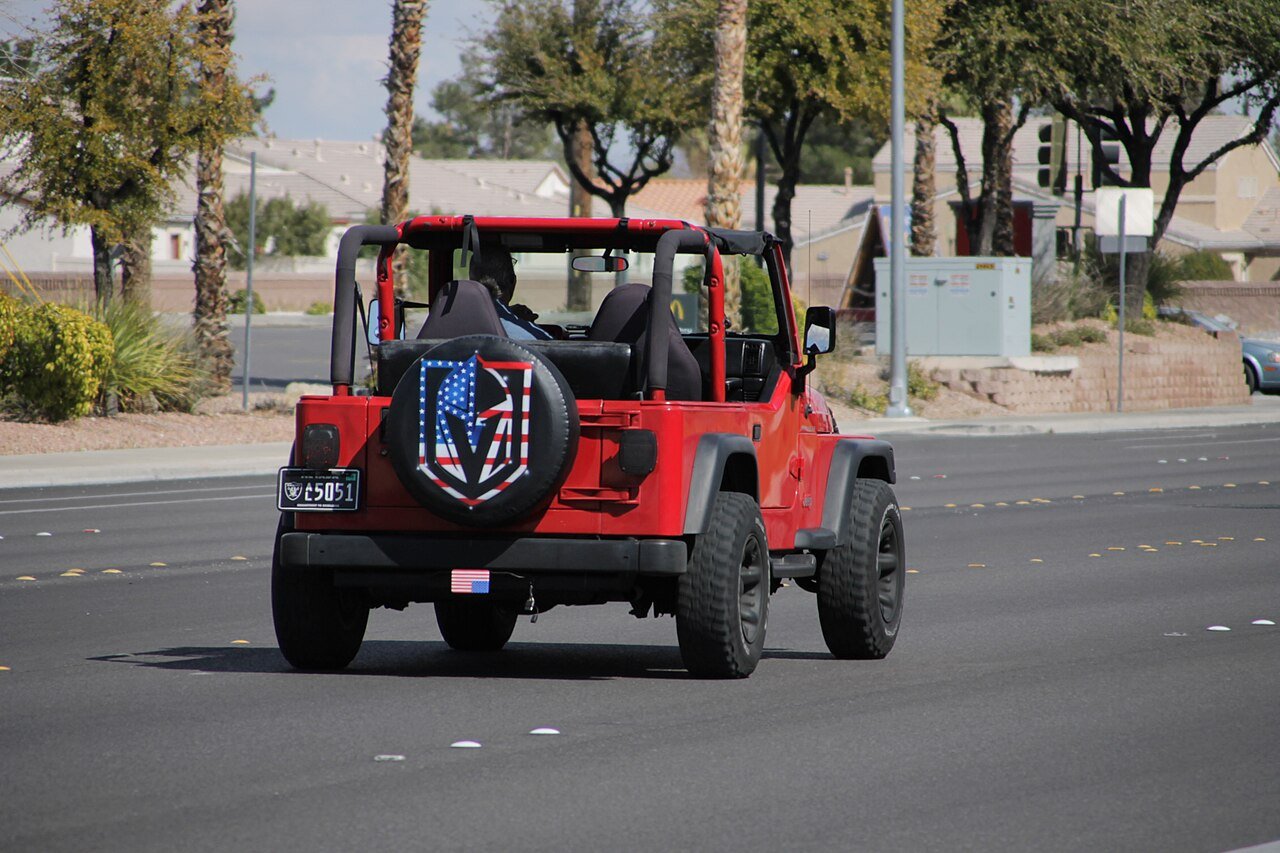
On the trail, axle ratio is only one part of the crawl equation: crawl ratio = first-gear ratio × transfer-case low range × axle ratio. Take a Jeep JL Rubicon with the 8-speed automatic. The published specs are a 4.71 first gear and a 4.0:1 Rock-Trac low range, so the crawl math is straightforward:
| Axle ratio | 1st gear | Low range | Crawl ratio |
|---|---|---|---|
| 3.73 | 4.71 | 4.0:1 | 70.3:1 |
| 4.10 | 4.71 | 4.0:1 | 77.2:1 |
That 77.2:1 matches Jeep’s own published crawl ratio for the automatic Rubicon — and it is roughly 10% deeper than the 3.73 setup. On rocks, that 10% shows up as a slower, more controlled idle crawl with less brake-riding and less clutch or converter slip to stay at walking pace. The 3.73 vs 4.10 gears crawl difference is about control, not speed — it will not turn a trail rig into a rock bouncer.
If you are weighing this against bigger tires at the same time, read a guide to when and why to regear a Wrangler before you buy — tire size and axle ratio have to be decided together, since a taller tire erases the crawl advantage you just paid for. For the reverse case, see our explainer on how bigger tires change your gearing.
Verdict table: which one for you?
| Use case | Pick this | Why |
|---|---|---|
| Daily driver, stock tires | 3.73 | Quietest cruise, best highway mileage |
| Daily driver, frequent towing | 4.10 | 10% more pulling power, fewer downshifts |
| 33″ tires | 4.10 | Restores stock feel |
| 35″ tires or off-road | 4.10–4.56 | Compensates for tall tires; better crawl control |
| Performance / drag racing | 4.10 | Stronger launch, engine stays in the powerband |
| Long highway trips | 3.73 | Lowest cruise RPM |
The real-world cost of the swap
A professional ring-and-pinion swap typically runs $1,500–$2,500 per axle including gears, bearings, and setup labor. On a 4WD, you must do both axles, so budget double. This is the honest math behind the forum wisdom “don’t re-gear for 3.73 to 4.10 alone”: you are spending ~$4,000 for a 10% change. That money makes far more sense when you are already re-gearing for bigger tires, or when you skip straight to 4.30s or 4.56s for a change you will actually feel.
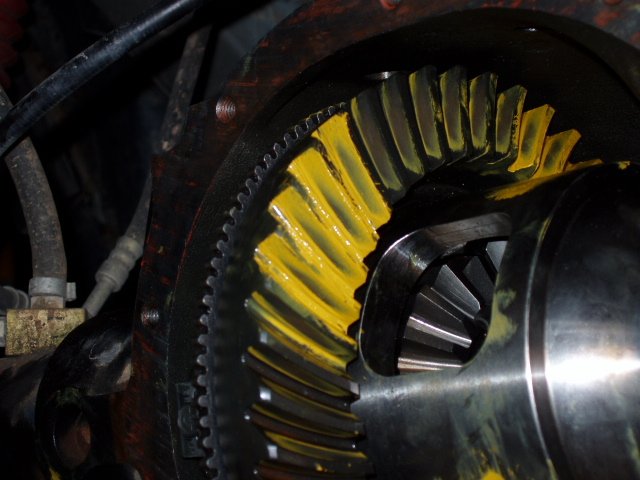
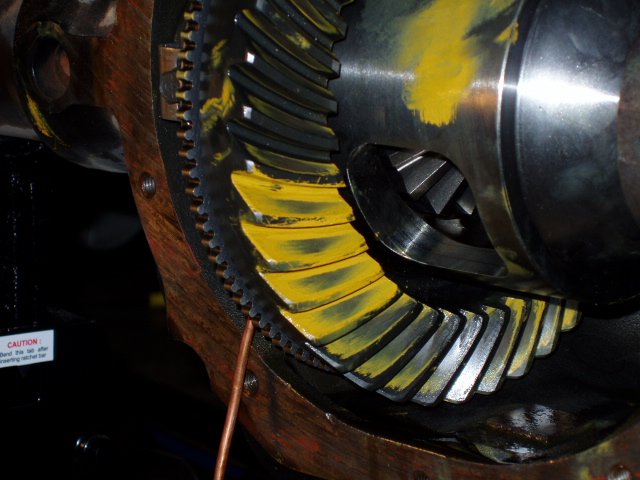
A big chunk of that labor bill is setup precision, not parts. The installer paints the ring gear teeth with marking compound and reads the contact pattern on both the drive and coast sides — adjusting pinion depth and backlash with shims until the pattern sits centered on the tooth. That trial-and-error is why the job takes a full day per axle.
When to skip both: 4.30 and 4.56
Sometimes the 3.73 vs 4.10 gears debate skips the two ratios that actually fit. If you are going to 37-inch tires, 4.10s will not be enough to restore stock feel — you will be re-gearing twice. If you tow heavy near your GCWR rating regularly, or you drive a diesel whose torque peak sits low in the rev range, the deeper ratios pay off far more obviously than the 3.73-to-4.10 step.
The step sizes tell the story: 4.56 gears multiply torque about 22% harder than 3.73s — more than double the 10% you get from 4.10s. The price is cruise RPM: on 31-inch tires at 70 mph in direct drive, 4.56s spin at roughly 3,461 RPM versus 2,831 for 3.73s, an 11% jump over 4.10. For a dedicated tower, crawler, or 37s rig, that trade is worth it. For a daily driver on stock tires, it is not — which is exactly when 3.73 or 4.10 remains the right call.
How the difference feels gear by gear
The 10% difference is constant, but you feel it most where torque matters: first gear becomes 10% shorter, so launches are sharper and the engine climbs into its powerband faster. In top gear, it is just 200–280 extra RPM of background hum.
Second and third gears split the difference — passing power improves noticeably because the engine is spinning closer to peak torque when you roll into the throttle. If your driving is 90% highway and you rarely tow, you will mostly notice the fuel receipt. If you tow, haul, or climb grades, you will notice every hill. That is the real summary of the 3.73 vs 4.10 gears question: a small, constant difference that matters most at the edges of how you drive.
Frequently asked questions
Is it worth swapping from 3.73 to 4.10 gears?
The change is about 10% — noticeable, but modest for the cost of a gear swap (often $1,500–$2,500 installed). If you are already re-gearing for bigger tires, 4.10 is a great target. As a standalone upgrade on stock tires, most people are happier saving for 4.30s or 4.56s if they want a dramatic change.
Will 4.10 gears hurt my top speed?
Slightly — the engine runs out of RPM about 10% earlier in top gear. In practice this only matters if you regularly drive near the vehicle’s top speed; cruising at legal speeds is unaffected.
Do 4.10 gears wear the engine faster?
No. A couple hundred extra RPM at cruise is well within any modern engine’s comfort zone. Regular maintenance matters far more than a 10% RPM difference.
Which gears did my truck come with?
Check the axle tag on the differential cover, the door-jamb or glovebox option sticker, or count rotations with our guide on how to find your gear ratio without pulling the cover.
Can I run 3.73 front and 4.10 rear on a 4WD?
No — the front and rear axle ratios must match exactly on any 4WD. With a 3.73 vs 4.10 gears split front-to-rear, engaging four-wheel drive forces the two axles to turn at different speeds, which binds the transfer case and can break driveline parts. Both axles get the same ratio, always.
How long does a gear swap take?
Plan on a full day in the shop per axle for a professional install — setting pinion depth, backlash, and reading the contact pattern takes time and usually a few iterations. A 4WD truck that needs both axles is typically a two-day job, plus a gentle break-in period before any towing.
Still deciding which side of the 3.73 vs 4.10 gears fence you are on? Run both setups side by side in the axle ratio calculator — cruise RPM, speed per gear, and the closest buyable gear sets, all in one place.