

Do bigger tires change gear ratio? Short answer: the gears inside your axles don’t change — but your effective gearing does. A bigger tire covers more ground per revolution, so the engine turns fewer times to move the same distance. The effect is identical to installing numerically lower (taller) gears: a 3.73 axle on 35-inch tires behaves like 3.36 gears on the original tires.
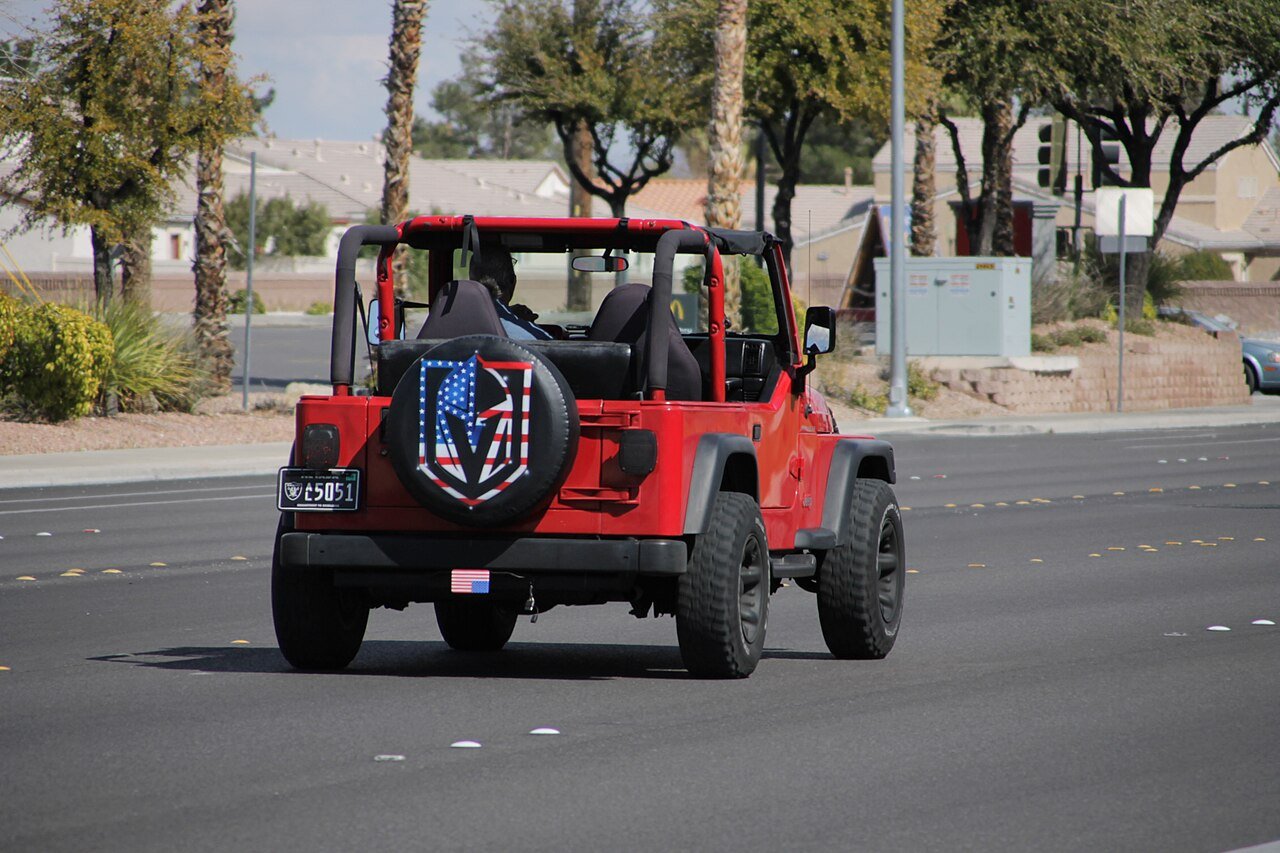
So, do bigger tires change gear ratio?
If you’ve typed “do bigger tires change gear ratio?” into Google, here’s the plain-English answer: yes — effectively. The ring and pinion inside your differential never change; a 3.73 set stays a 3.73 set forever. But your engine, your speedometer, and your right foot all experience the truck as if someone had swapped in taller gears, because every wheel revolution now moves you farther down the road.
That’s why asking “do bigger tires change gear ratio” is really asking about effective gearing — the full relationship between engine RPM and road speed. As engineers sometimes frame it, the tires are almost a third type of gearing: swap to a taller tire size and you’ve changed the gearing, even though no gear was ever touched.
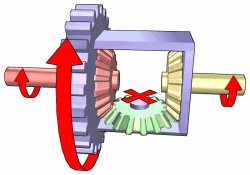
The one formula that explains it
Every version of the question “do bigger tires change gear ratio” comes down to one line of math:
Effective ratio = your real axle ratio × old tire diameter ÷ new tire diameter
That’s it. The diameter ratio is the scaling factor. Swap from 31.5″ tires to 35″: the multiplier is 31.5 ÷ 35 = 0.90, so every axle ratio loses exactly 10% — a 3.73 becomes a 3.36, a 4.10 becomes a 3.69. The percentage change in RPM at any speed is identical: your highway RPM drops 10% too.
Quantified example: 265/70R17 → 35s on a 3.73 truck
A 265/70R17 measures ((265 × 0.70 × 2) ÷ 25.4) + 17 = 31.6″ in diameter:
- Effective ratio after the swap: 3.73 × 31.6 ÷ 35 = 3.37
- Cruise RPM at 65 mph (1:1 gear): 2,578 → 2,328 (250 RPM lower)
- To restore the original feel: 3.73 × 35 ÷ 31.6 = 4.13 → buy 4.10 gears
- Speedometer error: indicated speed now reads low by 10% — 65 mph on the gauge is 72.2 mph actual. Recalibrate with the steps in our speedometer recalibration guide.
Worked example: 31″ → 35″ and the cruise RPM math
The worked example below answers the “do bigger tires change gear ratio” question in real RPM. It uses the classic speed formula — MPH = RPM × tire diameter ÷ (336.13 × total ratio) — rearranged to solve for RPM at 65 mph in 1:1 gear on a 3.73 axle.
| 31″ tires | 35″ tires | |
|---|---|---|
| Cruise RPM at 65 mph | 2,629 | 2,328 |
| Change | — | −300 RPM (−11.4%) |
The arithmetic: RPM = 65 × 336.13 × 3.73 ÷ 31 = 2,629 on the stock tires, and 65 × 336.13 × 3.73 ÷ 35 = 2,328 after the swap. A 300-RPM drop at cruise is an 11.4% change in effective gearing — just past the ~8% line where most drivers start planning a re-gear. It also checks out against the rule of thumb below: four extra inches at roughly 3% per inch predicts about 12%, right in line with the exact 11.4%.
Where the 336.13 constant comes from: one mile is 63,360 inches, so a tire’s revolutions per mile are 63,360 ÷ (π × diameter). Engine RPM then equals revolutions per mile × MPH ÷ 60 × total gear ratio — and the constants collapse to 336.13. It’s the same number every gear-speed chart uses, so you can check any of these results against your own calculator.
Real trucks, real numbers: five common swaps
Every truck below faces the same question — do bigger tires change gear ratio enough to notice? Stock sizes and axle ratios vary by trim, so treat these as representative examples using common combinations, and plug your own numbers into the tire gear ratio calculator. The “restore target” column uses the mirror-image formula and rounds to the ratio you’d actually buy.
| Truck | Stock tire | Axle ratio | Upgrade | Effective ratio | Restore target |
|---|---|---|---|---|---|
| Chevy Silverado 1500 | 31.5″ | 3.42 | 33″ | 3.26 | 3.58 → 3.55 (usually optional) |
| Jeep Wrangler Sport | 31.5″ | 3.45 | 35″ | 3.11 | 3.83 → 4.10 (recommended) |
| Ford F-150 | 33″ | 3.31 | 35″ | 3.12 | 3.51 → 3.55 (consider it) |
| Jeep Wrangler Rubicon | 33″ | 4.10 | 37″ | 3.66 | 4.60 → 4.56 (for 37s, yes) |
| Ram 2500 HD | 33″ | 3.73 | 37″ | 3.33 | 4.18 → 4.10 (recommended) |
Why the “restore target” rounds the way it does: gears are only sold in fixed ratios — common aftermarket sets run 3.55, 3.73, 4.10, 4.56, and 4.88. The formula gives an exact number (say 4.18), but you buy the closest ratio actually manufactured for your axle, which is why the column shows a computed value and the shelf ratio.
Every inch costs you roughly 3%
As a rule of thumb, each additional inch of tire diameter cuts RPM and torque multiplication by about 3–3.5% (more precisely, by 1 ÷ the starting diameter). A two-inch jump is ~6%; the 31.5″ → 35″ jump is 10%. Small changes (one size up, ~3%) are why most people never re-gear for a modest tire upgrade — at that size, the honest answer to “do bigger tires change gear ratio” is: barely.
Quick table: common jumps, quantified
| Tire swap | Diameter change | Effective gearing change | Speedometer error |
|---|---|---|---|
| 31.5″ → 33″ | +4.8% | −4.5% | Reads ~5% low |
| 31.5″ → 35″ | +11.1% | −10.0% | Reads ~10% low |
| 33″ → 35″ | +6.1% | −5.7% | Reads ~6% low |
| 33″ → 37″ | +12.1% | −10.8% | Reads ~11% low |
| 35″ → 37″ | +5.7% | −5.4% | Reads ~5% low |
Remember the asymmetry: a 33→35 jump (6.1% diameter) only changes gearing 5.7%, because the effect scales with 1 ÷ diameter. The first inch off stock always costs the most.
All the downstream effects of the “taller” effective gearing
- Acceleration: slower off the line — the engine’s torque is multiplied less at the wheels. This is the effect drivers notice first.
- RPM at cruise: lower, which sounds like free economy but often backfires (see below).
- Speedometer and odometer: both read low by the tire-percentage change. Your odometer also under-counts miles — it logs 90 miles for every 100 real miles after a 31.5″ → 35″ swap.
- Transmission strain: the engine works harder against the taller gearing, so the transmission downshifts more, runs hotter, and its fluid ages faster — the component most likely to complain.
- Fuel economy: often gets worse, not better. The lower RPM forces the engine to lug below its efficient range, so you use more throttle to hold speed. Combined with the extra rolling resistance and rotational weight of big tires, MPG typically drops 1–3.
- Towing and grades: the truck that pulled fine on stock tires may now struggle on hills because peak torque arrives at a wheel speed you can’t use.
Wider vs taller: only diameter changes gearing
One common confusion: width does not change your effective gear ratio — only diameter does. A 265/70R17 (31.6″) and a 285/65R17 (31.6″) have identical diameters, so gearing is exactly the same. Wider tires still hurt performance, but through a different mechanism: more rolling resistance and more rotational weight to accelerate. When people say “bigger tires killed my MPG,” it’s usually the taller gearing plus the wider, heavier tire working together.
Common mistakes when doing the tire-size math
The gears inside the axle truly don’t change — the question is about effective gearing, not the metal. These are the mistakes that trip people up when they run the numbers:
Mistake 1: trusting the advertised size. A tire sold as a “35” rarely measures a full 35 inches once mounted — published spec sheets often list it a half inch or more under the nominal size. Run your math on the real mounted diameter, or your effective-ratio calculation will come out roughly 1.5–2% optimistic.
Mistake 2: re-gearing only one axle on a 4×4. Front and rear axle ratios must match. Change the rear to 4.10 and leave the front at 3.73, and engaging four-wheel drive will bind the drivetrain — the open differentials can’t absorb a permanent ratio mismatch between axles.
Mistake 3: assuming lower cruise RPM means better MPG. It usually doesn’t — the engine lugs below its efficient range, so you open the throttle more to hold speed. Combined with extra rolling resistance and rotational weight, most trucks lose 1–3 MPG after the swap.
Mistake 4: forgetting the spare and the speedometer. A stock-size spare on a truck with 35s becomes a liability on a 4×4 (mismatched rolling diameters), and the speedometer needs recalibration any time the diameter changes by more than a couple of percent.
The short version: do bigger tires change gear ratio? Not the metal gears themselves — but effectively yes, by the ratio of old tire diameter to new tire diameter. Under about 5% you will barely feel it; past about 8%, plan a re-gear.
When should you re-gear?
Re-gear when the effective ratio falls more than ~8% below what the truck had stock, or whenever the truck tows, hauls, or wheels regularly. The restore formula is the mirror image: new axle ratio = old ratio × new tire diameter ÷ old tire diameter, rounded to the nearest ratio sold for your axle. Tire-size-specific answers: 33-inch tires (often optional), 35-inch tires (usually needed), and the general concept in effective gear ratio.
Measure your real tire diameter before you trust the math
Every number in this guide depends on one input, and it’s the one most people get wrong: the tire’s actual diameter. A tire sold as a 35 often measures 34.2–34.6 inches once it’s mounted, aired up, and carrying the truck’s weight. Run the effective-ratio formula on 35.0 when your tire is really 34.4 and your answer is off by almost 2% — enough to pick the wrong gear set.
Measure it in two minutes: park on flat ground, put a level or straight board across the top of the tire, and measure from the ground to the board’s underside. That’s your loaded diameter. Do it at your normal road pressure, not fresh off the tire machine.
Use that measured number everywhere — in the formula above, in the restore calculation, and when you sanity-check your speedometer against a GPS app. It is the single habit that separates accurate gearing math from guesswork, and it’s the honest starting point for the whole “do bigger tires change gear ratio” question.
Frequently asked questions
Do bigger tires actually change the gear ratio inside the axle?
No. The ring and pinion gears are untouched — a 3.73 set is still a 3.73 set. What changes is the effective ratio: the overall relationship between engine RPM and road speed, which behaves exactly like a numerically lower gear. So: do bigger tires change gear ratio physically? No. Effectively? Yes — every single time.
How much does each inch of tire size change gearing?
About 3–3.5% per inch, computed as 1 ÷ the original diameter. Going from 31.5″ to 35″ (3.5 inches) is a 10% change in effective gearing.
Will bigger tires hurt my transmission?
They increase its workload — more downshifts, more heat, more wear over time. Automatics with plenty of overdrive and a transmission cooler handle it best; a re-gear is the real fix because it restores the load the transmission was designed for.
Does the speedometer always read wrong after bigger tires?
If the speedometer is calibrated to the original tire size, yes — it reads low by the same percentage as the diameter increase. Modern trucks can usually be recalibrated in software; older ones need a different speedometer gear.
Do bigger tires change gear ratio on automatic transmissions too?
Yes — the physics doesn’t care which transmission you have. An automatic just hides the taller effective gearing longer: it downshifts more often and unlocks the torque converter sooner to keep the engine in its powerband. That’s why transmission temperatures climb on trucks with oversized tires, and why a re-gear is the real fix regardless of transmission type.
Do bigger tires change gear ratio enough to need a re-gear?
Once bigger tires change gear ratio by more than about 8%, most drivers re-gear — especially if the truck tows, hauls, or wheels regularly. Swaps under ~5% (one size up) are usually fine as-is. If you’re on the fence, run the restore formula (new ratio = old ratio × new diameter ÷ old diameter) and see whether the target lands far from what you already have.
Quantify your own swap — effective ratio, RPM change, and speedometer error — in the tire gear ratio calculator.