

To understand how gearing affects acceleration, start with a simple fact: gears make a car accelerate harder by multiplying engine torque — at the cost of speed. A 350 lb-ft engine can deliver over 3,000 lb-ft to the wheels in first gear, simply because the gearing multiplies force. This trade between torque and speed is the entire reason transmissions exist.
Torque multiplication: the core math
Every gear reduction multiplies torque by its ratio (minus friction losses of roughly 3–15% per stage):
Wheel torque ≈ engine torque × transmission gear × final drive ratio × efficiency
That is why a small engine in a low gear can move a two-ton truck, while the same engine in top gear can barely pull away from a stop. Every section below is really an answer to one question: how gearing affects acceleration in the situations drivers actually meet.
For the mechanical fundamentals behind this multiplication, Wikipedia’s gear reduction explainer walks through how gear trains trade speed for torque.
Think of it this way: how gearing affects acceleration is really about time — shorter gearing puts the engine’s power peak within reach at lower road speeds, so you spend more of every run near full output.
Worked example: 3,000+ lb-ft at the wheels
Take a pickup with 350 lb-ft of engine torque, a 1st gear of 2.66:1, and a 3.73:1 final drive:
- Overall ratio in 1st = 2.66 × 3.73 = 9.92:1
- Ideal wheel torque = 350 × 9.92 = 3,472 lb-ft
- At ~90% driveline efficiency ≈ 3,125 lb-ft actually reaching the wheels
Now shift to 4th gear (1:1) at the same engine torque: wheel torque ≈ 350 × 3.73 × 0.9 ≈ 1,175 lb-ft. Same engine, same final drive — less than half the acceleration force, but nearly four times the speed at the same RPM. Shorter gears trade speed for shove; taller gears trade shove for speed. Try your own numbers in the gear ratio calculator.
If you want the pure basics first, HowStuffWorks’ guide to how gear ratios work is a solid primer on the speed-versus-torque trade.
Why shorter gearing feels faster — but isn’t “more power”
Here is the critical point: gears cannot create power. Power at the wheels always equals engine power minus friction losses. What gears change is where in the RPM range that power lands relative to road speed. Shorter gearing keeps the engine near its power peak at lower road speeds, so more of the engine’s potential is usable when you need it — off the line, up a grade, or out of a corner.
That is why two identical cars with 3.73 and 4.10 gears (our head-to-head comparison) show different 0–60 times despite identical engines. Keep that distinction in mind — it is the most misunderstood part of how gearing affects acceleration.
Traction math: when shorter gears stop helping
The article’s own numbers reveal the ceiling. Take that 3,125 lb-ft of wheel torque and convert it into actual push at the contact patch. A 31-inch tire has a radius of about 15.5 inches — 1.29 feet — and force equals torque divided by radius: 3,125 ÷ 1.29 ≈ 2,419 lb of forward push.
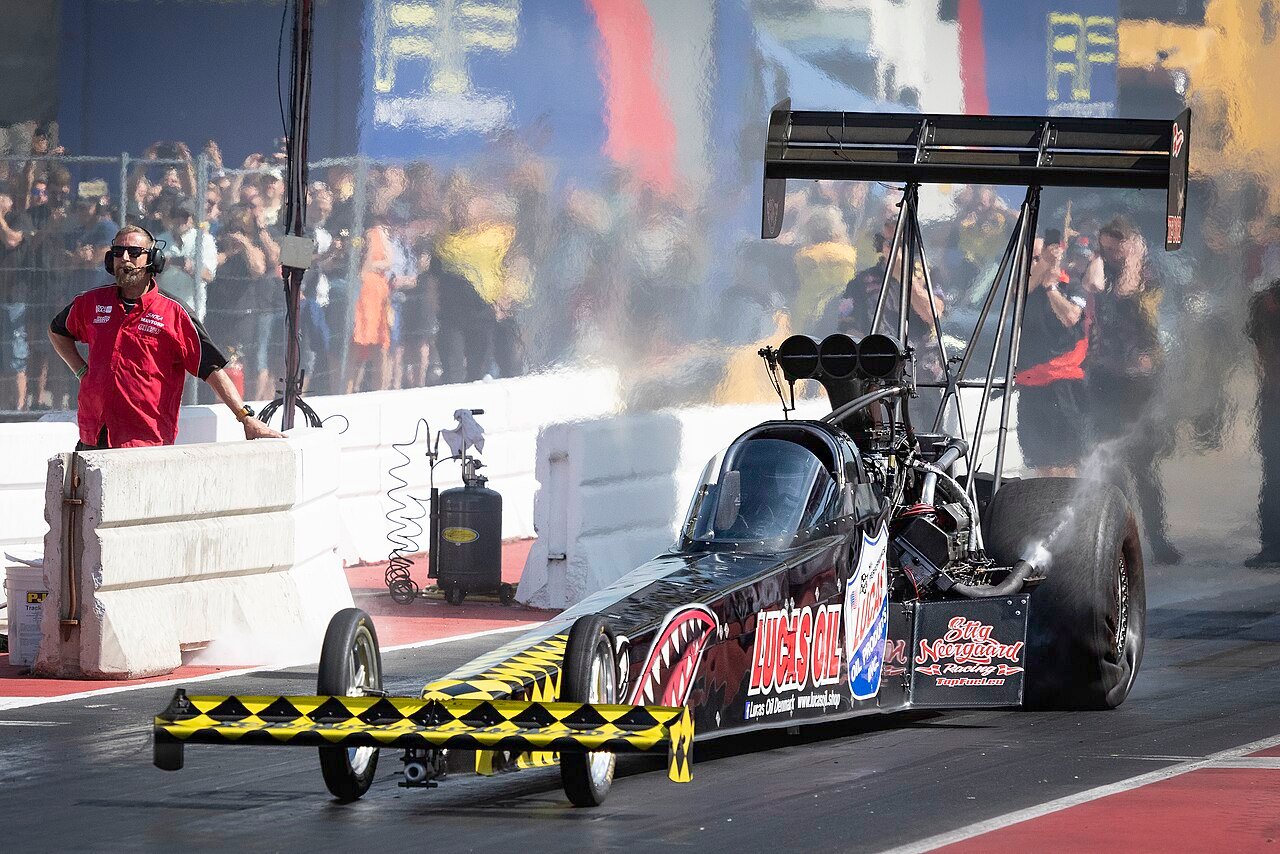
Now compare that with what the tires can actually hold. As the section below shows, grip is roughly weight on the driven wheels × the grip coefficient: 2,000 lb of rear-axle load on a street tire (≈1.0 on dry asphalt) gives about 2,000 lb of usable grip. The gearing delivers 2,419 lb of force to a tire that can only use 2,000 lb — the extra 419 lb becomes wheelspin. No matter how gearing affects acceleration on paper, the tires get the final vote: once you are traction-limited, shorter gears only make more smoke, not more speed.
The flip side is reassuring: in 4th gear that same car delivers about 1,175 lb-ft at the wheels, which is 1,175 ÷ 1.29 ≈ 910 lb of push — well inside the tire’s grip budget, so you can use full throttle without spinning. Short gearing only overworks the tires in the lowest gears, which is exactly why drag racers obsess over launch technique and sticky tires at least as much as ratio choice.
The traction limit
Torque multiplication only helps until the tires give up. The maximum force the tires can put down is roughly weight on the driven wheels × tire grip coefficient. A street tire on dry asphalt (grip ≈ 1.0) under 2,000 lb of rear-axle load can use about 2,000 lb of force — any more just spins the tires. This is why extremely short gearing stops improving launch times: once you are traction-limited, extra torque becomes smoke.
How gearing affects acceleration through the gears: the shift-point worked example
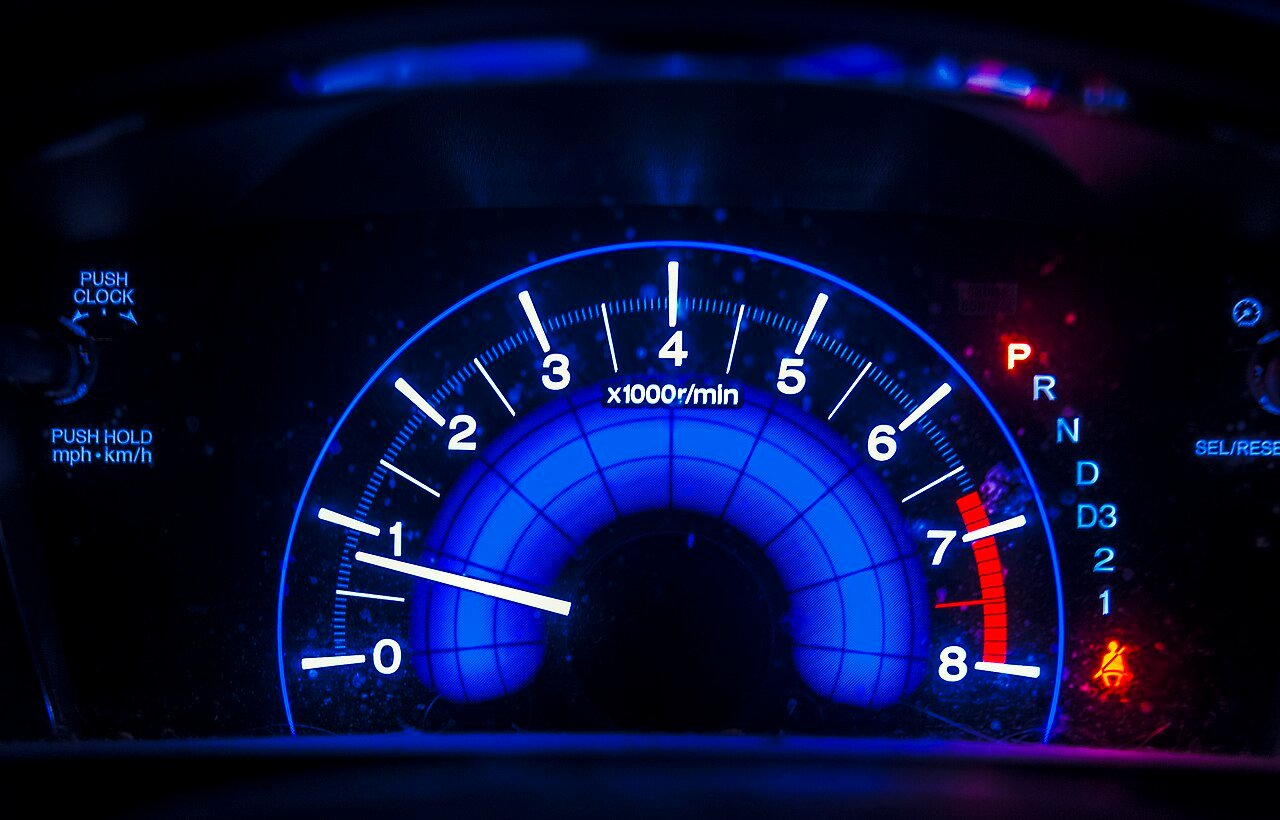
Acceleration does not end in first gear — every upshift drops the engine RPM, and the size of that drop decides whether you land back inside the powerband. The math is simple: landing RPM = shift RPM ÷ gear spread, where the spread is the old gear’s ratio divided by the new gear’s ratio.
Take a 4-speed-style example — 1st 2.66, 2nd 1.97, 3rd 1.46, 4th 1.00 — and shift every gear at 6,500 RPM:
| Shift | Spread | Shift at | Lands at |
|---|---|---|---|
| 1st → 2nd | 2.66 ÷ 1.97 = 1.35 | 6,500 RPM | ≈ 4,815 RPM |
| 2nd → 3rd | 1.97 ÷ 1.46 = 1.35 | 6,500 RPM | ≈ 4,817 RPM |
| 3rd → 4th | 1.46 ÷ 1.00 = 1.46 | 6,500 RPM | ≈ 4,452 RPM |
If your powerband runs from roughly 4,500 RPM to redline, every shift lands you right back in the meat of it — that is the whole point of the exercise. Short-shift at 5,500 RPM instead and the 1→2 change lands near 4,075 RPM, below the band, and the car takes a moment to climb back.
That landing RPM is the whole game when it comes to how gearing affects acceleration across a full run: close-ratio gearboxes simply make each drop smaller, so a peaky engine never falls out of its happy place.
0–60 trade-offs: shifting costs time
Shorter gearing accelerates harder in each gear but runs out of RPM sooner, which can add an extra shift before 60 mph — and every shift costs roughly 0.2–0.3 seconds. That is why the “best” drag-racing gear is often the one that crosses the finish line at the top of a gear, not simply the shortest ratio available. Read more in our drag racing gear guide.
That balance — torque you can use versus time you lose shifting — is how gearing affects acceleration where it counts: on the clock. For the truck world’s take on the same trade-off, MotorTrend’s guide to why people change gear ratios shows how axle swaps play out in the real world.
Power-to-weight still rules
Gearing optimizes how an engine’s power reaches the road, but the power-to-weight ratio sets the ceiling. Two cars with identical power-to-weight will run similar quarter miles when both are geared well; the one with better gearing just gets there with less drama. Gearing is the tuning knob, not the engine.
Power-to-weight decides how much speed is possible; how gearing affects acceleration decides how much of that potential you can actually use at the speed you are traveling.
Gearing vs the powerband: why short gears win off the line
Engines make peak power only in a narrow RPM band. Shorter gearing keeps the engine inside that band at lower road speeds, so when you floor it from a stop, the engine is already working near its best. That is the real secret behind “gears make you faster”: it is not more power, it is more usable power at the speed you need it. This is also why close-ratio gearboxes exist — tighter gear spacing keeps a peaky engine in its band through every shift.
That is the essence of how gearing affects acceleration: not more power, but more of the engine’s best work delivered at the road speeds where you need it most.
Real-world comparison: same car, two axles
Take two identical cars with 300 hp, one with 3.42 gears and one with 4.10s. The 4.10 car gets roughly 20% more wheel torque in every gear (4.10 ÷ 3.42 = 1.199) and will pull ahead through the first two gears. But it also runs out of RPM ~20% sooner, adding a shift the 3.42 car might not need before 60 mph. On a quarter mile, the 4.10 car usually wins — on a top-speed run, the 3.42 car walks away. Neither setup “makes more power”; they just spend the same power differently. Compare the two directly in our 3.73 vs 4.10 breakdown.
Neither setup makes more power — the difference is simply how gearing affects acceleration by spending the same power differently.
Electric cars: why one gear is enough
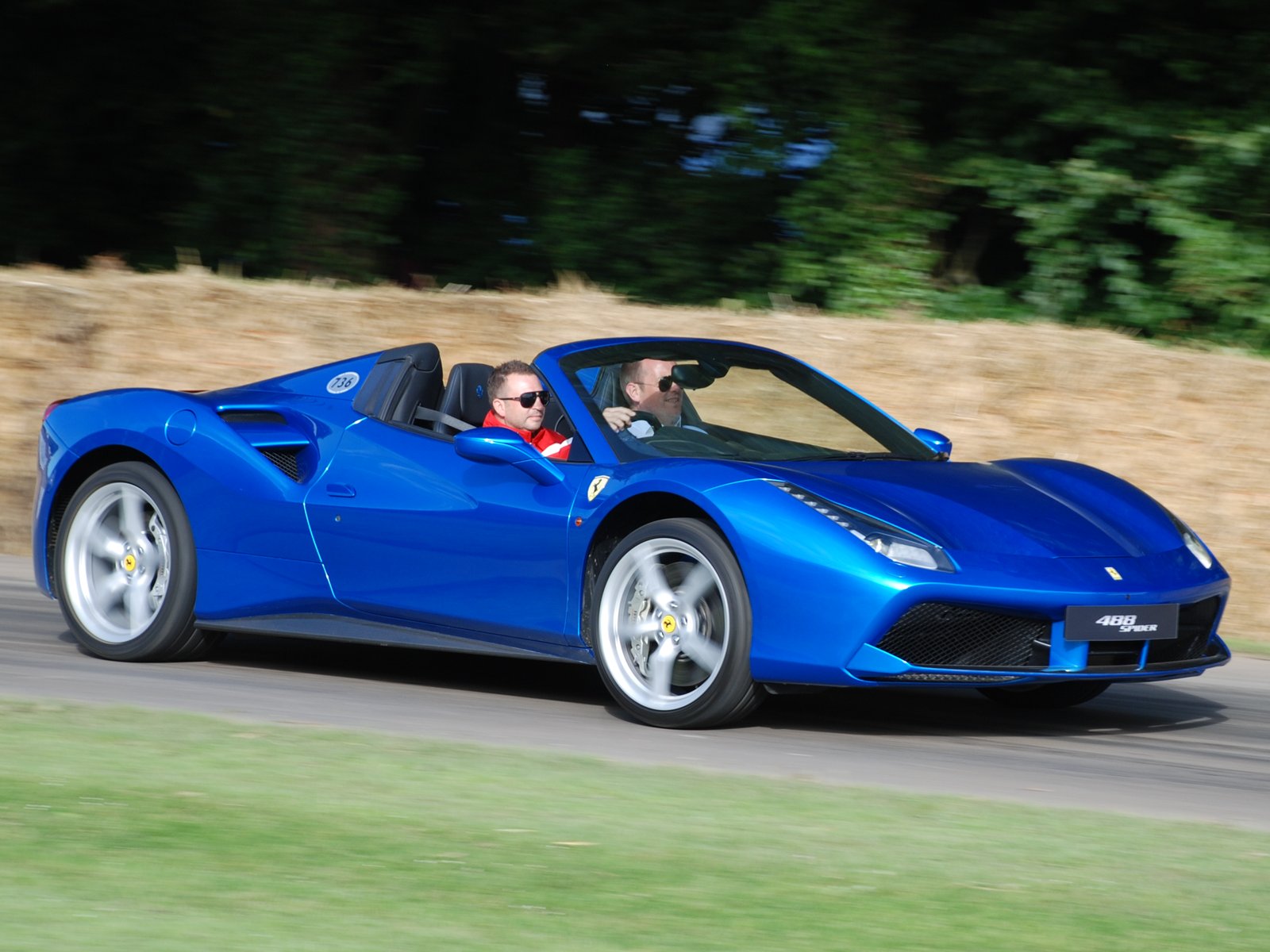
Electric cars throw out the whole multi-gear playbook because their motors behave nothing like gas engines. An electric motor makes peak torque from zero RPM and keeps pulling strongly across a huge RPM range — so instead of five or six ratios to stay inside a narrow powerband, one fixed reduction does the whole job. Most production EVs use a single-speed reduction of roughly 8–10:1; the Tesla Model 3 runs 9.03:1 per Tesla’s own owner’s manual, and the original Roadster ran 8.2752:1.
The trade-off is baked in: one ratio must serve both launch and top speed, so engineers pick a number that launches hard and accept whatever top speed falls out. In an EV, how gearing affects acceleration is wonderfully simple — one fixed ratio, no shifting, no shift-time losses — and it is why a family sedan can out-launch a sports car off the line without a single gear change.
Frequently asked questions
Do lower gears make a car faster?
They make it accelerate harder (quicker 0–60) but reduce top speed. “Lower” here means numerically higher ratios like 4.10 — confusingly, the ratio number goes up while the gearing is called “lower.”
Can gears increase horsepower?
No. Horsepower at the wheels can never exceed engine horsepower minus losses. Gears only change the torque-vs-speed balance.
Why does my car feel slower after bigger tires?
Taller tires lengthen your effective gearing — the engine’s torque is spread over more road per revolution. See how bigger tires change gearing and how re-gearing restores the lost punch.
What matters more for acceleration: gearing or power-to-weight?
Power-to-weight sets the potential; gearing decides how much of it you can use at a given speed. Both matter, which is why race teams obsess over both.
Why do diesels pull hard with tall gears?
Diesels make huge torque at very low RPM and their torque curve is flat, so they do not need deep multiplication to launch — a modest gear gives them all the wheel torque they need, and tall gears keep the engine inside its narrow RPM range at cruising speed. Tall gearing on a diesel is not a compromise; it matches the engine’s character.
Does gearing change wheel horsepower?
No. Power is torque × RPM, and gears only re-divide the two — more torque at the wheels always means fewer wheel RPM for the same engine RPM, minus friction losses. Wheel horsepower can never exceed engine horsepower. That trade — never a gain, only a different split — is the core of how gearing affects acceleration.
Model the trade yourself: the gear ratio calculator shows wheel torque and speed for any combination of gears, RPM, and tire size — and the power-to-weight calculator shows what the engine is working with.