

Wondering what is a good power to weight ratio for your car, truck, or motorcycle? A daily-driven car is in great shape at around 14–18 lb per horsepower (roughly 125–160 hp per tonne) — strong enough for easy merging and overtaking without hurting fuel economy. Sporty cars live at 8–13 lb/hp, supercars at 4.5–6.5, and anything under about 3 lb/hp is race-car territory. The lower the number, the faster the vehicle can accelerate.
The number is simple division: weight ÷ power. A 3,400 lb car with 190 hp gives 3,400 ÷ 190 = 17.9 lb/hp. Flip it and you get horsepower per pound (190 ÷ 3,400 = 0.056 hp/lb). Both describe the same car — US car culture mostly talks lb/hp, the UK and Europe mostly talk hp per tonne.
What is a good power to weight ratio by vehicle type?
The honest answer is that what is a good power to weight ratio depends on what the vehicle has to do. A family sedan, a work truck, and a sportbike can all be “good” at wildly different numbers, because the job — commuting, towing, or chasing lap times — sets the bar. The tables below use real, representative vehicles with published specs so you can see exactly where yours lands.
Cars: from economy runabout to hypercar
So what is a good power to weight ratio for a car? For a daily driver, 14–18 lb/hp is the sweet spot — relaxed, efficient, and never strained. Drop under 10 lb/hp and the car feels genuinely quick; at 6 lb/hp or below you’re in supercar territory. Here’s how real cars stack up, using curb weight and rated horsepower:
| Vehicle | Weight | Power | lb/hp | hp/tonne |
|---|---|---|---|---|
| Toyota Corolla | 3,060 lb | 169 hp | 18.1 | 122 |
| Honda Civic | 2,935 lb | 180 hp | 16.3 | 135 |
| Mazda MX-5 Miata | 2,366 lb | 181 hp | 13.1 | 169 |
| Ford Mustang GT | 3,827 lb | 486 hp | 7.9 | 280 |
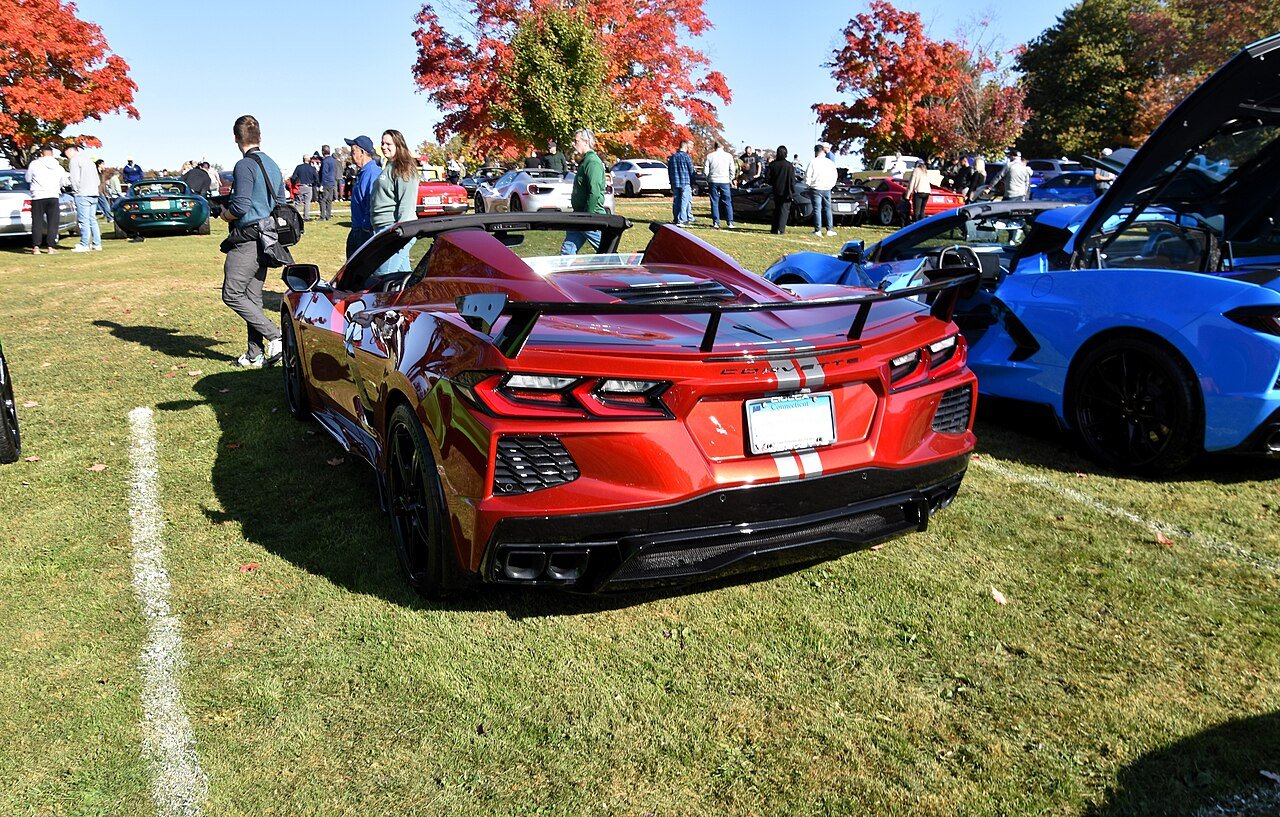
| Chevrolet Corvette Stingray | 3,535 lb | 495 hp | 7.1 | 309 |
| Ferrari 488 | 3,377 lb | 661 hp | 5.1 | 432 |
| Bugatti Chiron | 4,360 lb | 1,500 hp | 2.9 | 758 |
| Formula 1 car | 1,759 lb | ~1,000 hp | ~1.8 | ~1,250 |
Notice the Miata: just 181 hp, yet its 13.1 lb/hp lands it in genuinely sporty territory — lightness is free performance. The Mazda MX-5’s published specs (2,366 lb, 181 hp) make it the classic example of how a modest engine in a light car beats a big engine in a heavy one.
Why trucks live at different numbers
Ask what is a good power to weight ratio for a truck and the scale shifts completely. Pickups and semis are judged on towing and hauling, not 0–60 times — and torque, gearing, and cooling matter far more than the raw ratio. A diesel pickup at 20 lb/hp will out-tow a sports car at 8 lb/hp every single day, because the truck’s engine makes its torque low in the rev range and its gears multiply it:
| Vehicle | Weight | Power | lb/hp | hp/tonne |
|---|---|---|---|---|
| Ford F-150 (2.7L gas) | 4,391 lb | 325 hp | 13.5 | 163 |
| Ram 1500 EcoDiesel | 5,350 lb | 260 hp | 20.6 | 107 |
| Ford F-250 Super Duty (6.7L diesel) | 6,200 lb | 500 hp | 12.4 | 178 |
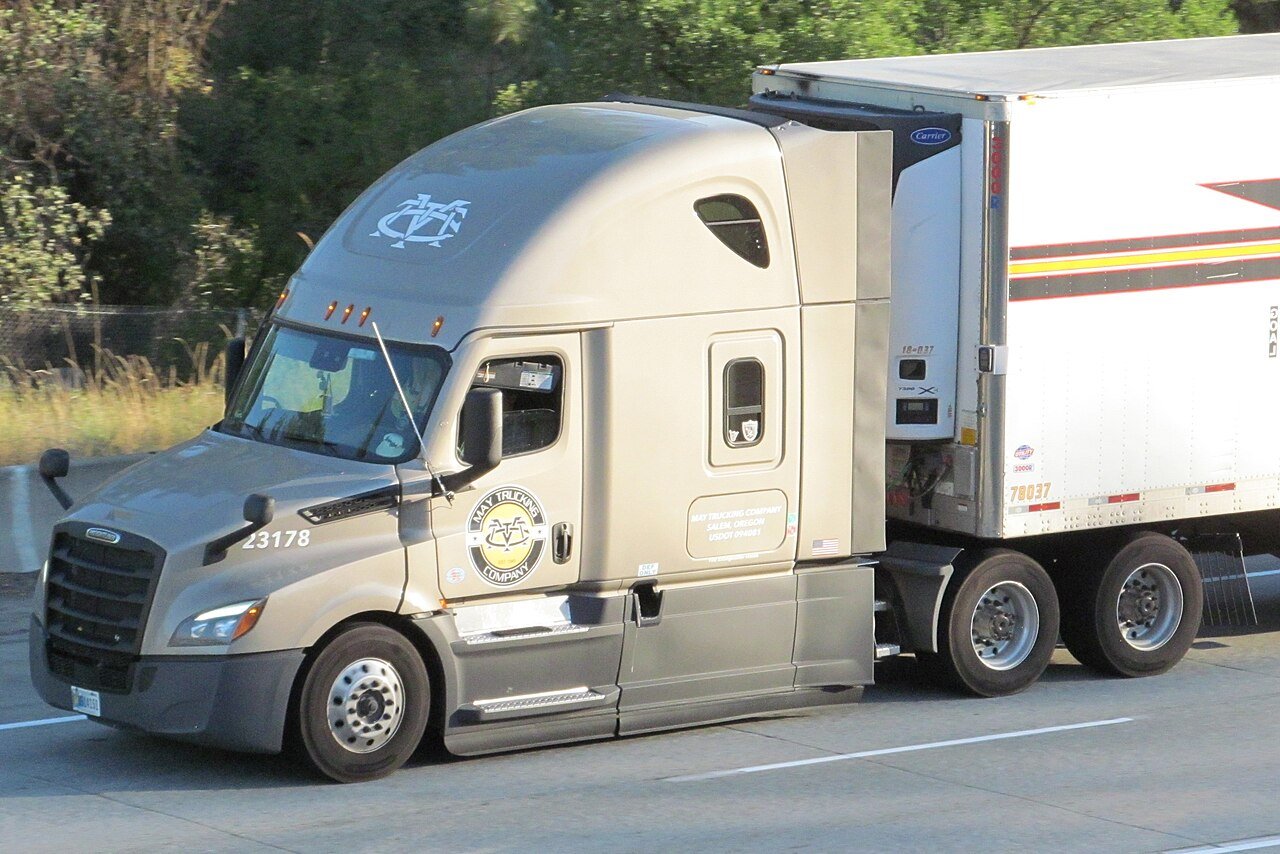
| Loaded semi (80,000 lb GCW) | 80,000 lb | 500 hp | 160 | 14 |
That last row is the whole point: a loaded semi at 160 lb/hp still cruises at highway speed all day, because holding speed is a battle against aerodynamic drag, not weight. And the Ram’s 260 hp looks weak on paper until you see its 480 lb-ft of diesel torque — torque gets the trailer moving, horsepower keeps it moving. So when someone asks what is a good power to weight ratio for towing, the honest answer is: the ratio matters less than the torque curve.
Motorcycles: supercar numbers on two wheels
If what is a good power to weight ratio seems like a car question, motorcycles will recalibrate your sense of scale. With no roof, doors, or crash structure to carry, even a modest bike posts numbers a supercar owner would envy — and the fastest ones live where Formula 1 lives:
| Motorcycle (with rider) | Weight | Power | lb/hp | hp/tonne |
|---|---|---|---|---|
| Kawasaki Ninja 400 | 366 lb | 45 hp | 8.1 | 271 |
| Typical cruiser | 700 lb | 90 hp | 7.8 | 283 |
| Honda CBR600RR | 432 lb | 113 hp | 3.8 | 577 |
| Yamaha YZF-R1 | 452 lb | 197 hp | 2.3 | 961 |
Weights include the rider — on a bike the rider can be a quarter of the total, so leaving them out makes the numbers lie. Our motorcycle power-to-weight guide breaks this down in full, including why a 45 hp beginner bike still out-accelerates most cars.

Power-to-weight ratio bands: where does your vehicle land?
Read the bands table below as the quick answer to what is a good power to weight ratio for any vehicle — find your lb/hp, and the row tells you its character.
| lb per hp | hp per tonne | Character | Typical vehicles |
|---|---|---|---|
| 18–24 | 90–125 | Sensible daily driving | Economy cars, small crossovers |
| 14–18 | 125–160 | Balanced and easy to live with | Family sedans, small SUVs |
| 10–13 | 170–225 | Brisk road car | Hot hatches, entry sports sedans |
| 8–10 | 225–280 | Strong acceleration | Sports cars, muscle cars |
| 4.5–6.5 | 340–500 | Very fast | Supercars, track specials |
| 1.5–3 | 750–1,500 | Race car | Hypercar, Formula 1 |
Convert between them: hp per tonne = (1 ÷ lb/hp) × 2,204.62. So 17.9 lb/hp = 0.0559 hp/lb = about 123 hp/tonne.
Worked examples: three very different vehicles
These three real vehicles show what a good power to weight ratio looks like in practice at different points on the scale — run your own numbers through the calculator link below and compare:
- Family sedan: 3,400 lb, 190 hp → 3,400 ÷ 190 = 17.9 lb/hp (123 hp/tonne). Adequate everywhere, relaxed on the highway.
- Performance coupe: 3,200 lb, 460 hp → 3,200 ÷ 460 = 7.0 lb/hp (317 hp/tonne). Serious acceleration with traction to use it.
- Liter sportbike (with rider): 625 lb total, 200 hp → 625 ÷ 200 = 3.1 lb/hp. Supercar-beating acceleration from half the weight — this is why bikes feel violent. See our motorcycle power-to-weight guide for the full breakdown.
How to read your own car’s number
Now that you know what is a good power to weight ratio, here’s how to place your own number honestly. First, use curb weight plus a driver and typical cargo — a 180 lb driver turns that 3,400 lb / 190 hp sedan into 3,580 ÷ 190 = 18.8 lb/hp, a small but real shift. Second, compare rated horsepower to rated horsepower, or wheel horsepower to wheel horsepower — never mix the two, because drivetrain losses eat roughly 10–20% between the crankshaft and the tires.
Third, remember the number describes potential, not delivery. A 9 lb/hp car on skinny all-season tires won’t out-launch a 12 lb/hp car on sticky rubber with a good launch-control system. The ratio tells you what the powertrain can do; tires, gears, and aero decide how much of it actually reaches the road.
Why a lighter car can beat a more powerful one
Take two sedans: Car A makes 350 hp but weighs 3,500 lb (10.0 lb/hp); Car B makes 300 hp but weighs 2,700 lb (9.0 lb/hp). Despite giving up 50 hp, Car B accelerates harder because each horsepower has less mass to move. This is also why a Mazda Miata feels quick at 181 hp while a 300-hp luxury SUV can feel sleepy — the ratio is what your body actually feels.
Want your own number in seconds? Run it through the power-to-weight ratio calculator — it gives you lb/hp, hp/lb, and hp/tonne in one shot. One more modern example: a dual-motor EV sedan at 4,065 lb and 450 hp gives 4,065 ÷ 450 = 9.0 lb/hp — sports-car territory on paper, and the instant electric torque makes it feel even stronger off the line than the number suggests.
Power-to-weight vs power-to-drag: the top-speed split
Power-to-weight predicts acceleration almost perfectly at low speed — but top speed is a different contest, decided by power versus aerodynamic drag, not weight. That’s why a 197 hp sportbike with a 2.3 lb/hp ratio demolishes a 495 hp Corvette to 60 mph, yet the Corvette’s slippery body lets it reel the bike in past 150 mph: the rider is punching a much bigger hole in the air. That split is why what is a good power to weight ratio for acceleration is not the same number as what wins on top speed.
The physics is brutal: drag grows with the square of speed, so doubling your top speed takes roughly eight times the power — the cube-root rule. Chasing top speed is an expensive game; chasing acceleration is where lightness pays. Wikipedia’s power-to-weight ratio article has the full formal treatment, including engine-only examples from turbines to rockets.
The number isn’t everything: traction, gearing, and aero
- Traction caps it. A 3 lb/hp car can’t use full power in first gear on street tires — it just spins. All-wheel drive, wide sticky tires, and launch control are how big numbers actually reach the pavement.
- Gearing multiplies torque. A short final drive makes the wheels hit harder at low speed; a tall overdrive makes the same power relaxed at cruise. The ratio tells you the engine’s potential — gearing decides how it hits the wheels.
- Aero rules at speed. Power-to-weight predicts low-speed punch almost perfectly, but above ~100 mph aerodynamic drag dominates. That’s why a slippery sedan can reel in a draggy bike past triple digits.
Can you improve your power-to-weight ratio?
Yes — and it only goes two directions: lose weight or add power. Stripping 100 lb off that 3,400 lb / 190 hp sedan gives 3,300 ÷ 190 = 17.4 lb/hp; adding 10 hp instead gives 3,400 ÷ 200 = 17.0 lb/hp. Weight loss is usually the cheaper win: lighter wheels, a smaller battery, and clearing junk out of the trunk all count.
On the power side, forced induction is the classic move — HowStuffWorks explains how a turbocharger raises an engine’s output, and its power-to-weight ratio, without adding much weight. Knowing what is a good power to weight ratio for your vehicle type is the starting point; the second step is deciding which side of the fraction to attack. For the full playbook, see our guide to improving power-to-weight ratio.
Cyclists measure it differently: watts per kilogram
In cycling the convention is watts per kilogram of body weight (W/kg) — power from a power meter divided by the rider’s weight, usually at FTP (the power you can hold for about an hour). A 75 kg rider holding 250 W with an 8 kg bike is 250 ÷ 83 = 3.0 W/kg — a strong recreational number.
Benchmarks: 2–3 W/kg is typical for committed amateurs, 4–5 for competitive racers, and 6+ for professionals. On a climb, W/kg predicts speed almost as cleanly as lb/hp predicts car acceleration — gravity, like mass, doesn’t negotiate. Different sport, same question — what is a good power to weight ratio is asked in watts per kilo instead of pounds per horsepower.
Calculating it yourself in each convention
All three common units come from the same two numbers — a 3,000 lb (1,361 kg) car with 200 hp:
- lb/hp (US): 3,000 ÷ 200 = 15.0 lb/hp — lower is better
- hp/lb: 200 ÷ 3,000 = 0.0667 hp/lb — higher is better
- hp per tonne (UK/EU): 200 ÷ 1.361 = 147 hp/tonne — higher is better
Use curb weight for fair comparisons between cars, and always include the rider for motorcycles. Mixing conventions — comparing one car’s curb-weight number against another’s gross-weight number — is the most common way these discussions go wrong.
Frequently asked questions
Is a higher or lower power-to-weight ratio better?
Lower is better (in lb/hp): less weight for each horsepower means quicker acceleration. In hp per tonne the opposite holds — higher is better, because there’s more power for each tonne.
What is a good power to weight ratio for a beginner driver?
Around 15–20 lb/hp (110–150 hp/tonne) is ideal to learn on — responsive enough to be fun, forgiving enough to stay out of trouble. Many graduated-license schemes cap learners at about 130 kW/tonne (roughly 174 hp/tonne).
Does power-to-weight ratio affect top speed or just acceleration?
Mostly acceleration. Top speed is decided by power versus aerodynamic drag; weight barely matters there. But the ratio is the single best predictor of 0–60 mph times.
Should I compare curb weight or weight with driver?
Use the same basis for every vehicle you compare — curb weight is the usual convention for cars. For motorcycles and race cars, always include the rider/driver, because they can be 25–30% of the total.
Can I improve my car’s power-to-weight ratio?
Easily. Every 100 lb you remove is worth real pace: on a 3,400 lb car with 190 hp, dropping to 3,300 lb moves you from 17.9 to 17.4 lb/hp — about the same gain as adding 5 hp (3,400 ÷ 195 = 17.4). Lighter wheels and less cargo are the free wins; forced induction is the big paid one — either way, knowing what is a good power to weight ratio target keeps the spending honest.
Does power-to-weight ratio matter for towing?
Less than you’d think. Towing is decided by torque, gearing, cooling, and chassis ratings — which is why a 20 lb/hp diesel pickup tows circles around a sports car at 8 lb/hp. The ratio still predicts how briskly the truck accelerates with the trailer attached, but the tow rating itself comes from a much longer checklist.
At the end of the day, what is a good power to weight ratio comes down to the job: 14–18 lb/hp for a happy daily driver, under 10 for real fun, and single digits for the wild stuff. Curious where you stand? The free power-to-weight ratio calculator handles cars, bikes, and trucks in both imperial and metric units.