

The motorcycle power to weight ratio is the single number that explains why two wheels feel so violent — a typical 1,000cc sportbike with its rider aboard sits around 3 lb per horsepower, a figure most supercars can’t touch. That’s the whole secret: not exotic horsepower, but the near-absence of weight. And it’s why a 200-hp motorcycle can humiliate a 600-hp car in a straight line — at least until the rider runs out of traction or nerve.
The worked example that explains everything
Take a 450 lb sportbike making 150 hp. Bike-only ratio: 450 ÷ 150 = 3.0 lb/hp. Now add the 180 lb rider the spec sheet conveniently forgot: 630 ÷ 150 = 4.2 lb/hp. The rider alone worsened the ratio by 40%. On a motorcycle, the human is a quarter of the total mass — no car driver’s weight swing comes close, which is why every honest motorcycle power to weight ratio must be calculated with the rider included.
(See Wikipedia’s page on power-to-weight ratio for the formal physics definition.)
Check the math yourself in the power-to-weight ratio calculator — toggle rider weight in and out and watch the number move.
Motorcycle power-to-weight by class (with 180-lb rider)
| Class | Typical hp | Wet weight | lb/hp (bike only) | lb/hp (with rider) |
|---|---|---|---|---|
| 400cc entry sportbike | 45 | 390 lb | 8.7 | 12.7 |
| Middleweight twin (e.g. 660-class) | 105 | 403 lb | 3.8 | 5.6 |
| 1,000cc superbike | 200 | 445 lb | 2.2 | 3.1 |
| Big naked / streetfighter | 150 | 465 lb | 3.1 | 4.3 |
| Heavy cruiser | 95 | 700 lb | 7.4 | 9.3 |
Figures are class-typical (wet weight, claimed crank hp) — individual models vary. A 400cc entry bike with its rider is a 12.7 lb/hp family-sedan equivalent; a liter bike at 3.1 is faster than any production supercar on paper. Sport-touring and adventure bikes sit between the naked and cruiser rows — for example, a 175-hp, 580-lb adventure bike with a 180-lb rider is 760 ÷ 175 = 4.3 lb/hp, quick but built for all-day comfort rather than lap times.
Real bikes: motorcycle power to weight ratio figures
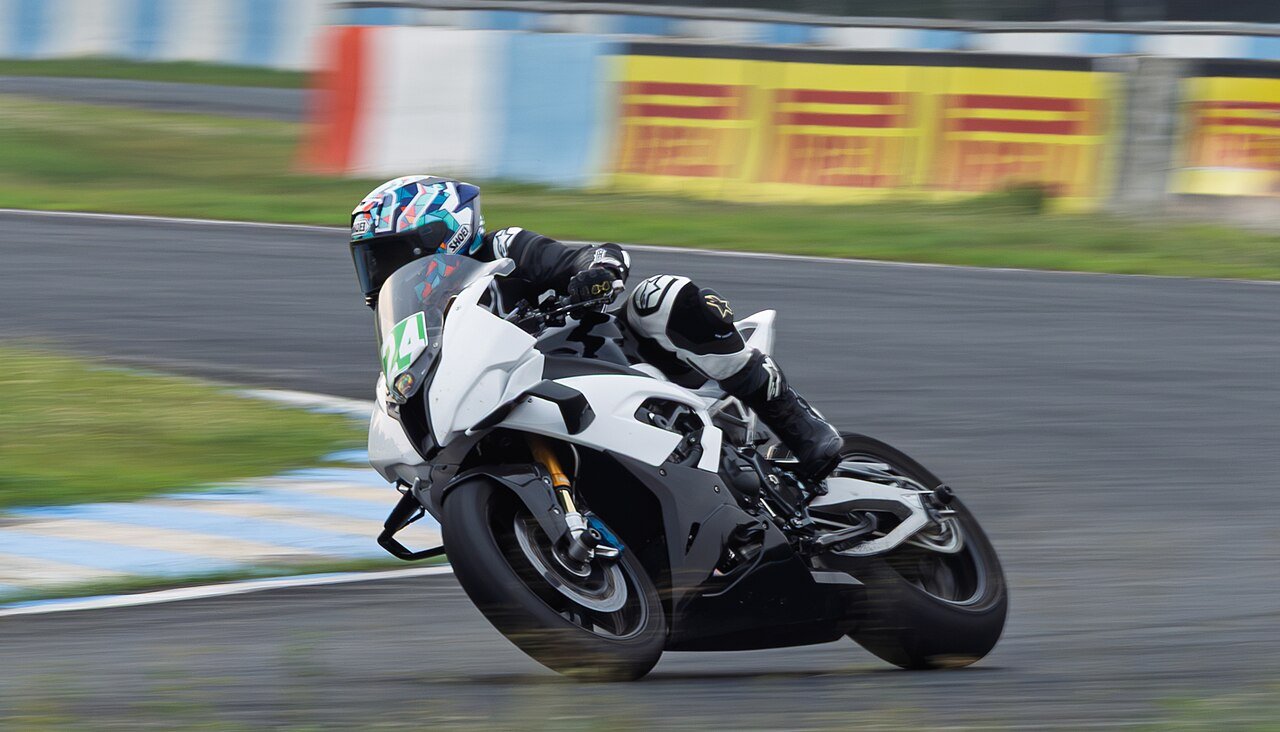
Class averages are useful, but real bikes sharpen the picture. Here are motorcycle power to weight ratio figures for eight well-known bikes, using manufacturer-claimed crank horsepower and wet weight (US-market figures, approximate — individual model years vary):
| Bike | Claimed hp | Wet weight | lb/hp (bike only) | lb/hp (with 180-lb rider) |
|---|---|---|---|---|
| Kawasaki Ninja 400 | 49 | 366 lb | 7.5 | 11.1 |
| Honda CBR500R | 47 | 423 lb | 9.0 | 12.8 |
| Yamaha MT-07 | 74 | 406 lb | 5.5 | 7.9 |
| Honda CBR600RR | 113 | 410 lb | 3.6 | 5.2 |
| Yamaha YZF-R1 | 197 | 443 lb | 2.2 | 3.2 |
| BMW S1000RR | 205 | 434 lb | 2.1 | 3.0 |
| Suzuki Hayabusa | 187 | 582 lb | 3.1 | 4.1 |
| Harley-Davidson Iron 883 (Sportster) | 50 | 564 lb | 11.3 | 14.9 |
The spread in this motorcycle power to weight ratio table is the whole story of motorcycling in numbers. The S1000RR at 3.0 lb/hp with its rider is twice as quick on paper as a Hayabusa at 4.1 — and the Hayabusa is in turn three times quicker than a Sportster at 14.9. Meanwhile the humble Ninja 400 (366 lb wet, per Kawasaki’s official spec sheet) lands at 11.1 with the rider — right in the beginner sweet spot below, despite being the cheapest bike on the list.
Two honest caveats. First, these are claimed crank horsepower figures — real rear-wheel numbers run 8–12% lower after drivetrain losses, though the ranking order barely changes. Second, wet weight assumes a full tank, so a half-empty bike is a slightly faster bike. The ratio is a comparison tool, not a dyno reading.
Why the motorcycle power to weight ratio matters more on bikes than cars
A 180 lb rider on a 445 lb superbike is 29% of the moving system. The same rider in a 3,500 lb sedan is about 5%. That single asymmetry is why the motorcycle power to weight ratio deserves its own treatment: on a car it’s a statistic, on a bike it’s the ride itself.
Weight savings hit harder too. Dropping 10 lb from a 620 lb bike-plus-rider system improves everything by 1.6%; the same 10 lb off a 3,800 lb car is a rounding error at 0.26%. That’s why racers spend thousands on magnesium wheels and titanium bolts — and why your body weight, unlike any bolt-on part, moves the needle for free.
It also explains why bikes feel the way they do. A superbike’s 3.0 lb/hp doesn’t just mean fast — it means throttle response violent enough to demand respect in every gear. No production car delivers that sensation at any price, because no production car is built around a 600 lb core.
Sportbike vs naked vs cruiser vs ADV: the ratio tells the real story
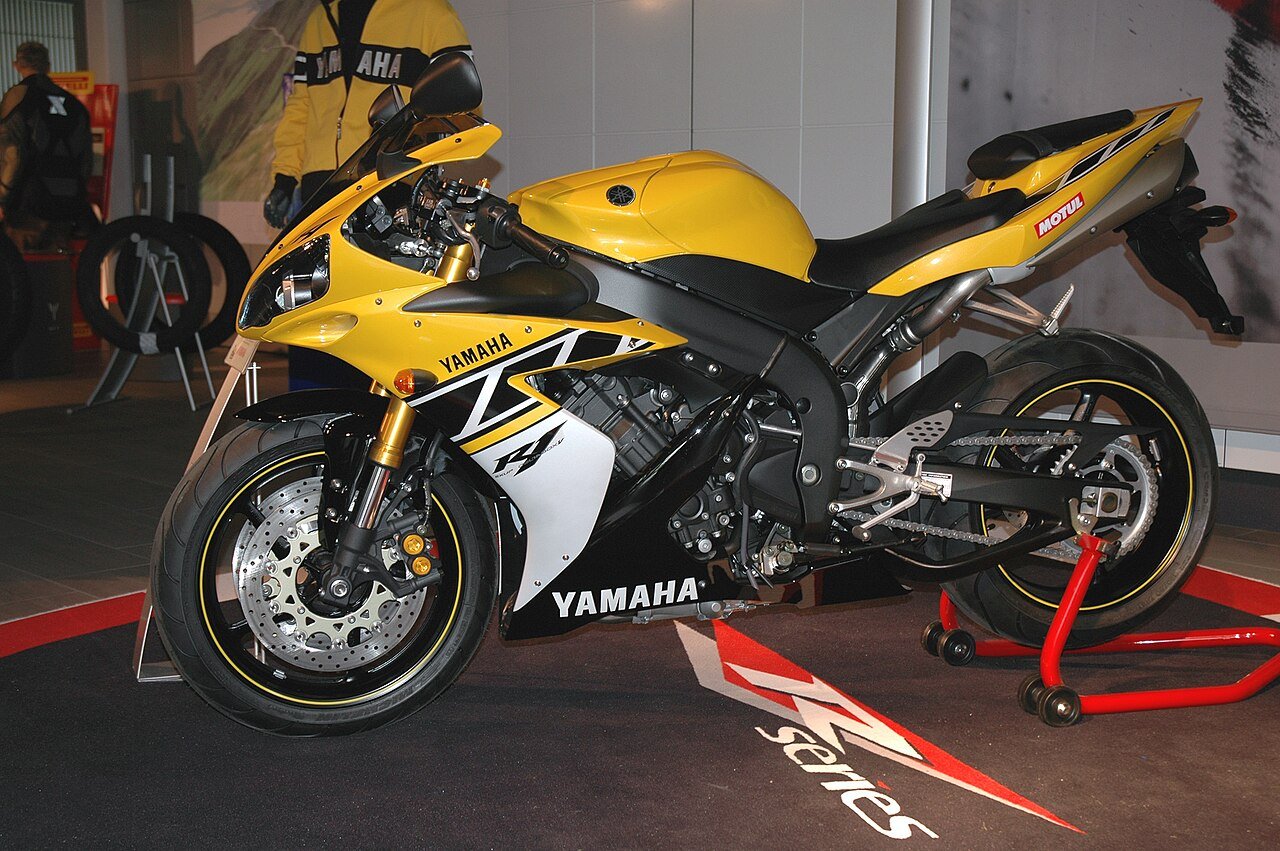
Compare the rows and each category’s philosophy becomes visible. Sportbikes chase the motorcycle power to weight ratio like nothing else — the S1000RR and R1 sit at 2.1–2.2 lb/hp before the rider because lap times reward nothing else. Nakeds like the MT-07 give up the chase at 5.5, trading clip-ons and full fairings for an upright position and a lower price; on the street, that gap matters far less than the spec sheet suggests.
Cruisers don’t play the game at all. The Iron 883’s 11.3 lb/hp looks hopeless next to a middleweight twin — but cruisers sell torque feel, sound, and style, and their riders aren’t drag-racing anyone. Judging a cruiser by its ratio is like judging a pickup by its lap time: technically possible, spiritually wrong.
Adventure bikes are the interesting middle ground. The 175-hp, 580-lb example from the class table lands at 4.3 lb/hp with the rider — superbike-adjacent pace wrapped in all-day comfort and luggage. The ratio proves you don’t need a torture-rack riding position to go very, very fast.
So why don’t bikes win everything? Traction and aero
- The launch is traction-limited. A 3 lb/hp bike can’t use full power until third gear on the street — it wheelies or spins instead. All that potential waits for speed to catch up with it.
- Aerodynamics are terrible. An upright rider is a barn door. At 150+ mph a bike needs far more power per pound than a slippery car to keep accelerating — this is where cars reel bikes back in.
- Gearing is the other half of the story. Short, close-ratio gearboxes multiply the engine’s torque hard in the lower gears, which is what makes a 600cc bike feel explosive. Changing sprockets reshapes the whole character — see the motorcycle sprocket gearing guide for the math.
- Weight distribution matters too. Bikes are light enough that braking and cornering also transform with the ratio — it’s the same reason racers obsess over grams.
The A2 licence: Europe’s legal cap on the ratio
In much of the world, the motorcycle power to weight ratio isn’t just physics — it’s law. The European A2 licence caps riders at 35 kW (47 hp) and a power-to-weight ratio of 0.2 kW/kg. At full power, that means a 47-hp bike must weigh at least 175 kg (385 lb): 35 ÷ 0.2 = 175.
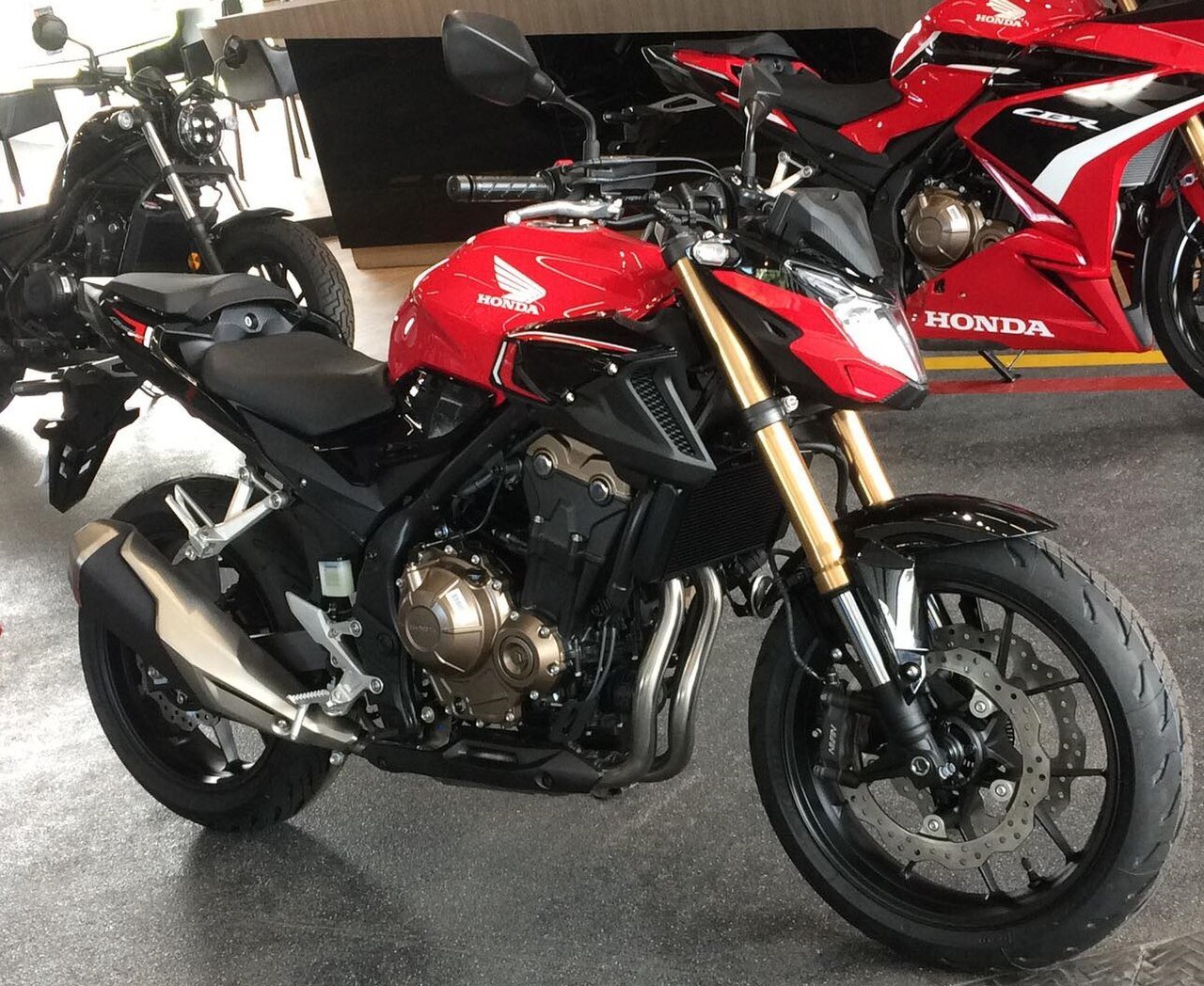
The clever part is the anti-loophole rule: you can’t just restrict a superbike down to 47 hp, because a restricted bike must not be derived from a machine making more than twice the limit (70 kW, about 94 hp). That’s exactly why manufacturers built 45–47 hp natives — the EU-market Ninja 400 makes 45 hp on purpose, and the CBR500R’s 47 hp is no coincidence. See Visordown’s breakdown of what the A2 licence can and can’t restrict for the full rules.
And here’s the satisfying part: the CBR500R’s with-rider figure of 12.8 lb/hp sits squarely in the 10–13 beginner sweet spot below. The law, almost by accident, lands new riders exactly where they should be.
What this means for choosing a bike
Don’t shop horsepower alone: a 105-hp middleweight at 5.6 lb/hp (with rider) is faster in the real world than a 95-hp, 700-lb cruiser at 9.3 — and far friendlier to learn on than a liter bike at 3.1. For a first bike, the 10–13 lb/hp band is the sweet spot: quick enough to be fun, calm enough to survive mistakes. Compare that with the car benchmarks in what makes a good power-to-weight ratio to see how the two worlds overlap.
Use the real-bikes table above as your cheat sheet: find which band your shortlist lives in before you fall in love with a headline horsepower number. The bike with the better ratio is almost always the faster bike — the only question is whether you want that speed wrapped in clip-ons, a flat bar, or floorboards. That is the practical use of the motorcycle power to weight ratio: a five-second filter that cuts through marketing.
The rider is the cheapest modification
Exhaust systems and carbon wheels cost hundreds per pound saved — but rider weight is free to lose. On our 450 lb / 150 hp example with a 180 lb rider (630 lb total, 4.2 lb/hp), the rider dropping 20 lb gives 610 ÷ 150 = 4.1 lb/hp.
To match that with power alone you’d need about 155 hp (630 ÷ 155 = 4.06) — a 5 hp exhaust-and-tune gain that would cost real money. On a motorcycle, losing 20 lb of rider is roughly equivalent to gaining 5 hp, and it also helps braking and cornering. No bolt-on part offers that value.
Electric bikes rewrite the math
Electric superbikes carry heavy batteries but make huge power: a 200-hp electric machine at 496 lb wet is 496 ÷ 200 = 2.5 lb/hp before the rider — superbike territory on the ratio alone. With a 180-lb rider: 676 ÷ 200 = 3.4 lb/hp. And the number actually understates how they feel, because electric motors deliver full torque from zero RPM with no gears to shift — there’s no waiting for the powerband. If the future of fast has a ratio, this is what it looks like.
| Electric bike | Claimed hp | Weight | lb/hp (bike only) | lb/hp (with 180-lb rider) |
|---|---|---|---|---|
| Zero SR/F | 110 | 499 lb | 4.5 | 6.2 |
| Energica Ego+ | 171 | 595 lb | 3.5 | 4.5 |
| LiveWire One | 105 | 562 lb | 5.4 | 7.1 |
Electrics rewrite the motorcycle power to weight ratio story without rewriting the physics. The Energica Ego+ at 4.5 lb/hp with its rider matches a Hayabusa — and because full torque arrives at zero RPM with no gears to shift, it feels even quicker off the line than the number suggests. The trade-off the table can’t show: the batteries behind those numbers also cap range, so electrics win the ratio game and lose the touring one. For now.
Frequently asked questions
Should I include my weight in a motorcycle power-to-weight ratio?
Yes — always. The rider is roughly 25–30% of the bike+rider system, so leaving them out flatters the number by 30–40%. Use full wet weight plus rider plus gear.
What is a good motorcycle power to weight ratio for a beginner bike?
Something in the 10–13 lb/hp range with the rider aboard — typical of 300–500cc bikes like the Ninja 400 (11.1) and CBR500R (12.8). It accelerates briskly without the violent top-end rush of a superbike.
Do MotoGP bikes really make 300 hp at 350 lb?
Modern MotoGP machines make roughly 300 hp at about 350 lb dry — under 1.2 lb/hp, a better ratio than a Formula 1 car. With the rider it’s still around 1.6–1.7 lb/hp, which is why nothing else on two wheels accelerates like one.
Why does my 600 feel faster than my friend’s faster-on-paper bike?
Gearing and power delivery. A shorter-geared bike with a punchy midrange hits harder at street speeds than a peaky superbike that only wakes up at 12,000 RPM. The ratio measures potential; gearing and the torque curve decide what you feel.
Can I restrict a superbike down to A2’s 47 hp limit?
No. A2 rules forbid bikes derived from a machine making more than twice the 35 kW limit (about 94 hp), and cap the ratio at 0.2 kW/kg regardless. A restricted S1000RR is not A2-legal — which is exactly why 45–47 hp native bikes like the Ninja 400 and CBR500R exist.
Run your own bike — with and without rider — through the free power-to-weight ratio calculator and see your own motorcycle power to weight ratio, exactly as physics (and in Europe, the law) would judge it.