

Changed your tires or gears and now the speedometer lies to you? Here’s how to recalibrate speedometer readings the right way: it’s a two-part job — first measure exactly how far off it is, then apply the right correction for your speedometer type. This guide walks through both, with the math checked at every step.
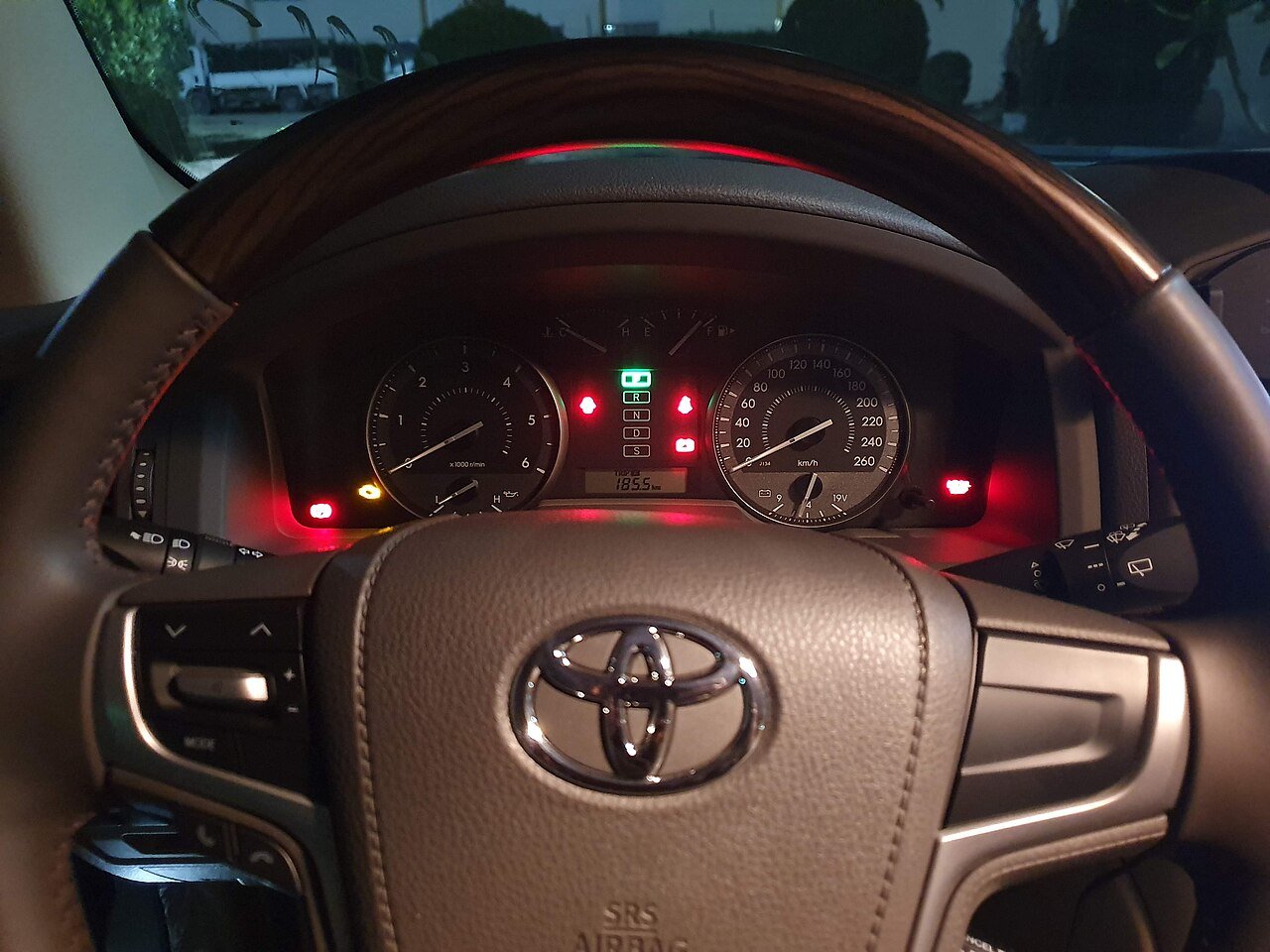
Step 1: Measure your error with GPS
Find a flat, straight road. Hold a steady indicated speed and compare it to a GPS speedometer app (GPS is the honest reference here). Example: your dash shows 60 mph while GPS reads 64.3 mph.
Error % = (actual speed ÷ indicated speed − 1) × 100
(64.3 ÷ 60 − 1) × 100 = +7.2%. Positive means the actual speed is higher than shown — your speedometer reads low, the classic result of taller tires. Write this number down; every method below needs it. If you have not changed anything and want to understand why the reading is off in the first place, see why your speedometer is wrong.
It works in the other direction too. Say the dash shows 65 mph while GPS reads 60.8 mph: (60.8 ÷ 65 − 1) × 100 = −6.5%. Negative means the actual speed is lower than shown — your speedometer reads high, the classic result of shorter tires (or a previous owner’s tall-tire correction that you just undid).
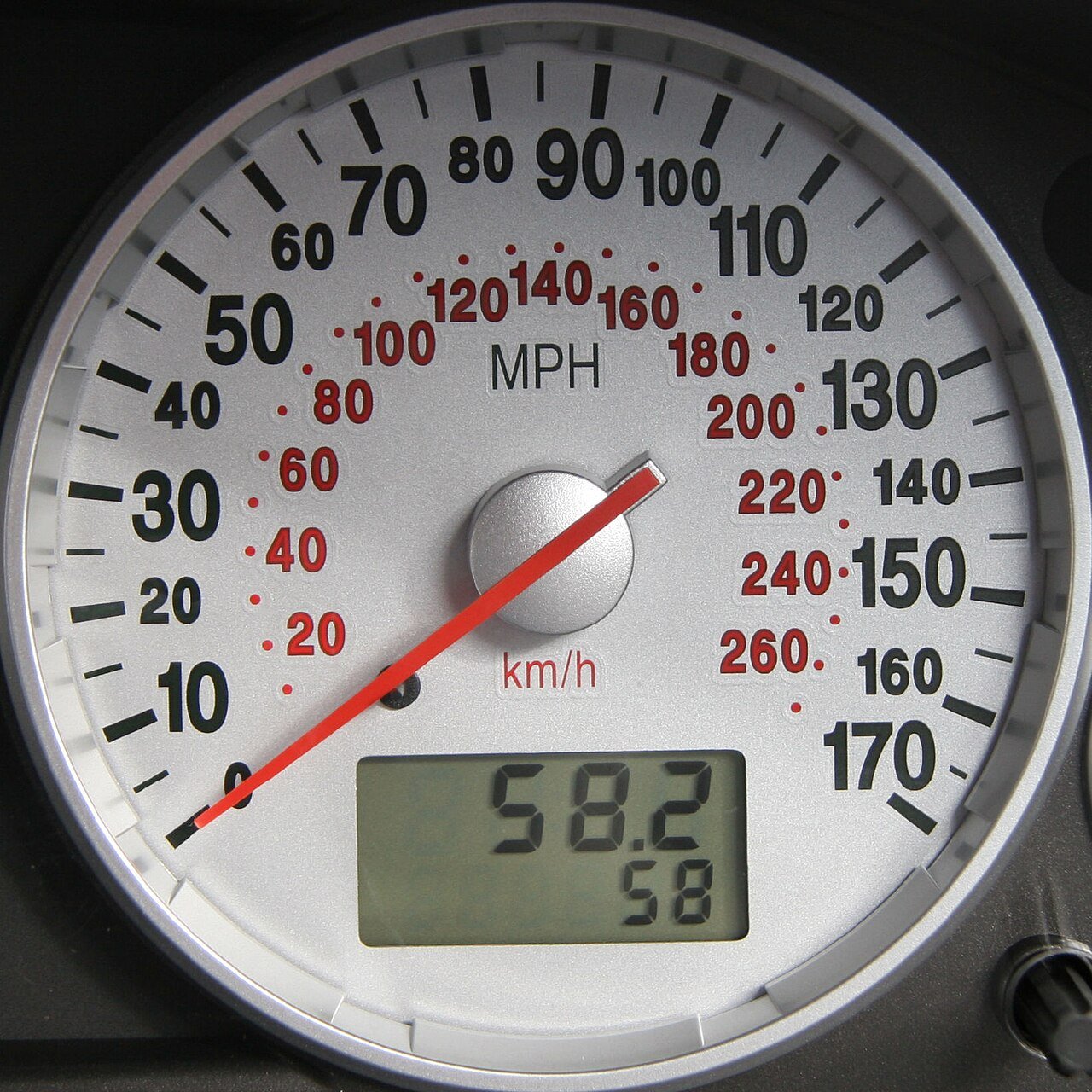
How to recalibrate speedometer: electronic vs cable decision guide
If you’re figuring out how to recalibrate speedometer readings on your own car or truck, match your setup in the left column — it points straight at the right method, so you don’t buy the wrong tool.
| If your vehicle has… | Use this method |
|---|---|
| An electronic speedometer, and an OBD-II tuner exists for your model | Handheld tuner (or FORScan on Ford/Mazda/Lincoln) — fixes the speedometer, odometer, and shift points in one shot |
| An electronic speedometer, and one tire size you’ll keep for years | Dealer or shop PCM reflash — the cheapest one-time fix |
| An electronic speedometer, but you swap tire sets seasonally — or the PCM is locked | Inline correction module — re-adjustable any time without touching the computer |
| A cable-driven speedometer (mostly pre-mid-90s) | Driven-gear swap inside the transmission — one gear, about $30 |
| No idea which system you have | Do the GPS test in Step 1 first — the size and direction of the error tell you what changed |
Step 2: Identify your speedometer type
- Electronic (most vehicles from the mid-1990s on): a vehicle speed sensor (VSS) sends pulses to the computer, which drives the gauge. Fixed with software or an inline module.
- Cable-driven (older vehicles): a spinning cable turns the gauge directly, through a small driven gear in the transmission or transfer case. Fixed by swapping that gear.
Those are the only two families you’ll ever meet: a spinning cable or a pulse signal. (For the full story of how the gauge evolved from mechanical to electronic, Wikipedia’s speedometer overview is a solid primer.) Whichever family yours belongs to, how to recalibrate speedometer error follows the same logic: correct the signal at its source, then verify against GPS.
Method A: Electronic speedometers
- Handheld tuner/programmer: plug into the OBD-II port, enter your new tire size (or tire revolutions per mile — check the tire maker’s spec sheet), and the computer rescales everything: speedometer, odometer, and often shift points. $200–$400 for the device, and you keep it for future changes. Dedicated units like Hypertech’s Speedometer Calibrator are built for exactly this job, correcting tire size and gear ratio per application.
- Dealer or shop reflash: the service department reprograms the PCM with the correct tire size. Typically 0.5–1 hour of labor ($75–$150). The simplest option if you only plan to do this once.
- Inline correction module: a small box wired between the speed sensor and the computer that rescales the pulse signal by your error percentage. Ideal if you swap between summer and winter tire sizes or change setups often. The best-known unit is Dakota Digital’s SGI-100BT, which rescales the signal anywhere from 25% to 400% and can be adjusted from a phone app.
Inline correction modules vs tuners: cost, effort, and when each wins
The debate over how to recalibrate speedometer electronics usually comes down to these two tools. Here’s the honest comparison.
Cost: a tuner runs $200–$400 but stays in your toolbox for future changes; an inline module runs roughly $100–$160 and does one job.
Effort: a tuner plugs into the OBD-II port and walks you through menus — a driveway job. An inline module means splicing a few wires (power, ground, signal in, signal out) and mounting a small box under the dash — also DIY-able, but more hands-on.
Pick the tuner when you also want corrected shift points and odometer in one shot, you plan future tire or gear changes, and your vehicle’s computer is supported.
Pick the inline module when you swap tire sets often (summer/winter), your PCM is locked or no tuner supports your model, you’re running an engine swap or aftermarket gauges, or you want to fine-tune the calibration while driving.
One caveat: a module only rescales the signal it intercepts. If it’s wired to feed just the gauge, your shift points stay wrong — and it must never be wired to alter the ABS signal path. The math is simple either way: with our +7.2% example the gauge reads low, so the module multiplies the pulse rate by 1.072 — 60 indicated × 1.072 = 64.3, matching the GPS.
How to recalibrate speedometer on a Ford with FORScan
For Ford, Mazda, Lincoln, and Mercury owners, how to recalibrate speedometer settings is unusually cheap: FORScan is free software that talks to these vehicles’ modules at dealer depth, and tire circumference is one of the values you can rewrite.
You need two things: the software (free download, with a free Extended License for the programming functions) and a quality OBD-II adapter — FORScan’s own docs recommend adapters like the OBDLink EX or vLinker FS and warn that cheap ELM327 clones cause failures. Budget roughly $20–$60 for the adapter.
The procedure: back up your AsBuilt module data first, then change the tire circumference value in the body control module (on a 2015–2020 F-150 that’s BCM line 726-12-01; on 2021+ trucks the value moved to lines 726-15-01/726-15-02 — model-specific spreadsheets map tire sizes to the right hex values). After writing, run the PCM and TCM module relearn/initialization so the change sticks and the resulting fault codes (typically P160A) clear.
Then do the Step 1 GPS test again. Because it’s software, you can nudge the value and re-test until the dash and GPS agree — no parts to buy twice.
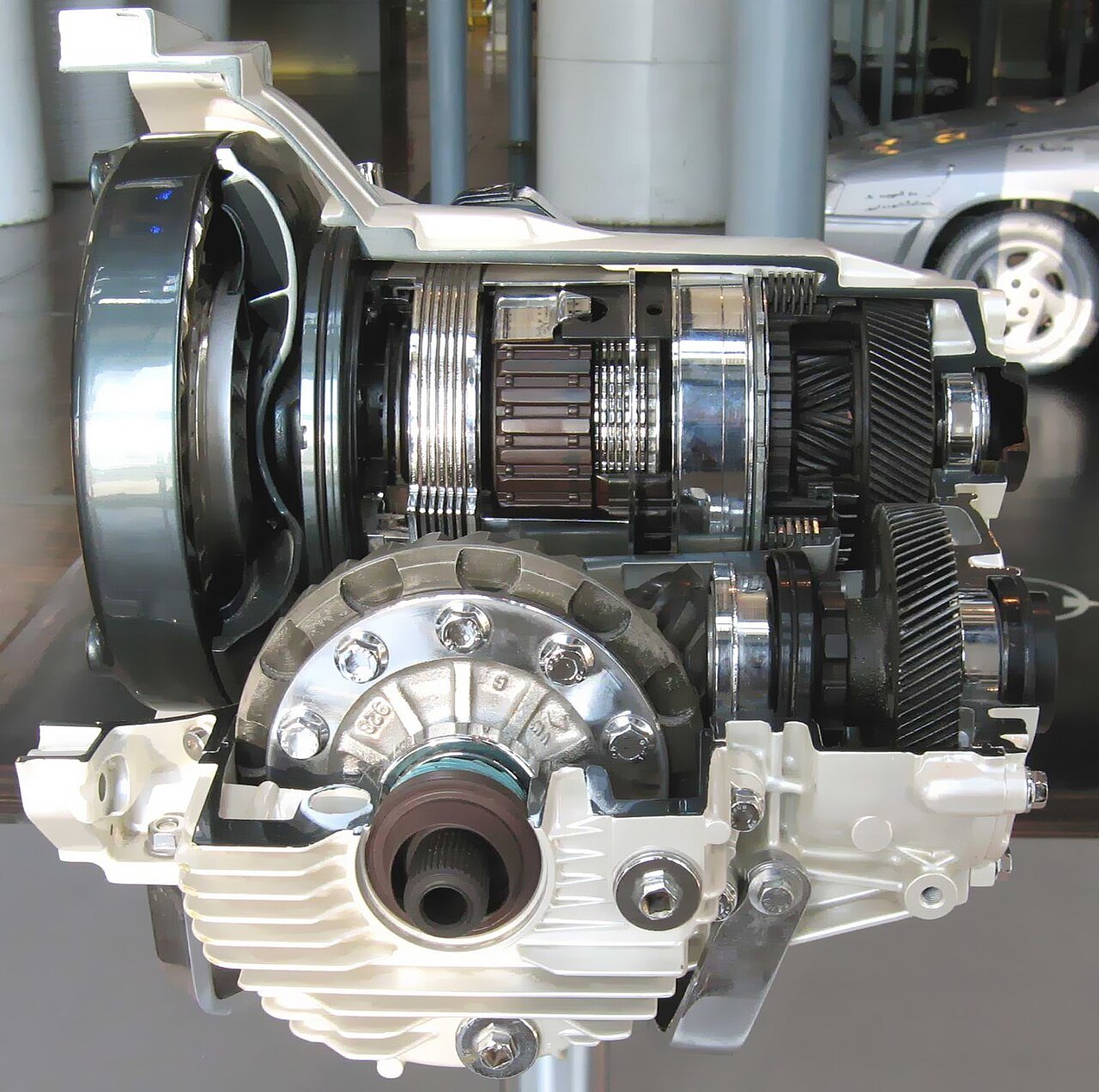
Method B: Cable-driven speedometers (gear swap)
Pop out the speedometer driven gear and replace it with one that has the right tooth count:
New teeth = old teeth × (old tire diameter ÷ new tire diameter), rounded to the nearest available gear.
Worked example: your old gear has 20 teeth, and you went from 30-inch tires to 35-inch tires. New teeth = 20 × (30 ÷ 35) = 17.1 → install the 17-tooth gear. The direction makes sense: taller tires turn the cable fewer times per mile, so you need a gear that spins the cable faster relative to the driveshaft — fewer teeth. Our speedometer gear calculator runs this for any tire or gear change, including the Ford color-coded gear chart.
Second example, going the other way: a 21-tooth gear with a change from 33-inch tires down to 31-inch tires. New teeth = 21 × (31 ÷ 33) = 19.7 → install the 20-tooth gear. Shorter tires spin the cable more times per mile, so you need more teeth to slow the cable back down — the formula handles the direction automatically.
Worked example: gear-ratio-only swap on a truck
Truck owners ask about how to recalibrate speedometer readings after a regear more than any other change. Here’s the full picture, with numbers — because a gear-only swap sometimes needs no correction at all, and sometimes needs a big one. The sensor location decides.
Setup: 35-inch tires (unchanged), axle gears swapped from 3.55 to 4.10. First, wheel speed at a true 60 mph: the tire’s circumference is 35 × π = 109.96 inches, and a mile is 63,360 inches, so the wheels turn 63,360 ÷ 109.96 = 576.2 revolutions per mile — at 60 mph (one mile per minute), that’s 576.2 rpm.
Case 1 — the sensor reads the axle or wheels (a tone ring on the differential carrier or ABS wheel-speed sensors, as on many older trucks): the sensor spins at wheel speed — 576.2 rpm — and the axle ratio appears nowhere in that number. The carrier turns at wheel speed whether the gears are 3.55 or 4.10, so the pulses-per-mile are identical before and after. No recalibration needed.
Case 2 — the sensor reads the transmission output (common on modern trucks): the sensor counts driveshaft revolutions, and driveshaft rpm = wheel rpm × axle ratio. Before: 576.2 × 3.55 = 2,045.5 rpm. After: 576.2 × 4.10 = 2,362.4 rpm.
That’s 2,362.4 ÷ 2,045.5 = 1.155 — 15.5% more pulses per mile — so the speedometer reads about 15.5% high. Recalibration needed (this is exactly why tuner makers list gear-ratio correction, e.g. 2.73–4.56, alongside tire sizes).
Bottom line of the example: don’t guess — the two-minute GPS test in Step 1 settles which case you’re in.
Step 3: Verify with GPS
Drive the same test again. You want the dash and GPS to agree within about 1 mph at 60. If a small error remains, most tuners let you fine-tune the tire revs-per-mile figure up or down until it is dead on. With a gear swap, one tooth typically equals roughly a 5% step, so getting within a tooth is getting within a few percent. This verify-with-GPS loop is the part of how to recalibrate speedometer work that professionals never skip.
Common mistakes that waste a recalibration
Most people who look up how to recalibrate speedometer fixes get the measurement wrong, not the fix. Avoid these:
- Measuring on hills or in traffic. GPS speed is averaged over intervals, not truly instantaneous — hold a steady speed on a flat, straight road, or the error number you calibrate to will be fiction.
- Calibrating from sidewall math. A tire’s loaded, rolling diameter is smaller than its advertised size suggests. Use the tire maker’s revolutions-per-mile spec — that’s the number tuners ask for.
- Ordering the wrong rotation gear on cable systems. Driven gears are side-specific (Ford’s color-coded gears are the famous example) — match the gear to your transmission, not just the tooth count.
- Wiring an inline module into the ABS signal path. Correct only the speedometer feed; the ABS controller must keep seeing the unaltered signal.
- Writing with FORScan and skipping the relearn. Back up your AsBuilt data first, and always run the PCM/TCM initialization afterward — otherwise you’ll chase phantom fault codes.
What else the change affects
- Odometer: it runs off the same signal, so it was wrong too — taller tires mean it recorded fewer miles than you drove. Fix it together with the speedometer.
- Shift points and cruise control: automatics shift by speed; a wrong signal means wrong shift timing until corrected.
- ABS and traction control: these compare wheel speeds, so they are less affected, but large tire changes can still confuse stability systems on some vehicles.
Legal and safety notes
Driving with a known-wrong speedometer means unintentional speeding — with taller tires you are going faster than the needle says, which is exactly the wrong direction for avoiding tickets. Correcting it is always the right move — and it is why how to recalibrate speedometer readings promptly is a safety habit, not just a tidy-up.
Bigger tires change more than the speedometer — gearing, clearance, and braking all shift. See whether bigger tires change your gear ratio and use the tire gear ratio calculator to check the effective-ratio impact before you buy.
Frequently asked questions
How much does speedometer recalibration cost?
About $75–$150 for a dealer reflash, $200–$400 for a handheld tuner you keep, around $30 for a replacement speedometer gear on cable-driven systems, and roughly $100–$160 for an inline correction module. Every route in this guide is a complete answer to how to recalibrate speedometer problems — pick by your system type, not by price alone.
Can I recalibrate the speedometer myself?
Yes, in most cases. A handheld tuner is a driveway job on electronic systems, and a driven-gear swap is a single bolt and a clip on cable systems. If the vehicle needs a dealer-only PCM flash, budget a shop visit.
Do I need to recalibrate after a gear-ratio swap too?
It depends on where your speed signal comes from. If the sensor reads the transmission output (driveshaft speed — common on modern trucks), an axle gear swap does change the reading: the computer’s pulses-per-mile calibration assumed your old axle ratio, so the speedometer reads high after a numerically higher gear — see the truck example above. If the signal comes from a wheel-side tone ring or the ABS wheel-speed sensors, the axle ratio never enters the math, so only tire changes need correction. When in doubt, do the GPS test; it answers the question in two minutes.
Will bigger tires void my warranty?
Not by themselves. Under US law a manufacturer must prove the modification caused a failure to deny a claim — but transmission or drivetrain failures on a lifted truck with 37s will get extra scrutiny, so keep the recalibration documented.
How to recalibrate speedometer on a Ford — can FORScan do it free?
Yes. Download FORScan (free) from forscan.org, connect a quality OBD-II adapter (roughly $20–$60), and rewrite the tire circumference value in the body control module — then run the PCM/TCM relearn. The software costs nothing; the adapter is the only purchase. This works on Ford, Mazda, Lincoln, and Mercury vehicles.
Will recalibration fix my odometer too?
Yes — learning how to recalibrate speedometer accuracy fixes the odometer at the same time, because both run off the same signal. With taller tires the odometer was under-recording: at a +7.2% speed error, 10,000 indicated miles means you actually drove about 10,720. After the fix, both read correctly together.
Start with the math: the free speedometer gear calculator works out your error percentage and the exact correction gear from your old and new tire sizes.
Bottom line: how to recalibrate speedometer error always starts with the GPS measurement, then matches the fix to your system — a tuner, reflash, inline module, or FORScan for electronic gauges; a new driven gear for cable ones. Measure first, fix once.