

Swapping sprockets is the cheapest performance change you can make to a motorcycle — and the most misunderstood. Understanding motorcycle sprocket gearing is the difference between a bike that wakes up and a bike that just gets buzzy: one tooth here or there reshapes acceleration, top speed, cruise RPM, and even your speedometer reading. Here’s exactly how the math works and what to expect from each change.
The fast answer: final drive ratio = rear sprocket teeth ÷ front sprocket teeth. Bigger rear or smaller front = shorter gearing (more acceleration, lower top speed). Smaller rear or bigger front = taller gearing (calmer cruising, higher top speed).
The math: final drive ratio
Ratio = rear teeth ÷ front teeth. A 45-tooth rear with a 15-tooth front = 45 ÷ 15 = 3.00:1 — the countershaft turns 3 times per wheel revolution.
Worked example: what a sprocket swap actually changes
Stock: 18-tooth front, 43-tooth rear → 43 ÷ 18 = 2.389.
Swap to 17-tooth front and 45-tooth rear → 45 ÷ 17 = 2.647.
Percent change: (2.647 − 2.389) ÷ 2.389 = 0.258 ÷ 2.389 = 10.8% shorter gearing.
That 10.8% shows up everywhere: 10.8% more wheel torque, 10.8% higher RPM at any given speed, and about 10.8% less top speed. If the bike cruised at 5,000 RPM at 65 mph before, expect roughly 5,000 × 1.108 = 5,540 RPM after. Run your own numbers in the gear ratio calculator — it shows the new ratio, the percent change, and the RPM shift.
Motorcycle sprocket gearing: worked examples on a commuter bike
Take a typical middleweight commuter running 16 front / 43 rear from the factory: 43 ÷ 16 = 2.688. It’s the classic commuter setup — relaxed on the highway, a little sleepy off the line.
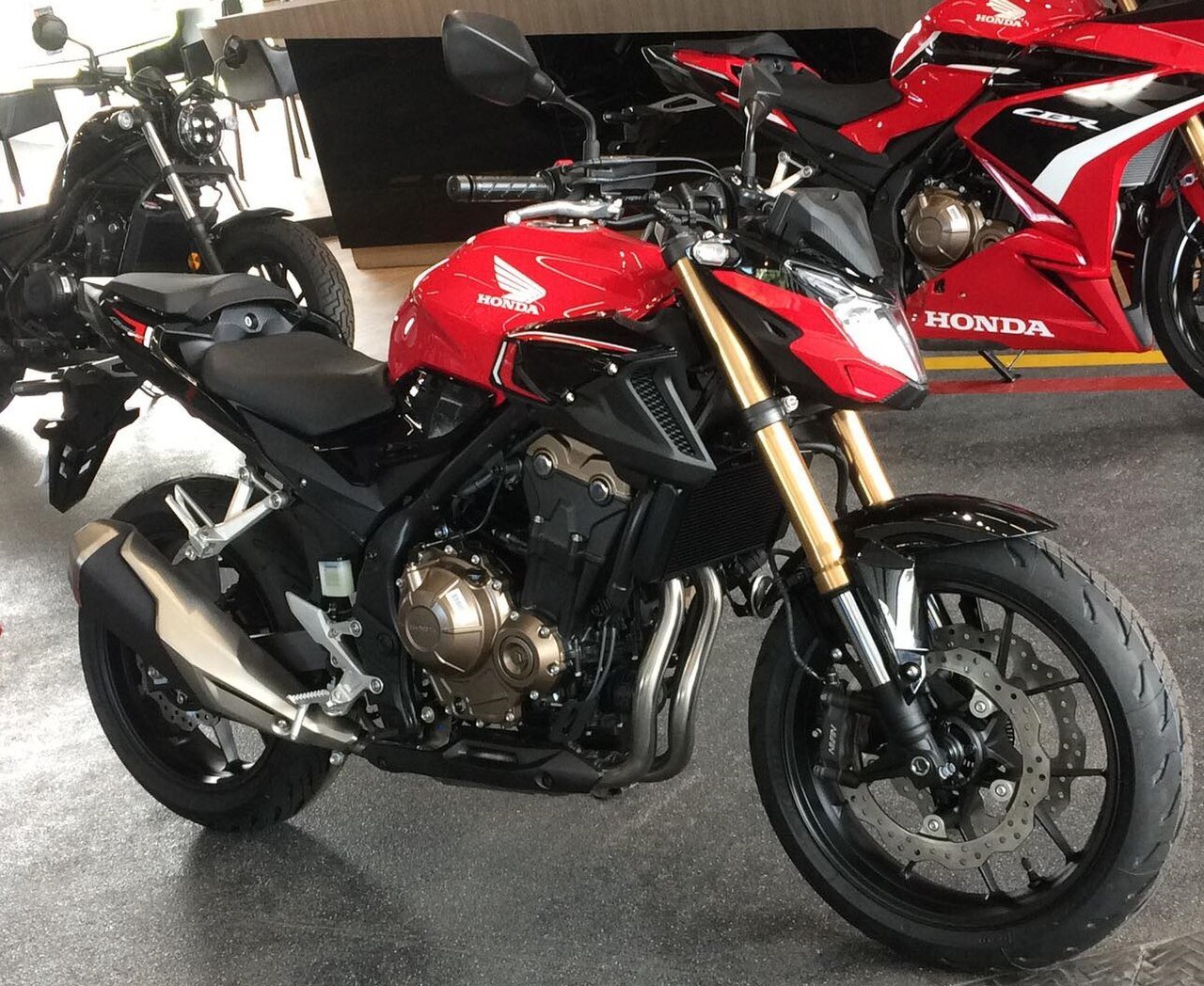
−1 front (the most common change): drop the front to 15 teeth → 43 ÷ 15 = 2.867. Percent change: (2.867 − 2.688) ÷ 2.688 = 0.179 ÷ 2.688 = 6.7% shorter. The bike pulls noticeably harder from stops and out of corners, and cruise RPM at a steady 5,000 climbs to 5,000 × 1.067 ≈ 5,333 RPM — a difference you can feel and measure, not an imaginary gain.
+1 front (the touring/commuting change): go up to 17 teeth → 43 ÷ 17 = 2.529. Percent change: (2.529 − 2.688) ÷ 2.688 = −0.159 ÷ 2.688 = 5.9% taller. Cruise RPM drops to 5,000 × 0.941 ≈ 4,706 RPM, which is calmer and kinder on fuel — at the cost of lazier acceleration and a first gear that feels longer in stop-and-go traffic.
That predictability is the real payoff: motorcycle sprocket gearing rewards math, not guesswork. A single ratio calculation tells you the RPM shift, the torque trade, and the top-speed cost before you spend a dollar.
The golden rule: 1 front tooth ≈ 3 rear teeth
Because the front sprocket is much smaller, one tooth there moves the motorcycle sprocket gearing ratio about three times as much as one tooth at the rear. Check it: on a 16/40 setup (2.500), going −1 front gives 40 ÷ 15 = 2.667 (+6.7%), while going +1 rear gives 41 ÷ 16 = 2.563 (+2.5%). So:
- Fine tuning: change the rear sprocket (±1–3 teeth).
- Big step: change the front sprocket (±1 tooth ≈ ±3 rear).
- Combined: −1 front and +2 rear is the classic track-day combo (roughly 12% shorter).

Common setups by riding style
| Riding style | Typical change | Effect | Trade-off |
|---|---|---|---|
| Touring / commuting | +1 front or −2 rear (taller) | Lower cruise RPM, better mileage | Lazier acceleration, taller first gear |
| Street / canyon | Stock, or −1 front (shorter) | Snappier drive out of corners | Slightly busier on the highway |
| Track days | −1 front + 2 rear (shorter) | Strongest corner exits | Top speed drops ~10–12% |
| Trail / dirt | +2–3 rear (shorter) | Crawls technical sections easily | Highway riding gets buzzy |
Chain pitch: 520 vs 525 vs 530
Changing sprockets means buying the matching chain size, and the three-digit code stamped on your chain is the spec you must match. All three share the same 5/8″ (15.875 mm) pitch — the difference is width, which decides strength:
| Chain | Pitch | Inner width | Roller diameter | Typical use |
|---|---|---|---|---|
| 520 | 5/8″ (15.88 mm) | 1/4″ (6.35 mm) | 10.16 mm | Lightweight bikes, 125–250 cc, MX/enduro; popular racing conversion (lightest) |
| 525 | 5/8″ (15.88 mm) | 5/16″ (7.94 mm) | 10.16 mm | Mid-size sportbikes and tourers, ~600–1,000 cc; the most common stock size |
| 530 | 5/8″ (15.88 mm) | 3/8″ (9.53 mm) | 10.16 mm | Heavy/liter-class machines; the strongest of the three, also the heaviest |
The chain and both sprockets must be the same size — a 520 sprocket will not mesh correctly with a 525 chain. A common upgrade in motorcycle sprocket gearing is the “520 conversion”: swapping a 525 or 530 drivetrain to 520 saves unsprung weight and spins up slightly quicker, but the narrower chain wears faster on a powerful bike. Check any chain’s dimensions against a chain and sprocket fitment guide before ordering.
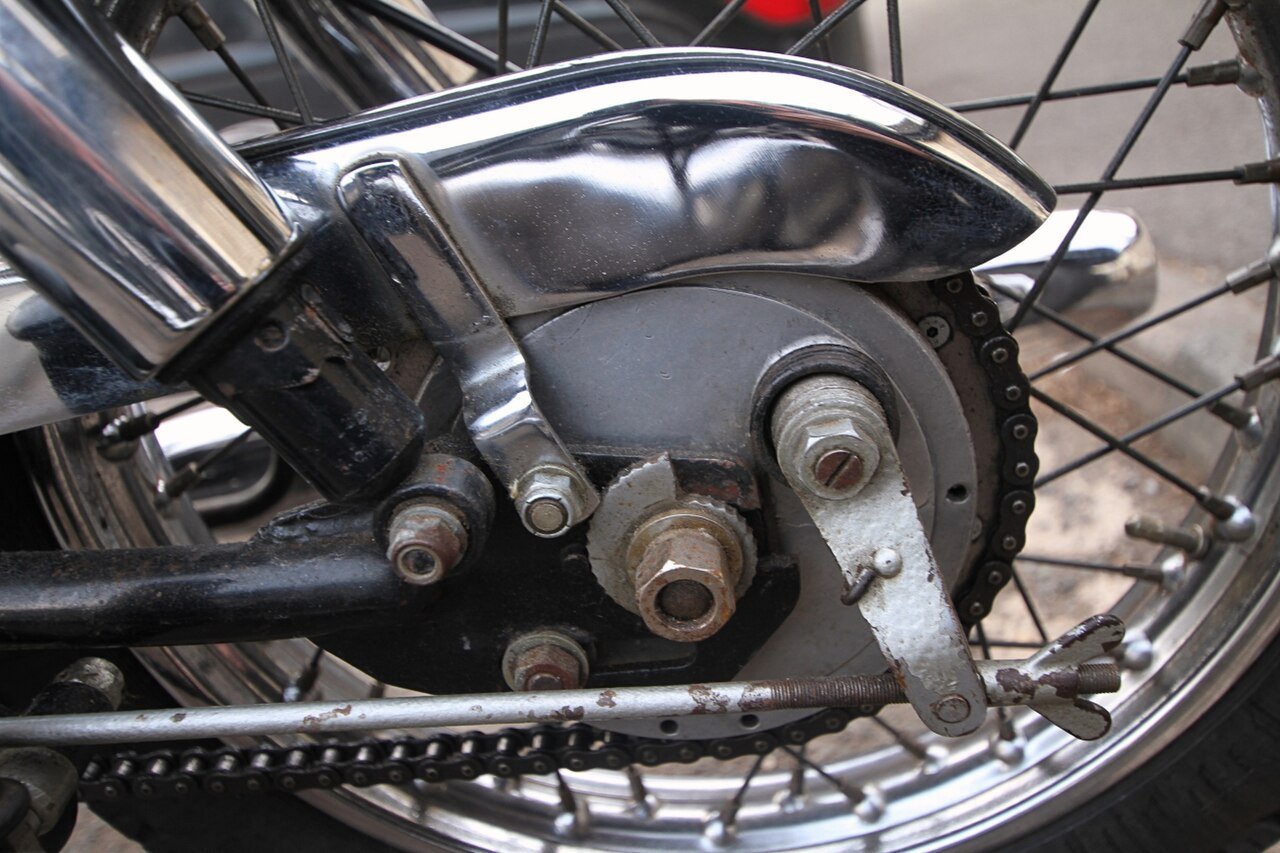
Motorcycle sprocket gearing: what to buy (checklist)
Ordering sprockets is straightforward if you run through this list before clicking “buy”:
- Match the chain size — front sprocket, rear sprocket, and chain all share one pitch code (520/525/530). Mismatched parts wear each other out fast.
- Count your links. Note your stock chain’s link count before ordering. A +2-rear change often still fits on the stock link count; bigger changes may need a longer chain.
- Sprocket material: steel lasts longest — always choose steel for street bikes and for the front sprocket. Aluminum rear sprockets save weight for racing but wear noticeably faster; hard-anodized aluminum splits the difference.
- Rivet master link for big power. Clip-style master links are fine for lighter bikes, but rivet links are the safer choice on anything making real horsepower.
- Replace as a set. A new chain on worn sprockets (or vice versa) destroys the new part quickly — chains and sprockets are sold as kits for a reason.
- Model it first. Before spending money, run the change through our gear ratio calculator and confirm the percent shift and new cruise RPM match what you actually want.
Side effects most riders forget
Every motorcycle sprocket gearing change carries these four side effects — plan for them before you order, not after:
- Speedometer error. Most bikes read speed from the countershaft or front sprocket, not the wheel. Shorten the gearing 10% and the speedo reads ~10% optimistic — 70 mph indicated is really ~63. Gearing taller has the opposite effect. A speedo healer or ECU flash corrects it.
- Chain length and axle position. A bigger rear sprocket needs the axle moved forward (or a longer chain); a smaller one moves it back. Check the adjustment marks — running out of adjustment means a new chain.
- Chain wear. Very small front sprockets force the chain around a tighter bend, accelerating wear. Going below the manufacturer’s recommended minimum front size is a false economy.
- Fuel economy. Shorter gearing raises RPM at cruise, and RPM costs fuel. Taller gearing helps mileage only if the engine isn’t lugging — lugging can actually hurt economy and smoothness.
Belt and shaft drives
Most Harleys and many tourers use belt drive: the same math applies (rear pulley teeth ÷ front pulley teeth), but pulley changes are coarser and pricier. Shaft-drive bikes generally can’t be re-geared at all — what the factory chose is what you get, so choose the model with the final drive that suits your riding. For the mechanical background, Wikipedia’s chain drive overview and motorcycle transmission article cover how the chain, gearbox, and final drive fit together.
Frequently asked questions
Does changing sprockets affect top speed?
Yes — directly. Shorten gearing 10% and top speed falls roughly 10% (you hit redline earlier in top gear). Lengthen it and theoretical top speed rises, but only if the engine has the power to pull the taller gear to redline — many bikes don’t, so real-world top speed barely moves.
Should I change the front or rear sprocket?
In motorcycle sprocket gearing, the rear sprocket is the fine-tuning dial and the front is the big lever. Rear for fine adjustments, front for a big single change — but smaller front sprockets wear chains faster. For a ~5% change, ±2 rear teeth is the sweet spot. For ~10%+, consider −1 front.
Will a sprocket change void my warranty or hurt reliability?
Sprockets are wear items and swaps are routine; reliability impact is minimal if chain slack and alignment are set correctly. Extreme changes can accelerate chain/sprocket wear and, on some bikes, confuse traction control calibrated to stock gearing.
How do I know my stock sprocket sizes?
Count them (teeth are usually stamped on the sprocket face too), or check the owner’s manual. If you want the deeper math behind any change — ratio, percent shift, new cruise RPM — the rotation-and-ratio method in our gear ratio guide and the gear ratio calculator cover it.
How often do sprockets need replacing?
Sprockets are wear items, and a well-maintained chain-and-sprocket set typically lasts 12,000–25,000 miles depending on riding style, lubrication, and conditions. Replace on condition, not the calendar: look for hooked or shark-toothed teeth and uneven wear. Always replace the chain and both sprockets as a set — a worn sprocket will chew up a new chain in short order.
Can I change gearing on a belt-drive bike?
Yes, with pulleys instead of sprockets — the same motorcycle sprocket gearing math (rear teeth ÷ front teeth) applies. Pulley swaps are less common and more expensive than sprocket swaps, and you may need a different belt length, but many cruisers have common aftermarket pulley sizes for exactly this purpose.
Before you order sprockets, model the motorcycle sprocket gearing change in the free gear ratio calculator — ratio, percent change, and the new RPM at your cruising speed, all with the formulas shown.