

If you want to know how to work out gear ratio, start with one question: how many times does the input turn for one turn of the output? Whether it’s a bicycle sprocket set, a motorcycle final drive, or the diff in a pickup, answer that — by counting teeth, measuring sprockets, or counting rotations — and you have the ratio.
The 10-second method: divide the teeth
The fastest way to see how to work out gear ratio in practice is the tooth-count method — one division, no tools:
Gear ratio = driven teeth ÷ driver teeth
Motorcycle example: a 16-tooth front (gearbox) sprocket and a 40-tooth rear sprocket give 40 ÷ 16 = 2.5:1. The front sprocket turns two and a half times for every single turn of the rear wheel. On a bicycle it’s the same idea: a 44-tooth chainring driving a 16-tooth cog is 44 ÷ 16 = 2.75:1 — try your own combinations in the bicycle section of our gear ratio calculator.
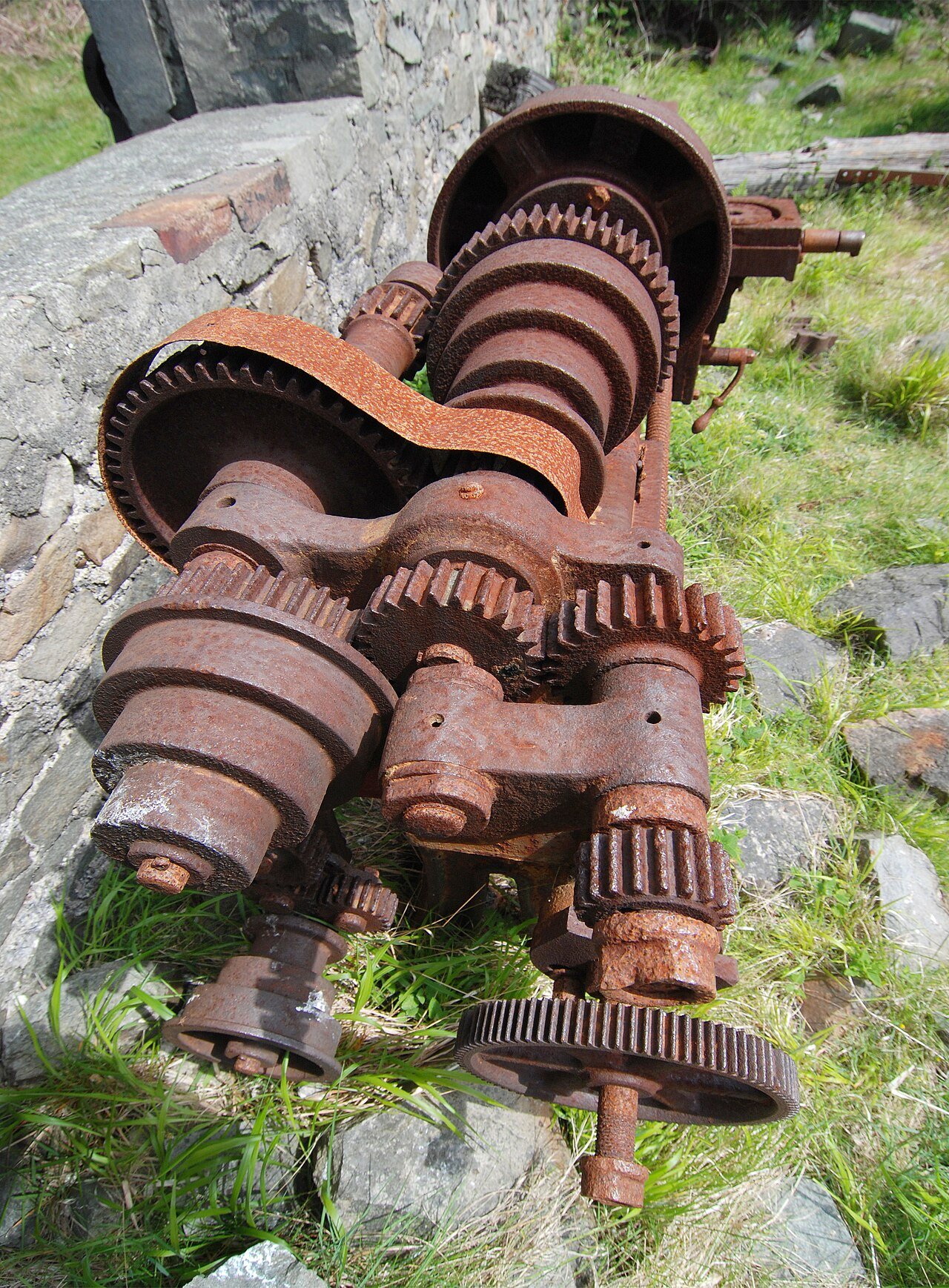
Work it out without counting teeth: the rotation method
Another way to work out gear ratio when you can’t see the teeth: count turns instead:
- Mark the input shaft (or front sprocket) and the output (wheel) with a paint pen or chalk.
- Rotate the output exactly one full turn.
- Count how many times the input mark comes around — fractions included.
Three full turns plus three-quarters = 3.75:1 (almost certainly a 3.73 gear set). This works for any enclosed gearbox or differential where the gears are hidden. For car axles there are a few extra tricks — axle tags, option codes, and the open-vs-limited-slip difference — covered in our guide on how to find your gear ratio without pulling the cover.
Work it out from sprocket or gear sizes
Teeth are proportional to diameter, so if you can measure across the sprockets you can work out gear ratio without counting a single tooth:
Ratio = rear (driven) diameter ÷ front (driver) diameter
A 200 mm rear sprocket over a 100 mm front sprocket = 2:1. The same diameter trick is exactly how belt drives are worked out — our pulley RPM calculator uses diameters plus belt slip to give output speed.
“Short” vs “tall” gearing — what changing the ratio does
- Shortening the gearing (smaller front sprocket or bigger rear sprocket) raises the number: stronger acceleration and pulling power, but the engine revs higher at every speed and top speed falls.
- Tallening / lengthening the gearing (bigger front or smaller rear) lowers the number: calmer cruising and better economy, lazier acceleration.
One tooth on the front sprocket is worth roughly three on the rear — handy when you’re deciding which end to change. For a visual walkthrough of how these ratios trade speed for torque, HowStuffWorks explains gear ratios with clear diagrams.
Working out the overall ratio (gearbox × final drive)
Once you understand how to work out gear ratio for a single gear pair, the next step is chaining them. Most vehicles have two ratios in series: the gearbox gear you’re in, and the final drive (diff or sprockets). Multiply them:
Overall ratio = gearbox ratio × final drive ratio
Example: 3rd gear at 1.30:1 with a 3.73 final drive = 1.30 × 3.73 = 4.85:1 overall. Engine at 4,000 RPM → wheels at 4,000 ÷ 4.85 = 825 RPM. The Per-Gear Table in our gear ratio calculator builds this for every gear of common transmissions, and the RPM calculator turns it into road speed on your tire size. Wikipedia’s gear train overview covers compound and planetary arrangements in more formal depth.
How to work out gear ratio in a multi-stage gearbox
When gears chain through more than one pair — most real gearboxes — you work out each pair separately, then multiply. That is how to work out gear ratio for a two-stage gearbox:
- Stage 1: a 12-tooth pinion drives a 48-tooth gear: 48 ÷ 12 = 4:1
- Stage 2: a 14-tooth pinion on the same shaft drives a 42-tooth gear: 42 ÷ 14 = 3:1
- Overall ratio: 4 × 3 = 12:1
So a motor spinning at 3,600 RPM comes out of the second stage at 3,600 ÷ 12 = 300 RPM, with roughly twelve times the input torque (minus friction). The rule never changes: however many stages there are, multiply every stage’s ratio and you have the overall number. Idler gears between a pair don’t change the ratio at all — they only reverse the direction of rotation — so ignore them when you count.
This is also how to work out gear ratio inside an automatic transmission or a transfer case: each planetary set or gear pair contributes one multiplier, and the total is the product of them all. Our homepage calculator’s Multi-Stage tab chains up to four stages exactly this way.
How to work out gear ratio by machine type
The core formula never changes — driven ÷ driver — but every machine counts its “gears” a little differently. Here’s the method for the three machines people ask about most.
Motorcycles: chain final drive
On a motorcycle, here’s how to work out gear ratio on the chain final drive: rear sprocket teeth ÷ front sprocket teeth. A 17-tooth front and 45-tooth rear gives 45 ÷ 17 = 2.65:1. Swap the rear to 47 teeth and you get 47 ÷ 17 = 2.76:1 — about 4.4% shorter gearing, meaning roughly 4% more pull and 4% higher revs at every speed.
Bicycles: the flipped convention
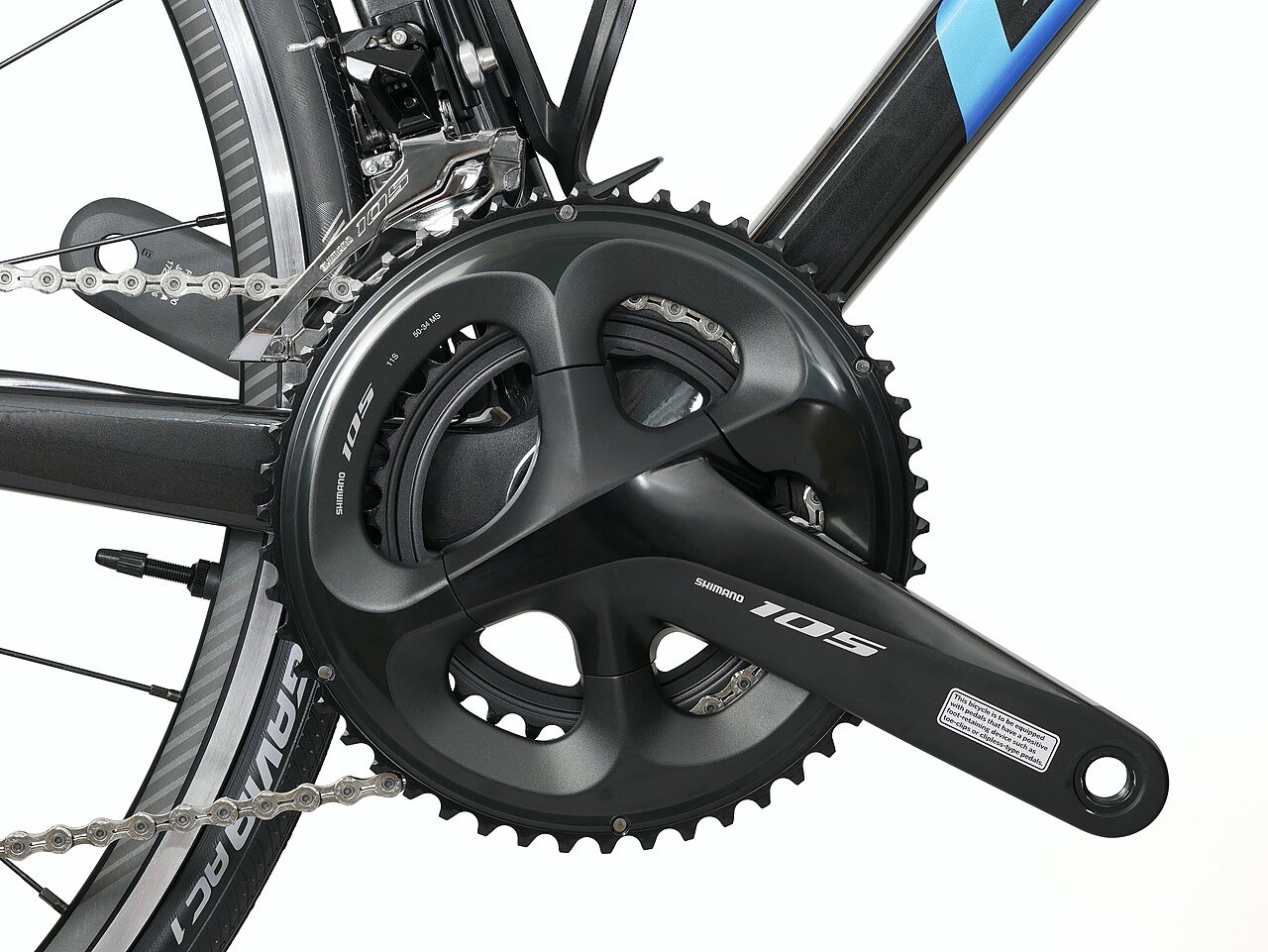
Cyclists quote it backwards: chainring teeth ÷ rear cog teeth. This is how to work out gear ratio on a bicycle: a 44-tooth chainring with a 16-tooth cog gives 44 ÷ 16 = 2.75 — one pedal turn spins the wheel 2.75 times. At a 90 RPM cadence on 27-inch wheels, that’s 2.75 × 90 = 247.5 wheel RPM, or about 19.9 mph — the same cadence math our bicycle gear ratios guide breaks down in full.
Car axles: the rotation-count method
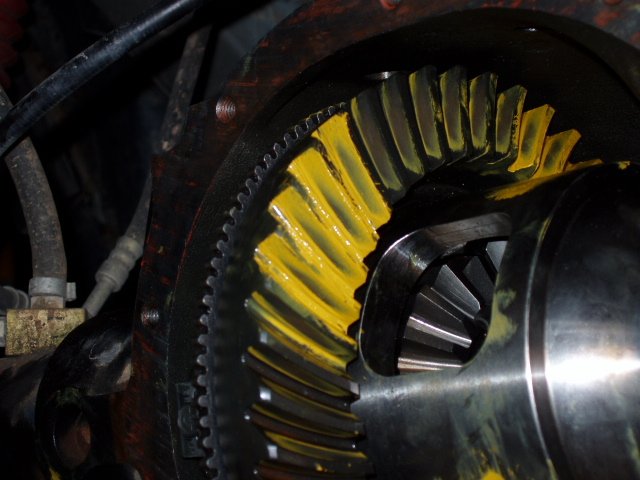
For a car axle with hidden gears, the rotation method is how to work out gear ratio physically: jack up the rear, mark the driveshaft and a tire, turn the tire two full revolutions (open differential), and count driveshaft turns — then divide by two. Count 8.2 driveshaft turns and you have 8.2 ÷ 2 = 4.10:1, the factory ratio for countless trucks.
How to work out gear ratio changes before buying parts
Run the numbers on paper first. Motorcycle, 16T front / 40T rear stock = 40 ÷ 16 = 2.500. Drop one tooth on the front: 40 ÷ 15 = 2.667 — a 6.7% shorter gear. Add one tooth at the rear instead: 41 ÷ 16 = 2.5625 — only 2.5% shorter. That’s why racers say one front tooth ≈ three rear teeth: the front sprocket is the coarse adjustment, the rear is the fine one.
How to work out gear ratio from a spec sheet or axle tag
Sometimes the answer is already written down. Axle tags and build sheets list the ratio directly — “3.73” means the ring gear has 3.73 times the pinion’s teeth (commonly a 41-tooth ring and an 11-tooth pinion: 41 ÷ 11 = 3.727). GM trucks hide it in RPO codes (GU6 = 3.42, GT4 = 3.73, GT5 = 4.10). Our guide on how to find your gear ratio without pulling the cover decodes every method, including the two-minute rotation test.
Common mistakes when working out gear ratio
- Dividing the wrong way: it’s always driven ÷ driver. Flip it and a 2.5:1 ratio reads as 0.4 — the single most common beginner error.
- Mixing units: don’t combine a diameter in inches with a circumference in millimetres. Pick one unit and stick with it.
- Forgetting the final drive: a transmission gear ratio alone isn’t what the wheels feel — multiply by the final drive for the overall number.
- Counting one tire turn on an open diff: with one wheel held, the spider gears double the count — turn the free wheel two revolutions, then divide driveshaft turns by two.
Worked examples
| Setup | Driver | Driven | Ratio | Effect |
|---|---|---|---|---|
| Motorcycle, stock | 16T front | 40T rear | 2.50:1 | Balanced |
| Motorcycle, geared down | 15T front | 40T rear | 2.67:1 | Stronger pull, ~7% more revs |
| Bicycle, big ring | 50T ring | 14T cog | 3.57:1 | Fast road gear |
| Bicycle, climbing | 34T ring | 34T cog | 1.00:1 | Easiest climbing gear |
| Truck axle | 11T pinion | 41T ring | 3.73:1 | Street / towing balance |
Frequently asked questions
What is the easiest way to learn how to work out gear ratio?
Divide driven teeth by driver teeth — that single division is the whole method, and it works for gears, sprockets, and chainrings alike. If you can’t see the teeth, count rotations instead: turn the output once and count the input turns. Run either method through the free gear ratio calculator to check your arithmetic.
How do I work out my gear ratio if I don’t know the tooth counts?
Count rotations: turn the output once and count input turns (including the fraction). Or measure the sprocket/gear diameters and divide driven by driver. Both give the ratio directly.
How do I work out gear ratio for an automatic car’s individual gears?
The same way: overall ratio in any gear = transmission gear ratio × final drive ratio. A 1.52:1 second gear with a 3.42 final drive gives 1.52 × 3.42 = 5.20:1 overall — the engine turns 5.2 times per wheel revolution in that gear.
Does a bigger rear sprocket make the ratio higher or lower?
Higher. More driven teeth ÷ the same driver teeth = a bigger number, shorter gearing, stronger acceleration, lower top speed.
What gear ratio is best?
It depends on the job: towing and off-road favour numerically higher ratios (3.73–4.56), highway economy favours lower (2.73–3.23), and bicycles range from 1:1 climbing gears to 4:1+ sprint gears. There is no single best — match it to your speed and load.
Will changing sprockets or gears affect my speedometer?
Yes, on most vehicles — the speedometer assumes the factory ratio. Our speedometer gear calculator works out the correction gear for cable-driven speedometers.
Want the numbers done for you? The free gear ratio calculator works out ratios from teeth, diameters, or RPM — and shows the formula behind every result.