

Crawl ratio is the total gear reduction between your engine and your tires when you’re in 4WD Low — and it’s the single number that decides whether your rig walks over rocks at idle or has to be slipped and revved over them. A higher crawl ratio means slower, more controlled, more torque-multiplied crawling. Here’s what it is, how to calculate it, what counts as “good,” and how to get more of it.
The crawl ratio formula
Crawl ratio = 1st gear ratio × transfer case low-range ratio × axle ratio
That’s it — three multiplications. Example: a truck with a 4.03:1 first gear, a 2.72:1 transfer case low range, and 3.42:1 axle gears gives 4.03 × 2.72 × 3.42 = 37.5:1. The engine turns 37.5 times for every single tire revolution. The gear ratio calculator builds this for every gear in common transmissions, and MotorTrend’s crawl ratio explainer lists factory transfer-case and transmission ratios going back decades — handy when your owner’s manual is long gone.
What crawl ratio actually feels like on the trail
- 30–50:1: typical stock truck. Fine on dirt and light trails; you’ll ride the clutch or brakes on anything steep.
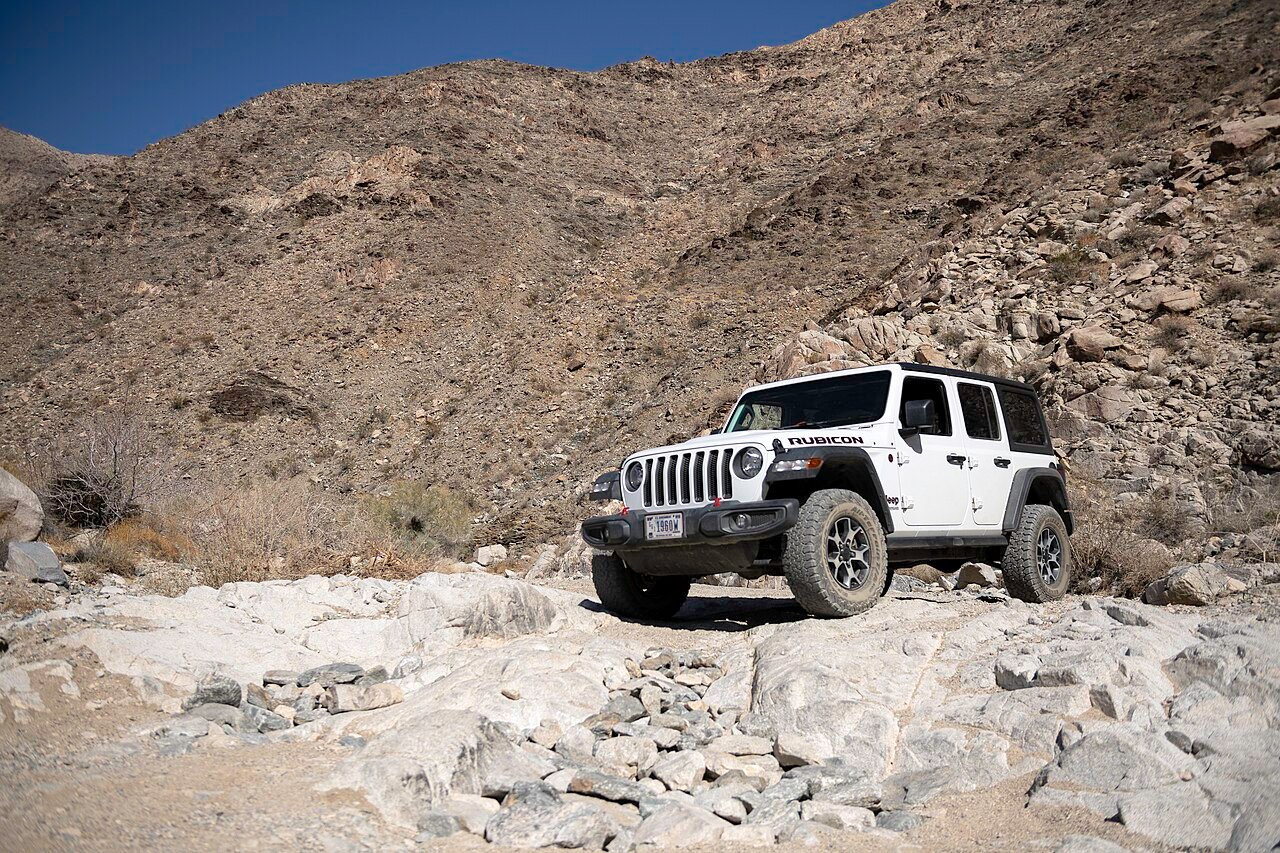
- 50–80:1: confident crawling. This is Rubicon-from-the-factory territory — controlled descents and steady climbs at idle.
- 80–120:1: dedicated crawler territory. The truck moves so slowly at idle you can step out and watch it — maximum control on boulders.
- 120:1+: competition-level. Spectacular control, but wheel speed drops so low that the rig can stall against an obstacle instead of bumping over it.
Why gearing matters more than horsepower off-road
On pavement, horsepower sells cars. On rocks, torque at the tire contact patch wins — and this reduction is a torque multiplier. A 300 lb-ft engine behind a 90:1 crawl ratio puts a theoretical 27,000 lb-ft to the tires (before drivetrain losses). Double the crawl ratio and you double the wheel torque at the same throttle. That’s why a 150-horsepower flat-fender Jeep on 100:1 gears will out-crawl a 400-horsepower truck on stock gearing: the Jeep’s torque arrives at the tires slowly and multiplied, while the truck’s just spins tires.
Worked examples: stock rigs vs built rigs
| Vehicle | 1st gear | T-case low | Axle | Crawl ratio |
|---|---|---|---|---|
| Stock half-ton pickup (auto) | 4.03 | 2.72 | 3.42 | 37.5:1 |
| Jeep Wrangler JK Rubicon (manual) | 4.46 | 4.00 | 4.10 | 73.1:1 |
| Jeep Wrangler JL Rubicon (manual) | 4.71 | 4.00 | 4.88 | 91.9:1 |
| Built crawler (doubler + 5.38s) | 6.32 | 5.44 | 5.38 | 185:1 |
The built crawler’s engine turns 185 times per tire revolution — at a 700 RPM idle, the tires rotate at under 4 RPM. That’s walking pace, with enormous torque behind it.
How to find your three numbers
To compute your own number, pull three numbers from your spec sheet: 1st gear ratio (transmission specs — e.g. 4.03:1), transfer case low range (owner’s manual or the 4WD badge — e.g. 2.72:1), and axle ratio (the tag, an RPO code, or our guide on how to find your gear ratio). Worked example: 4.03 × 2.72 × 3.42 = 37.5:1. That single multiplication tells you more about trail capability than the horsepower figure.
Manual vs automatic: the torque converter bonus
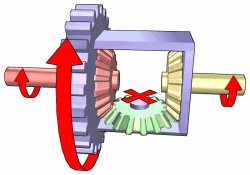
Automatics get a hidden fourth multiplier. At stall, a torque converter roughly doubles engine torque — an effective ~2:1 reduction on top of the gear ratios. So an automatic rated at 40:1 behaves more like 80:1 off the line, which is why automatic Rubicons crawl beautifully despite “worse” published numbers than their manual siblings. The trade-off: that multiplication fades as the converter couples up, and it generates heat — the reason serious automatic crawlers run big transmission coolers.
Crawl ratio and wheel speed: the sand-and-mud exception
Extreme reductions shine on rocks, where control beats speed. But in sand and mud, wheel speed is traction — tires need to spin fast enough to clean themselves. This is why desert racers and mud trucks run modest crawl ratios (30–50:1) and rely on horsepower instead: a 110:1 crawler at full throttle still barely turns the tires, while a 40:1 rig can keep them churning. Match the number to the terrain, not to bragging rights.
Crawl speed at idle: how slow is slow?
It also sets your idle crawl speed — how fast the truck moves in 4-Low, 1st gear, foot off the pedals. Approximate it from tire circumference and idle RPM:
Idle speed (mph) = (idle RPM ÷ crawl ratio × tire circumference in inches × 60) ÷ 63,360
Example: 700 RPM idle, 90:1 gearing, 35″ tires (110″ circumference): 700 ÷ 90 = 7.78 tire RPM → 7.78 × 110 × 60 ÷ 63,360 = 0.81 mph. Under one mile per hour — that’s the whole point. Our RPM calculator can run these numbers for your exact setup.
Idle crawl speed for the rigs above
Run the same idle-speed math over the worked examples and the differences stop being abstract. All four figures assume a 700 RPM idle with the driver’s foot completely off the pedals:
| Vehicle | Crawl ratio | Tire | Idle crawl speed |
|---|---|---|---|
| Stock half-ton pickup | 37.5:1 | 31″ | ≈ 1.7 mph |
| JK Rubicon (manual) | 73.1:1 | 33″ | ≈ 0.94 mph |
| JL Rubicon (manual) | 91.9:1 | 35″ | ≈ 0.79 mph |
| Built crawler | 185:1 | 37″ | ≈ 0.42 mph |
Even the stock pickup creeps at under 2 mph — but the built crawler moves at a quarter of that speed with five times the torque behind it. That gap is the difference between easing over a ledge and bouncing off it.
Three ways to get more reduction
- Deeper axle gears (e.g. 3.73 → 5.13): the cheapest big win — it also restores gearing lost to bigger tires. See 3.73 vs 4.10 for how gear swaps compare.
- Lower transfer-case gears (e.g. 2.72 → 4.0:1): a bigger single jump than axle gears, and it leaves your highway gearing untouched. MotorTrend’s drivetrain gearing guide walks through transfer-case options.
- A doubler / second transfer case: stacking two low ranges multiplies them (2.72 × 2.0 = 5.44:1 effective) — the path to 150:1+ for dedicated rigs.
Note that deeper axle gears affect every gear including highway cruise, while transfer-case gears only affect 4-Low — pick the mod that matches where you actually drive.
Frequently asked questions
What is a good crawl ratio for rock crawling?
Most experienced crawlers target 80:1 to 120:1 for a trail rig on 35–37″ tires. Factory Rubicons land around 73–92:1, which is why they’re so capable stock. Below 50:1 you’ll be working the clutch and brakes constantly on real rock trails.
What crawl ratio does a stock Jeep Wrangler have?
It depends on the year and gearbox. A JK Rubicon manual runs about 73:1 (4.46 × 4.0 × 4.10), a JL Rubicon manual about 92:1 — see the table above. A base Sport automatic is closer to 40:1, which is why Rubicons crawl noticeably better stock.
Does crawl ratio matter for overlanding?
Less than for rock crawling. Overlanding is mostly dirt roads and moderate trails, where 40–50:1 gearing and good ground clearance matter more than extreme reduction. Save the doubler transfer case for the dedicated trail rig.
Can my crawl ratio be too low?
Yes — past ~150:1 you gain little control but lose the wheel speed needed to bump over ledges, and the torque multiplication starts breaking axle shafts instead of moving the truck. More isn’t always better; it’s about matching gears to tires and terrain.
Does a bigger engine reduce the need for crawl ratio?
Partially. More torque helps everywhere, but it can’t replace reduction: doubling your engine torque and doubling your reduction both double wheel torque — and gears do it without the heat, fuel burn, and broken parts that come from revving a big engine against an obstacle.
Know your three numbers? Drop them in the gear ratio calculator to see your crawl ratio — then price the gear swap that gets you to your target.