

Final drive ratio is the last gear reduction your engine’s power passes through before it reaches the wheels — the ring-and-pinion set in the differential (or the chain sprockets on a motorcycle, or the reduction gear in an EV). It multiplies the torque from every transmission gear equally, which is why two otherwise identical cars with different final drives can feel like completely different machines. Here’s what it is, how it differs from “gear ratio,” and how it shapes speed, torque, and fuel economy.
What the final drive ratio actually is
Your transmission gives you several selectable ratios (1st through 6th, say). After the transmission, the power flows through one more fixed reduction — the final drive — before it reaches the wheels. In a rear- or front-wheel-drive car, that’s the ring gear and pinion inside the differential: a typical 41-tooth ring gear driven by an 11-tooth pinion gives 41 ÷ 11 = 3.73:1. The engine and driveshaft turn 3.73 times for every wheel revolution, in every gear.
On a motorcycle, the final drive is the chain and sprockets (or a shaft drive’s bevel gears). On most electric cars, it’s a single fixed reduction gear — often around 8:1 to 10:1 — because an electric motor’s wide RPM range makes a multi-gear transmission unnecessary.
Where the final drive lives
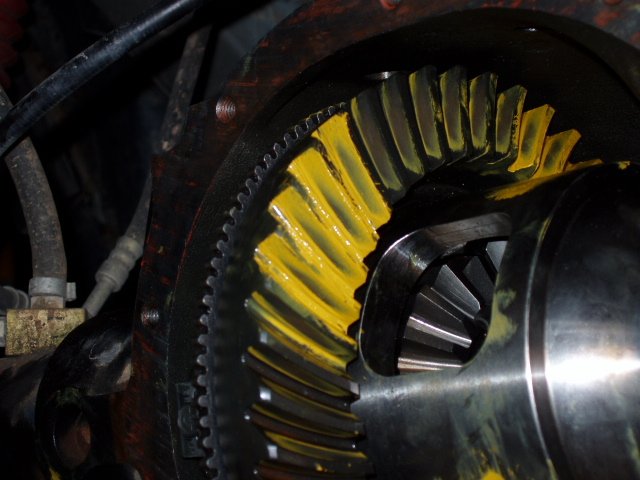
- Rear-wheel drive: in the rear axle housing — the driveshaft enters the differential, the pinion drives the ring gear, and the axles carry power out to the wheels.
- Front-wheel drive: inside the transaxle, bolted to the transmission — same job, one combined housing.
- All-wheel drive: there’s a final drive in each driven axle (front and rear), and both ratios must match.
- Motorcycles: the countershaft sprocket → rear sprocket chain drive is the final drive (a 2.5–3.0:1 reduction on most street bikes).
Final drive ratio vs gear ratio: what’s the difference?
“Gear ratio” usually means one selectable transmission gear (e.g. 2nd gear at 1.52:1). “Final drive ratio” is the separate, fixed reduction after the transmission. The number that actually matters at the wheels is the overall ratio = transmission gear × final drive ratio:
| Gear | Trans ratio | × 3.42 final drive | Overall |
|---|---|---|---|
| 1st | 4.03 | × 3.42 | 13.78:1 |
| 2nd | 2.36 | × 3.42 | 8.07:1 |
| 3rd | 1.53 | × 3.42 | 5.23:1 |
| 4th (1:1) | 1.00 | × 3.42 | 3.42:1 |
| 6th (overdrive) | 0.67 | × 3.42 | 2.29:1 |
Swap the 3.42 final drive for 4.10s and every row gets 20% shorter — 1st becomes 16.5:1 and 6th becomes 2.74:1. That’s the leverage a final drive swap has: one change, every gear. Still fuzzy on the terminology? Jalopnik’s plain-English final drive explainer is a great second opinion.
How final drive ratio affects acceleration, top speed, and MPG
- Numerically higher (shorter) — e.g. 4.10: more torque to the wheels in every gear, snappier launches, better towing and hill-climbing. Costs: higher cruise RPM, more noise, worse fuel economy, lower top speed.
- Numerically lower (taller) — e.g. 2.73: relaxed highway cruising, better MPG, higher top speed (if the engine can pull it). Costs: lazier acceleration, more downshifting on grades, weaker towing.
Rule of thumb: going from 3.42 to 4.10 raises wheel torque about 20% — and raises cruise RPM by the same 20%. The RPM calculator will show you both sides of that trade for your exact tires.
Final drive ratio and 0–60: a worked comparison
Take two identical cars, one with a 3.23 final drive ratio and one with 4.10s. The 4.10 car puts (4.10 − 3.23) ÷ 3.23 = 26.9% more torque to the wheels in every gear — that’s the launch difference you feel.
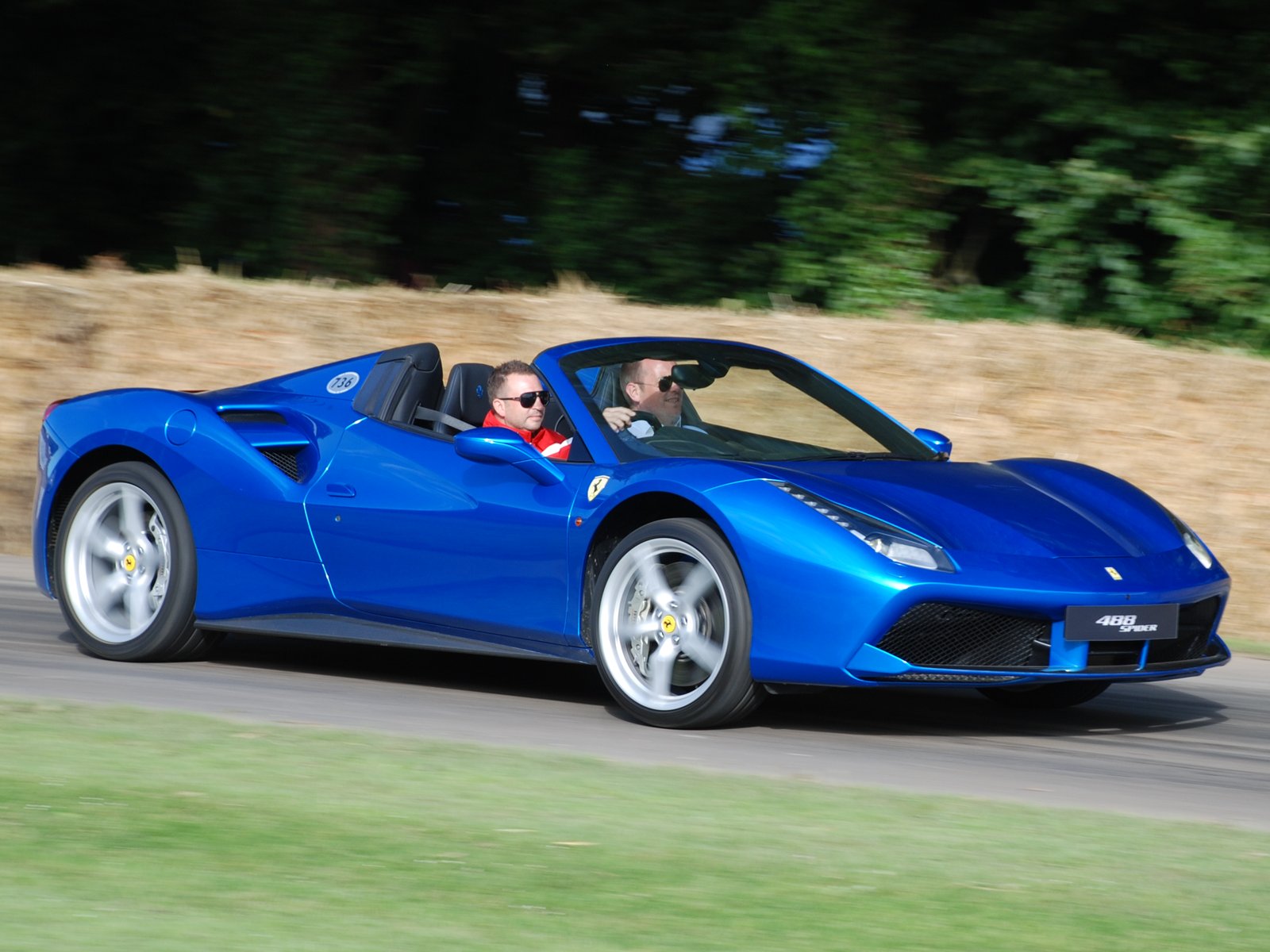
The price: at 65 mph on 28-inch tires in a 1:1 gear, cruise RPM = (65 × ratio × 336.13) ÷ 28. The 3.23 car turns (65 × 3.23 × 336.13) ÷ 28 = 2,520 RPM; the 4.10 car turns 3,199 RPM. Same engine, same transmission — the final drive ratio alone decides whether the car is a highway cruiser or a stoplight sprinter.
Final drive ratio in EVs: one gear does it all
Electric cars usually skip the multi-gear transmission entirely and use a single fixed reduction — often around 8:1 to 10:1 — as their final drive ratio. It works because an electric motor makes peak torque from zero RPM and spins happily to 15,000+ RPM, so one ratio covers both launch and highway.
The exception that proves the rule: the Porsche Taycan uses a two-speed rear gearbox, precisely because its engineers wanted both violent launches and efficient autobahn cruising — the same trade-off a final drive ratio has always managed.
How to read your final drive from the spec sheet
Manufacturers list it as “final drive ratio” or “axle ratio” in the specifications — common values are 2.73, 3.08, 3.23, 3.42, 3.55, 3.73, 4.10, and 4.56. Trucks often offer two or three choices (towing packages get the shorter gears). To see what yours means at speed, try a worked example: final drive 3.55, 6th gear 0.69, 27″ tires, at 70 mph. Overall = 0.69 × 3.55 = 2.4495. Cruise RPM = (70 × 2.4495 × 336.13) ÷ 27 = 2,135 RPM. If your truck’s actual ratio is a mystery, our guide on how to find your gear ratio covers every method.
Changing your final drive ratio: re-gearing
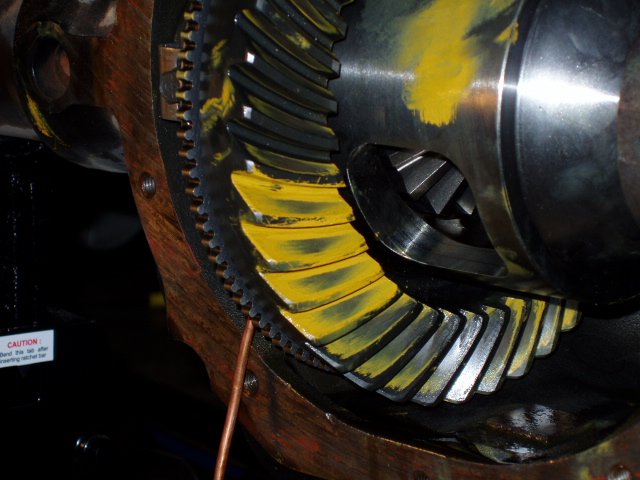
Re-gearing means swapping the ring-and-pinion set for a different ratio — typically $1,200–$2,500 per axle at a shop, gears plus labor. The most common reason is bigger tires: 35″ tires on stock 3.21 gears feel gutless, so owners re-gear to 4.56 to restore the factory feel (our tire gear ratio calculator computes the exact restore ratio). On 4WD vehicles both axles must match — see 3.73 vs 4.10 gears for a head-to-head of the two most popular swaps. Motor Authority breaks down the pros and cons of changing final drive ratio before you spend money on gears.
Frequently asked questions
Is final drive ratio the same as differential ratio?
On most cars, yes — the terms are interchangeable, because the differential’s ring-and-pinion set is the final drive. On motorcycles and EVs the “final drive” is the chain/belt/shaft or the single reduction gear instead.
What final drive ratio is best for highway driving?
Numerically lower: 2.73–3.42 keeps cruise RPM down and fuel economy up. The trade-off is lazier acceleration — which is why towing packages and performance trims get shorter (numerically higher) gears from the factory.
Does a higher final drive ratio always mean faster acceleration?
Almost always — up to the point where traction becomes the limit. More wheel torque only helps if the tires can put it down; past that, shorter gears just make more wheelspin (and more shifts before 60 mph).
Will changing my final drive ratio void the warranty?
Not the whole warranty — in the US, the Magnuson-Moss Warranty Act means a dealer must prove the modification caused the failure. But the dealer can deny a claim on the differential itself after a re-gear, so budget the job as your own responsibility.
Why do EVs have such high final drive ratios?
Because there’s only one reduction doing the whole job — no gearbox multiplying it further. A 9:1 EV final drive gives similar total reduction to a gas car’s 1st gear × final drive combined, which is why EVs launch so hard from a single gear.
Compare your final drive against alternatives with the RPM calculator — see the RPM and speed trade-off before you spend a dollar on gears.