

Picking the right go kart gear ratio is the single biggest performance call on a machine with no gearbox — just a chain between the engine and the rear axle. That single sprocket pair decides everything: how hard the kart launches, how fast it tops out, and whether the clutch survives. Here’s how kart gearing works and how to pick the right ratio for your track.
The fast answer for any go kart gear ratio: ratio = rear axle sprocket teeth ÷ clutch (engine) sprocket teeth. A 60-tooth axle sprocket with a 12-tooth clutch = 60 ÷ 12 = 5:1. Higher number = harder launch, lower top speed. Lower number = the reverse.
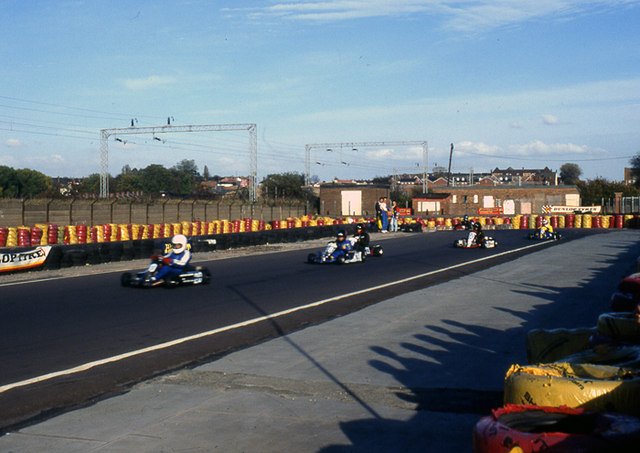
Go kart gear ratio math: one division
Gear ratio = axle sprocket teeth ÷ clutch sprocket teeth.
Worked example: ratio → axle RPM → speed
12-tooth clutch sprocket, 60-tooth axle sprocket, engine at 3,600 RPM, 11″ tall rear tires:
- Ratio = 60 ÷ 12 = 5:1
- Axle RPM = 3,600 ÷ 5 = 720 RPM
- Speed = axle RPM × tire diameter ÷ 336.13 = 720 × 11 ÷ 336.13 = 7,920 ÷ 336.13 = 23.6 mph
Check it against the formula the other way: at the same RPM, a 6:1 ratio (72-tooth axle) gives 600 axle RPM and 600 × 11 ÷ 336.13 = 19.6 mph — slower top end, but noticeably harder acceleration. Try your own sprockets in the gear ratio calculator, or cross-check the top speed on CSGNetwork’s go-kart speed calculator, which runs the same circumference-and-RPM formula.
Go kart gear ratio chart: sprocket teeth vs top speed
Same engine, same tires — only the axle sprocket changes. This go kart gear ratio chart assumes a 12-tooth clutch, a 3,600 RPM engine, and 11″ rear tires:
| Axle sprocket | Ratio | Axle RPM | Top speed |
|---|---|---|---|
| 48T | 4:1 | 900 | 29.5 mph |
| 54T | 4.5:1 | 800 | 26.2 mph |
| 60T | 5:1 | 720 | 23.6 mph |
| 66T | 5.5:1 | 654.5 | 21.4 mph |
| 72T | 6:1 | 600 | 19.6 mph |
Each 6-tooth step changes top speed by roughly 2–3 mph: you trade straight-line speed for launch bite with every tooth you add. If your clutch isn’t 12T, gokarter.com’s printable #35 chain gear ratio chart covers axle sprockets from 54T to 75T against every common clutch size.
Ratio by track and kart type
| Kart / use | Typical ratio | Example sprockets | Why |
|---|---|---|---|
| Kids / rental | ~6:1 | 12T clutch → 72T axle | Gentle, controllable, clutch-friendly |
| General fun kart | 5:1 – 6:1 | 12T → 60–72T | Balanced launch and top speed |
| Tight / twisty track | 6:1 – 7:1 | 11T → 66–77T | Corner-exit acceleration wins |
| Long / fast track | 4:1 – 5:1 | 12T → 48–60T | Top speed on the straights |
The classic all-rounder is 6:1 — enough punch for corners, enough legs for straights. If you’re unsure, start there and tune one tooth at a time.
Wikipedia’s go-kart article confirms the principle behind this table: karts send power to the rear axle by chain, and the sprocket ratio has to be matched to the track configuration to get the most out of the engine.
Small changes, big feel
One tooth on the axle sprocket changes the ratio by roughly 1.5–2%, and you’ll feel it: on a 5:1 setup, swapping a 60T axle sprocket for a 62T takes you to 62 ÷ 12 = 5.17:1 — a ~3.3% shorter gear that sharpens launches without meaningfully hurting top speed. That’s why fine-tuning the go kart gear ratio is the fastest tuning change in the sport: experienced karters carry a few axle sprockets and swap them between sessions.
Tire size changes your effective ratio
Bigger rear tires act like taller gearing — each revolution covers more ground. Going from 11″ to 13″ tires with the same 5:1 sprockets raises top speed by 13 ÷ 11 = 18% but dulls acceleration by the same amount. If you upsize tires, go up a few teeth on the axle sprocket to compensate. (The same math governs full-size vehicles — see our gear ratio calculation guide.)
Choosing the right go kart gear ratio for a new track
Walking into an unfamiliar track with a box of sprockets? Work it like this. Start with the all-rounder 6:1 so the clutch stays safe, then spend your first practice session watching how the engine behaves on the longest straight. If it hits the rev limit halfway down the straight, you’re geared too short: drop 2–3 teeth on the axle sprocket. If it never reaches peak RPM on that straight, you’re geared too tall: add teeth until it does.

Change only one thing at a time — one tooth per change — and let lap times be the judge, not seat-of-the-pants feel. And don’t copy someone else’s sprocket: their weight, their engine, and their tire size make their ideal go kart gear ratio different from yours. The right gearing is the one that gets your engine to peak RPM at the end of the longest straight while still pulling hard out of the slowest corner.
Worked example: two karts, same engine
Same 6.5 hp engine governed at 3,600 RPM, same 11″ rear tires — the sprockets alone decide the kart’s character:
- Kid’s kart, 10T clutch → 60T axle (6:1): axle spins at 3,600 ÷ 6 = 600 RPM, top speed 600 × 11 ÷ 336.13 = 19.6 mph, with gentle, clutch-friendly launches.
- Adult kart on a fast track, 12T clutch → 54T axle (4.5:1): axle spins at 3,600 ÷ 4.5 = 800 RPM, top speed 800 × 11 ÷ 336.13 = 26.2 mph — 6.6 mph faster at the top, noticeably lazier off the line.
Neither is “better” — the first kart is safe and fun for a learner, the second uses the same power where an experienced driver wants it: at the end of the straight.
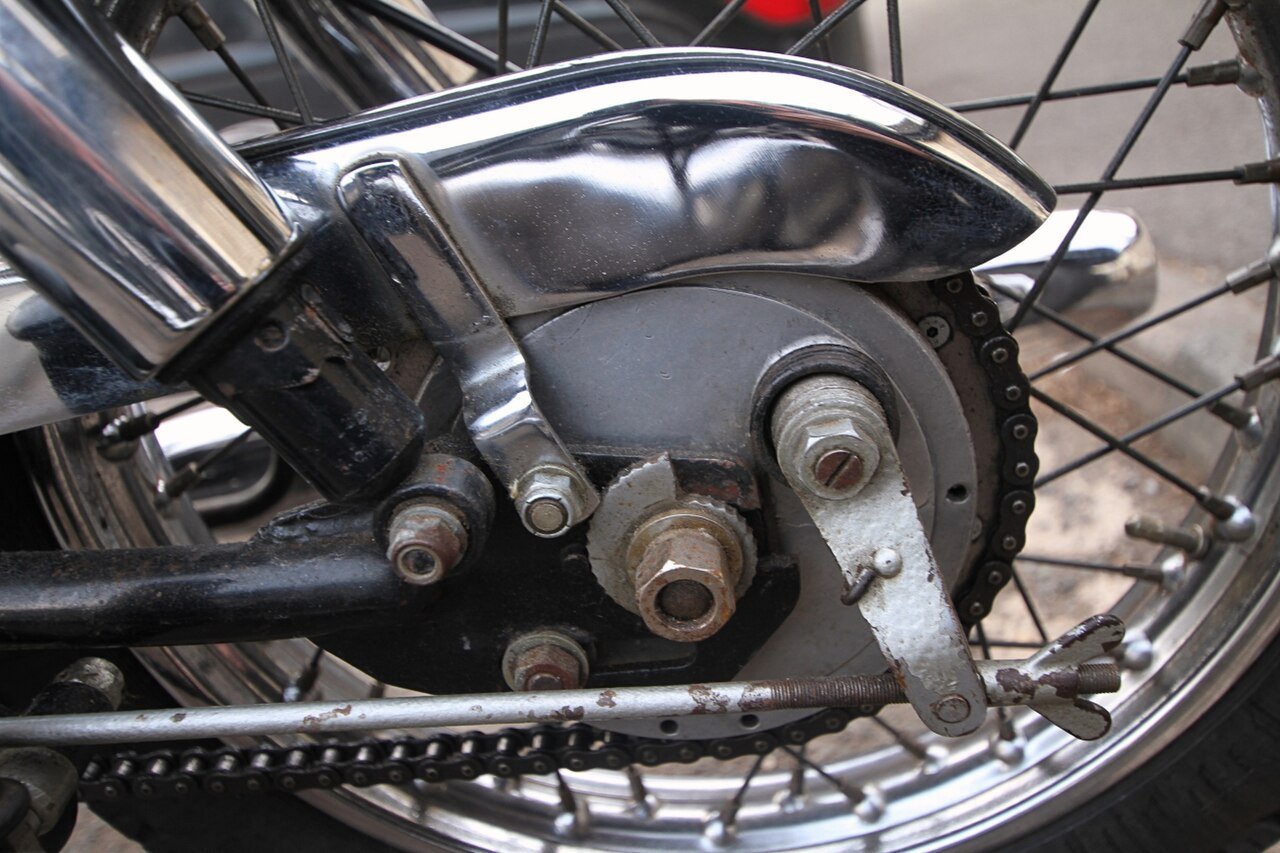
Jackshafts: multiplying two stages
Some karts use a jackshaft — an intermediate shaft with two sprockets — to get reductions a single pair can’t. Multiply the stages: engine 12T → jackshaft 24T (2:1), then jackshaft 12T → axle 60T (5:1) gives 2 × 5 = 10:1 overall. The same stage-multiplying principle works for any multi-stage drivetrain.
Torque converters are different
A Comet-style torque converter (TAV) isn’t a fixed ratio: it starts around 2.7:1 at engagement for strong launches and shifts up toward ~0.9:1 at full speed. Multiply by your chain ratio: a 2.7:1 converter with a 5:1 chain gives 13.5:1 off the line, settling near 4.5:1 at speed. If your kart has one, don’t apply fixed-ratio thinking to launch behavior.
Clutch and chain notes
- Clutch engagement. Too tall a ratio (e.g. 4:1 on a heavy kart) makes the clutch slip excessively on launch — that’s the smell of a dying clutch. Gear shorter if launches smell hot.
- Chain pitch. Match the chain to the sprockets: #35 is the kart standard, #40/#41/#420 for bigger engines. Pitch must match on both sprockets and the chain.
- Alignment. After any sprocket swap, check that clutch and axle sprockets line up perfectly — misalignment eats chains fast.
Frequently asked questions
What is the best gear ratio for a go-kart?
For most fun karts, 6:1 (e.g. 10T clutch → 60T axle). Tight tracks favor 6.5–7:1, long fast tracks 4–5:1. There’s no universal best — match it to track layout, kart weight, and engine power.
Does a bigger axle sprocket make a go-kart faster?
Faster off the line, slower at the top. A bigger axle sprocket raises the ratio (more torque multiplication, lower top speed). A smaller axle sprocket does the opposite.
How fast will my go-kart go?
Speed (mph) = (engine RPM ÷ ratio) × tire diameter (in) ÷ 336.13. A 3,600 RPM engine, 5:1 gearing, 11″ tires = 23.6 mph. Change any one number and the speed follows.
Why does my kart’s clutch get hot and smoke?
Usually gearing that’s too tall for the kart’s weight — the clutch slips trying to launch. Gear shorter (bigger axle sprocket), reduce weight, or check that the clutch springs and shoes are healthy.
Does engine power change the best go kart gear ratio?
Yes. A stronger engine can pull a taller (numerically lower) go kart gear ratio because it makes enough torque to launch without clutch abuse — that’s why a 20 hp race kart can run 4:1 where a 6.5 hp fun kart needs 6:1 on the same track. But a bigger engine also revs higher, so the real limit is still whether it reaches peak RPM on the longest straight. Power moves the window; it doesn’t remove it.
Can I run different sprockets on wet vs dry tracks?
You can, and many club racers do — but there’s no universal wet-weather recipe. Shorter gearing (a few more axle teeth) sharpens drive out of slow, slippery corners, while taller gearing softens the hit on the tires and can reduce wheelspin. Start with your dry go kart gear ratio, try a ±2-tooth change in practice, and let lap times decide.
Model your go kart gear ratio before buying sprockets — the free gear ratio calculator gives ratio, axle RPM, and top speed from your teeth, RPM, and tire size.