

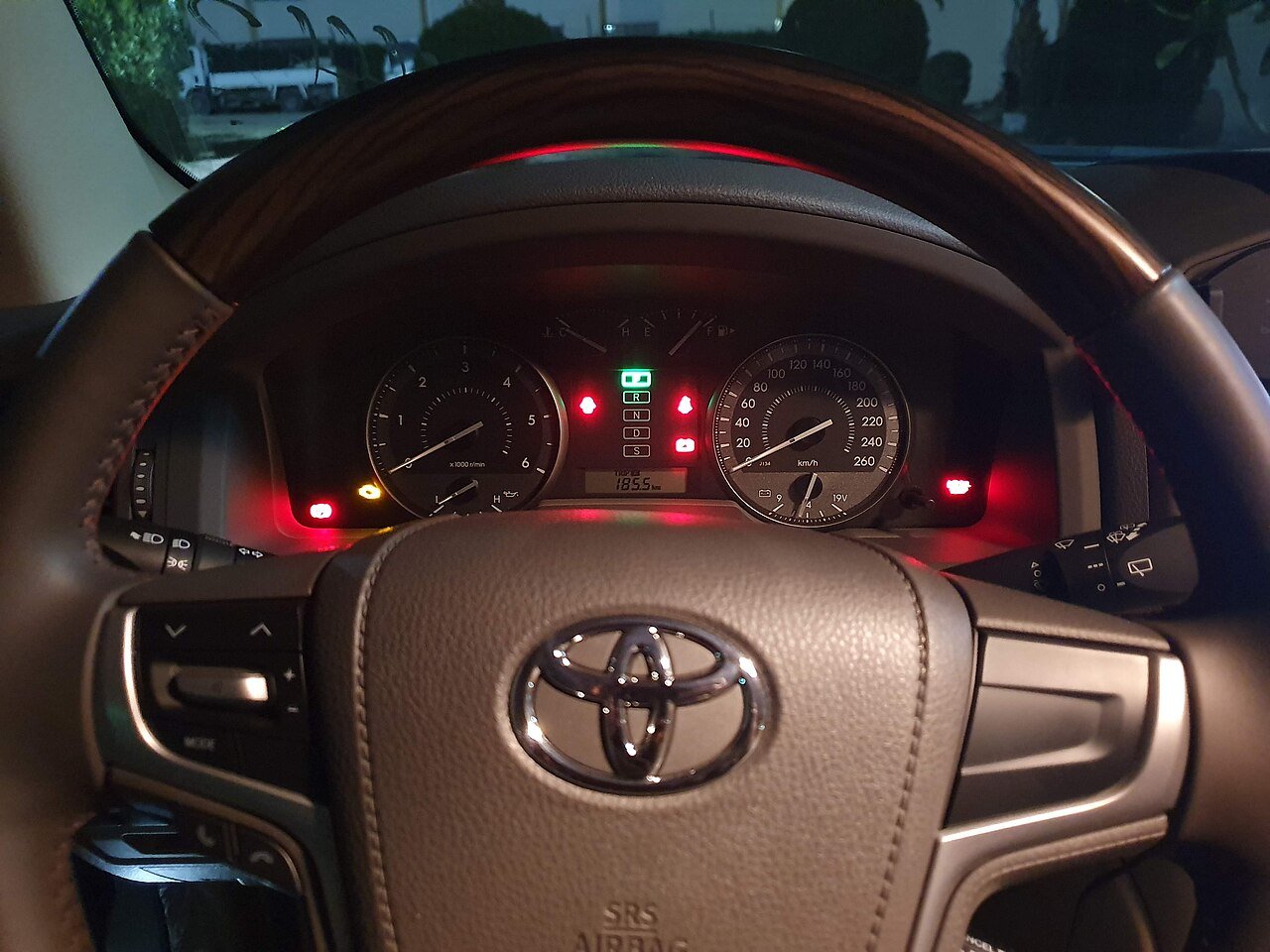
This speedometer gear chart guide shows you how cable-driven speedometers get their signal from two small plastic gears in the transmission: a drive gear on the output shaft and a driven gear on the speedometer cable. Change your axle ratio or tire size and this pair is suddenly wrong — your speedo lies. Here’s how the two gears work, the chart-style logic for picking them, and the correction formula with worked examples.
Skip the chart math? Our free speedometer gear calculator picks the exact driven gear for your drive gear, axle ratio, and tire size, and shows your error in bands.
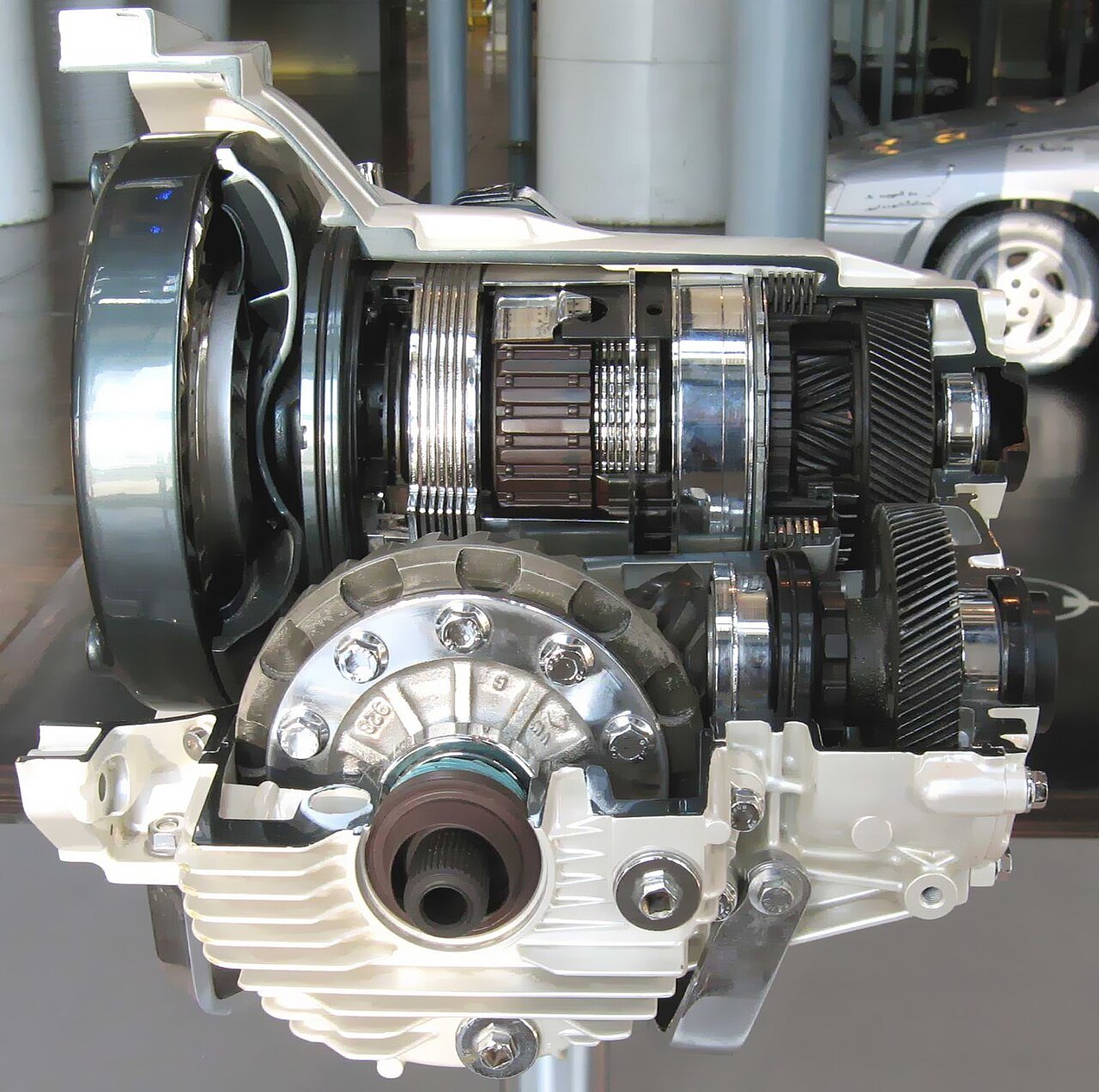
How the two-gear system works
- Drive gear — fixed to the transmission’s output shaft (inside the tail housing). You rarely change this; it’s the reference.
- Driven gear — meshes with the drive gear and spins the speedometer cable. This is the one you swap. It slides in through the speedo housing with a clip or bolt.
- Fewer driven teeth → speedometer reads faster. More driven teeth → speedometer reads slower. (The driven gear turns the cable; fewer teeth means more cable revolutions per output-shaft revolution.)
Every speedometer gear chart ever printed encodes those three facts: identify your transmission, match the drive gear, and read off the driven teeth for your axle ratio. For what happens at the other end of the cable, the classic HowStuffWorks speedometer explainer walks through the magnetic eddy-current mechanism inside the gauge itself.
How to read any speedometer gear chart
Factory charts all follow the same layout — driven-gear teeth down one side, drive gears and axle ratios across the top. The reading method is three steps:
- Identify your drive gear. On Ford units it’s color-coded (pink, black, and so on); other makes stamp a part number. This is your starting column.
- Find your axle ratio. Scan the chart for the ratio you’re actually running — not the factory one, if you’ve swapped gears.
- Read across to the driven teeth. The cell where your drive gear meets your axle ratio is the gear you buy.
Worked mini-example: pink drive gear, 3.70 axle, using the Toploader chart below → the cell reads 18-tooth driven gear. Cross-check with the formula, anchored at the 19-tooth/3.90 row: new teeth = 19 × (3.70 ÷ 3.90) = 19 × 0.9487 = 18.03 → 18. Chart and formula agree — that’s how you know you’re reading the speedometer gear chart correctly.
If your axle ratio falls between two printed rows, use the nearer row and check the residual with the one-tooth rule below. A speedometer gear chart is built from this same math, so it won’t disagree with the formula by more than a tooth.
The correction formula
New driven teeth = current driven teeth × (indicated speed ÷ actual speed)
Actual speed comes from GPS or a measured mile. Then round to the nearest whole tooth — you can’t buy a 20.6-tooth gear.
If your exact combination isn’t printed on any speedometer gear chart you can find, this formula replaces the chart entirely — it’s how the charts were generated in the first place.
Worked example 1: speedo reads HIGH
GPS says 60 mph, but the speedometer shows 65. Current driven gear: 19 teeth.
- Correction = 65 ÷ 60 = 1.0833 — the cable is spinning 8.3% too fast
- New teeth = 19 × 1.0833 = 20.58 → install a 21-tooth gear
- Result: the cable now turns slower, and the reading drops toward true speed
Worked example 2: speedo reads LOW
Speedometer shows 55 mph at a true 60. Current driven gear: 20 teeth.
- Correction = 55 ÷ 60 = 0.9167
- New teeth = 20 × 0.9167 = 18.33 → install an 18-tooth gear
- Fewer teeth = cable spins faster = reading climbs to match reality
A real chart example: Ford Toploader
This is how factory charts are organized — driven-gear teeth down the side, and which drive gear (color-coded on Ford units) pairs with each axle ratio at a given tire size (here, ~25.4″ tires):
| Driven gear | Pink drive gear suits | Black drive gear suits |
|---|---|---|
| 16 teeth | 3.25 axle | 2.75 axle |
| 17 teeth | 3.50 axle | 3.00 axle |
| 18 teeth | 3.70 axle | 3.25 axle |
| 19 teeth | 3.90 axle | 3.36 axle |
| 20 teeth | 4.11 axle | 3.55 axle |
The pattern is the lesson: numerically higher axle ratios need more driven teeth (to slow the cable back down), and each drive gear covers a band of axle ratios. Your transmission’s chart works the same way — find your axle ratio row, read across to the driven-gear teeth.
Tire diameter → driven teeth: a worked example
Charts are usually printed for one reference tire size, so here’s a speedometer gear chart built by arithmetic instead — same transmission, same drive gear, different tires. Anchor it to the Toploader row above: pink drive gear, 3.90 axle, ~25.4″ tires → 19-tooth driven gear.
The scaling rule: new teeth = 19 × (25.4 ÷ new tire diameter), rounded to the nearest whole tooth:
| Tire diameter | Math | Install |
|---|---|---|
| 28″ | 19 × (25.4 ÷ 28) = 17.24 | 17-tooth |
| 30″ | 19 × (25.4 ÷ 30) = 16.09 | 16-tooth |
| 33″ | 19 × (25.4 ÷ 33) = 14.62 | 15-tooth (below the usual 16–22 range — warn) |
| 35″ | 19 × (25.4 ÷ 35) = 13.79 | 14-tooth (outside range — the drive gear must change) |
Sanity check on direction: bigger tires → fewer driven teeth. That’s correct — a taller tire makes the speedo read low, so the cable must spin faster, which means fewer teeth. It also matches the correction formula exactly: the tire error from 25.4″ to 35″ is (35 ÷ 25.4 − 1) × 100 = 37.8%, and 19 × (25.4 ÷ 35) = 13.79 teeth — the same number the chart method gives.
Where the math lands below the 16-tooth floor, the drive gear itself must change — exactly what the factory charts assume when one drive gear covers a whole band of axle ratios. That’s the tail-housing job described in the accuracy section below.
How accurate is “good enough”?
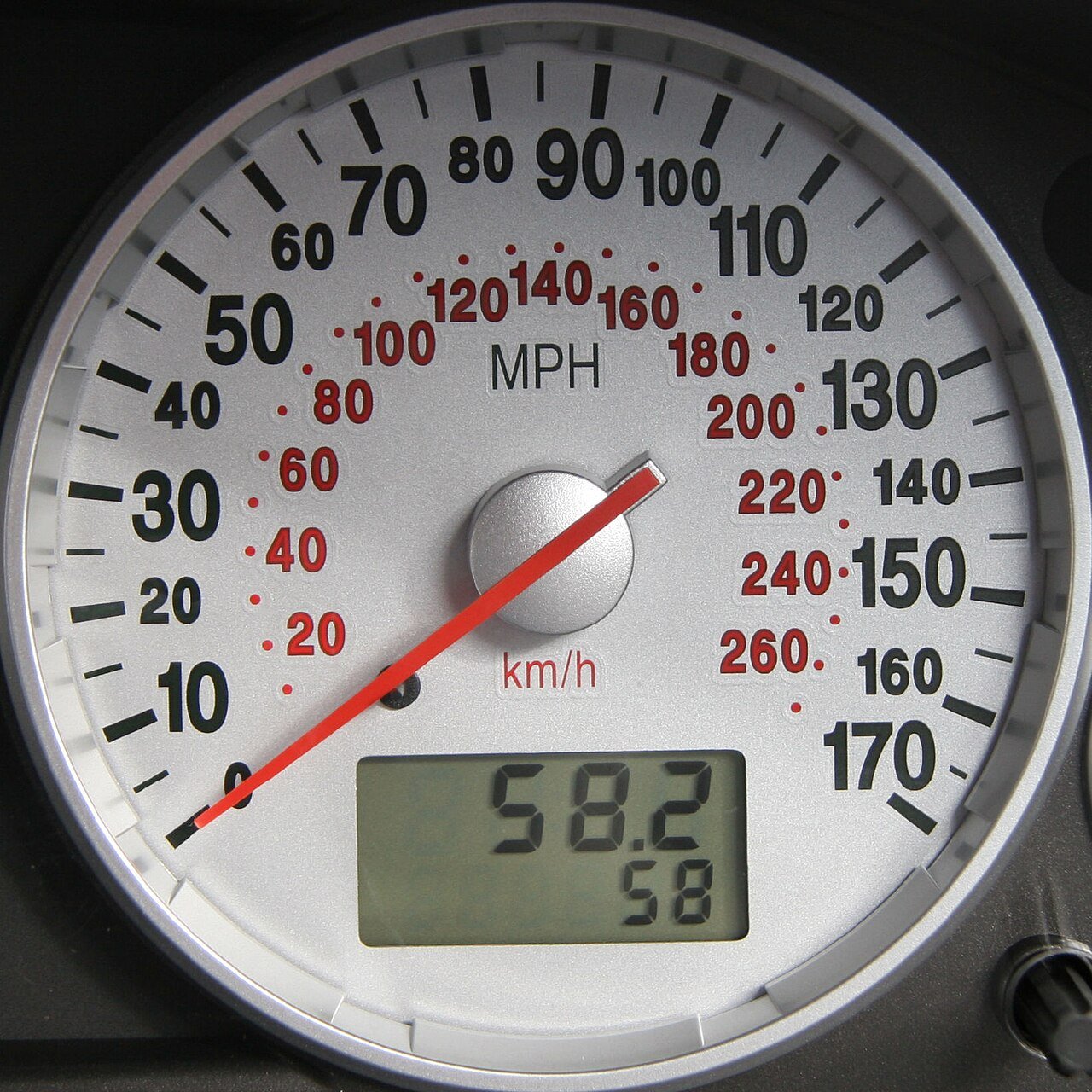
- Within ±2%: excellent — the best a whole-tooth step allows.
- 2–5%: slightly off — acceptable for most drivers, but worth a gear swap if you’re chasing it.
- Beyond 5%: swap the gear — you’re accumulating odometer error and speeding-ticket risk.
Remember the error scales with speed: 3% off means ~1 mph at 30, but ~2 mph at 65.
Note the tolerance bands apply whether you read the count off a speedometer gear chart or calculated it yourself — whole teeth are whole teeth, and the chart can’t beat the math.
When a gear swap can’t fix it
- Electronic speedometers (VSS sensor, no cable): there’s no driven gear — recalibrate with a tuner, a speedometer calibrator module, or dealer programming. Dakota Digital’s quick-start guide walks through the measured-mile calibration method their digital gauges use. Our speedometer recalibration guide covers both worlds.
- Wrong drive gear: if the needed driven-gear count falls outside the available range (typically 16–22 teeth), the drive gear itself must change — that’s a tail-housing job.
- Tire size changed: bigger tires slow the reading the same way a lower axle ratio does — gear for the tire diameter you’re actually running, using the measured (loaded) height.
Where to buy replacement speedometer gears
Once your speedometer gear chart homework hands you a tooth count, sourcing the part is easy — driven gears are cheap, standardized, and stocked everywhere. The main suppliers:
- TCI Automotive — GM and Ford drive and driven gear sets, the most common aftermarket line.
- Ford Performance / Ford racing parts — OEM Ford gears if you want factory-correct colors and fit.
- Summit Racing — Summit Racing’s speedometer gears section stocks driven gears across tooth counts and colors from brands like TCI, ACDelco, and Crown Automotive.
Buy the driven gear in the color your transmission’s chart specifies — and while the housing is open, inspect the drive gear for worn or chipped teeth. A fresh driven gear meshing with a chewed-up drive gear won’t stay accurate for long.
How much does one tooth move the reading?
A handy rule: one tooth ≈ (1 ÷ current teeth) of error. On a 20-tooth driven gear, one tooth is ~5% (1/20); on a 40-tooth gear, ~2.5%. So if your speedo is 3% off on a 20-tooth gear, one tooth in the right direction lands you within 2% — usually good enough. On small tooth counts, the steps are coarse, which is why some transmissions offer drive-gear swaps to re-center the range. This one-tooth rule is printed on the back of most paper speedometer gear chart sheets — now you know where it comes from.
Reading the error from a tooth mismatch
Suppose the formula calls for 20.58 teeth and you install the closest available 21-tooth gear. The residual error: the cable now turns at 20.58/21 = 0.98 of ideal → the speedometer reads about 2% low (at 65 true, it shows ~63.7). That’s inside the excellent band — stop there.
Installing the 20-tooth gear instead would give 20.58/20 = 1.029, or ~2.9% high. When stuck between two gears, take the smaller absolute error; factories typically target a hair high rather than low, since regulations everywhere forbid reading low.
Frequently asked questions
Do I change the drive gear or the driven gear?
Almost always the driven gear — it’s designed to be the service part and swaps in minutes. Change the drive gear only if the math lands outside the driven gears available for your transmission.
Why is my speedometer wrong after a gear swap?
The cable drive still assumes the factory axle ratio. A numerically higher ratio spins the output shaft faster per wheel revolution, so the speedo reads high — see our guide on why speedometers read wrong for the full diagnosis.
What if the formula gives me 20.6 teeth?
Round to 21 — gears come in whole teeth. The residual error is under 2%, which is the excellent band — and if a speedometer gear chart lists both neighbors, this residual check tells you which one to buy.
Does the odometer use the same gear?
Yes — the odometer runs off the same cable, so a speedometer error is an odometer error too. Fixing one fixes both.
What color speedometer gear do I need?
Color codes vary by transmission family — there is no universal color chart. Use the speedometer gear chart for your specific transmission (like the Toploader example above) or your manufacturer’s parts catalog to match color to tooth count. Don’t trust color lists from forums or memory: a pink 19-tooth gear in one transmission family can be a completely different color in another.
Can I mix drive and driven gears from different transmissions?
No. The drive and driven gears are matched by tooth pitch, diameter, and helix direction for one transmission family — a driven gear from another family will strip itself in short order. If the math lands outside the driven gears available for your transmission, change the drive gear for that same transmission (the tail-housing job above), not a gear from a different box.
The speedometer gear chart narrows it to a whole tooth; the formula confirms the residual. Together they’re the whole job — nothing left to guess.
Get the exact gear for your setup — drive teeth, axle ratio, tire size, and error bands — in the free speedometer gear calculator.